
What Do Odd Cat Behaviors Mean


Your cat suddenly launches onto your shoulders or climbs straight up your chest with zero warning. One minute you are walking past the sofa. The next, you have a living backpack with claws. It feels shocking. It is not random. Scientists who study feline behavior have mapped these patterns for decades. What looks like pure quirks is almost always instinct, trust, or a clear signal that your cat sees you as family.
At Cattytude, we celebrate that spirit every day. Cats remind us of God's intricate design. Their behaviors connect back to ancient hunting, nursing, and territory rules that still run strong even in a cozy living room. Understanding them helps you respond with patience instead of frustration. It also deepens the bond. Here is a clear look at the most common strange things cats do and what they actually mean.
Why Cats Knead You Like Dough

This is the milk tread. Kittens press their mother's belly to start milk flow. Adult cats keep the motion when they feel completely safe and loved. The harder the kneading, the happier the moment. Claws often come out by reflex. Some cats even drool. That is pure contentment, not a plan to hurt you.
Don't stop the ritual. Drape a thick blanket over your lap if the claws bother you. Enjoy the compliment. A cat that never kneads may still be building that deep level of trust.
Why Cats Bring Dead Mice or Birds

Your cat views you as a clumsy hunter who needs training. In the wild, mother cats bring prey to teach kittens. First come fully dead gifts. Later, they may bring half-alive ones so the student can practice. Screaming and tossing the gift away tells the cat the lesson failed.
Praise the effort with calm words and pets. Then quietly remove the offering. This is care, not punishment or a scare tactic. Your cat is trying to feed its family.
Why Cats Knock Things Off Tables

This is not revenge or pure mischief. Cats use their paws to test the world the way scientists run experiments. An object that falls moves, makes sound, and changes position. In nature, the same test checks if prey is truly dead. Your pen just failed the liveliness check.
Cats also clear space they want to claim for lounging or watching. And they quickly learn that a crash gets your attention fast. Don't scold. The cat doesn't grasp the value of your items. Provide safe outlets for paw play instead.
Why Cats Meow at Closed Doors

A closed door is an insult to territorial control. Cats need to know they can access every part of their domain. They often don't even want to go in. They just need the option. In the wild, they patrol boundaries several times a day. A shut door is like a random fence across their land.
Leave doors ajar when possible or add a cat door. The meowing stops once the anxiety of blocked access disappears.
Why Cats Bury Unfinished Food

This instinct hides leftover prey from scavengers and larger predators. Scratching around the bowl is the same motion used on dirt. Your apartment has no wild competitors, but the DNA still fires. Sometimes it also means the food has lost appeal and the cat treats it like waste.
Serve smaller fresh portions. Remove uneaten food after about twenty minutes. The burying urge itself will not vanish. It is hard-wired.
Why Cats Suddenly Race Around Like Crazy (Zoomies)

Call it the frantic five minutes. Energy builds during long rest periods. In nature, cats hunt in short, intense bursts. Indoors, that energy has nowhere to go until it explodes into wild runs, jumps, and puffed tails. Afterward, the cat collapses into deep sleep.
This is healthy. Nighttime zoomies often mean the cat needs more daytime play. Fifteen minutes of active chase games in the evening usually shifts the burst to a better hour. A cat that never shows zoomies may be low on vitality or understimulated.
Why Cats Sit Exactly on the Book or Laptop You Are Using

Your attention is locked on the object. The cat inserts itself between you and that focus. It is not human-style jealousy. It is a demand for priority. You are looking at something dead. The cat offers itself as the better option. Warmth from a laptop is a bonus. Your scent on the pages or keys also draws them.
Create a nearby box or soft bed so the cat can stay close without blocking the work. Many accept the compromise when they feel included.
Why Cats Prefer the Tap Over Their Bowl

Running water signals freshness and safety. Standing water can stagnate or hide contaminants. The instinct has protected cats for thousands of years. A bowl next to food also feels wrong. Prey and water sources stay separate in nature.
Move the water dish to another room. A wide bowl keeps whiskers from brushing the sides. A fountain that mimics a stream often doubles drinking. Low water intake is a major risk for kidney issues, so matching the instinct matters.
Why Cats Rub on Furniture Corners and Your Legs

Facial glands leave pheromone marks. Rubbing claims the object or person as part of the cat's territory. After you come home, the cat overwrites outside smells with its own familiar scent. This is high-level acceptance. You are now marked as family.
A cat that never rubs may not yet see you as fully inside its circle. Let the greeting happen. It is ownership and calm combined.
Why Cats Show You Their Rear

A raised tail and presented rear is a major compliment. Kittens greet mothers this way. Trusted adults do the same. It invites scent exchange and shows total lack of fear. The cat turns its back because it trusts you will not attack. The base of the tail is also packed with nerve endings, so petting there often feels good.
Accept the gesture. Turning away in disgust misses the trust on offer.
Why Cats Chew Plastic Bags and Wires

The crunch resembles prey bones. Some plastics carry faint animal-fat smells. Wires look like mouse tails or snakes. Boredom, stress, or missing minerals can amplify the urge. This one is dangerous. Choking or shock are real risks.
Remove the targets. Cover wires. Offer cat grass or safe chew toys. More daily play reduces the drive for the wrong objects.
Why Cats Meow at 3 a.m.

Cats are crepuscular. Peak natural activity hits at dawn and dusk. Domestication has not rewritten that clock. The cat wakes ready to hunt or play and cannot understand why the rest of the household is motionless. Hunger or leftover energy often fuels the calls.
Play hard before bed. Offer a small meal. An automatic feeder timed for early morning can break the hunger cycle. Consistent ignoring of the meows teaches that the tactic no longer works. Thick curtains can also soft-pedal the dawn signal.
Why Cats Stuff Themselves Into Tiny Boxes

Walls on most sides create security. Predators cannot approach unseen. Contact with the sides soothes like a gentle hug. Body heat stays trapped. Cardboard smells interesting and invites claw work. Even a square drawn on the floor can draw them because the boundary itself feels safe.
Keep a few open boxes available. They are high-value resources, not clutter.
Why Cats Stare Into Empty Corners

Their senses outrange ours. They detect ultraviolet patterns, ultrasound up to about 65,000 hertz, and tiny movements we miss. A dust mote, distant mouse, insect, or electrical hum can hold their full attention. They are not seeing ghosts. They are seeing a wider slice of the real world.
If the cat stays tense, check the area. Something is usually there.
Why Cats Lick You

This is allo-grooming. Mothers lick kittens. Bonded adults lick each other. Your cat is treating you as family, cleaning, mixing scents, and sometimes trying to soothe stress it detects on your skin. The rough tongue is built for fur. You just happen to be the target.
Intense or compulsive licking may signal anxiety that needs attention. Ordinary licking is love.
Why Cats Suddenly Climb or Jump on You From Ambush
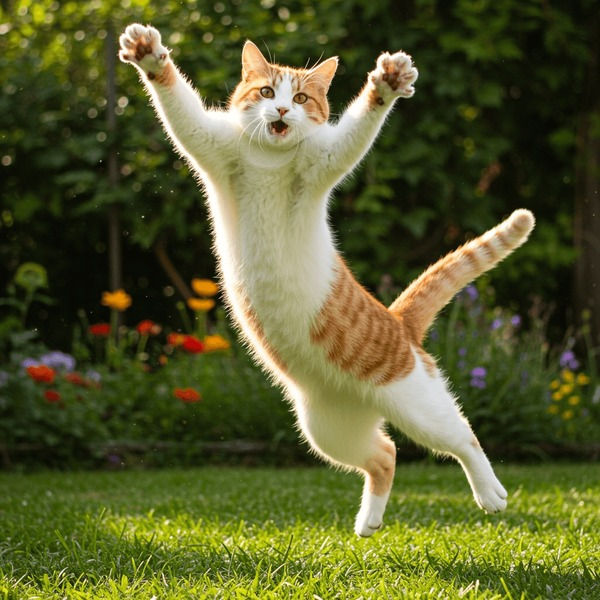
This is the behavior that started the whole question. Moving legs trigger pure hunting software. In the wild, a cat waits in cover for the exact moment prey enters the strike zone. Your walk past the sofa is that moment. The leap is play-hunting, not true aggression or a scare tactic. The cat practices the sequence that once meant survival.
Redirect the energy with toys that let the cat stalk, chase, and kill something appropriate. A few short sessions each day satisfy the program without turning you into the target every time.
Simple Ways to Support Healthy Cat Behavior at Home

Many of these instincts become easier to live with when the environment matches what cats need. Here are practical items that often help:
A quality cat drinking fountain that keeps water moving and appealing.
Sturdy cardboard boxes or covered beds that give secure resting spots.
Interactive wand toys and puzzle feeders that let the hunting sequence play out safely.
Soft blankets or mats placed where you sit so kneading stays comfortable for both of you.
Wide shallow water bowls kept away from food stations.
Cat grass or safe chew alternatives for the plastic-and-wire urge.
Automatic feeders timed to reduce early-morning hunger calls.
Scratching posts and vertical spaces that expand territory without furniture damage.
These tools do not erase instincts. They give the instincts healthy outlets. That is the real win.
FAQs
Why does my cat only climb on me and not other people?
Trust and scent history. You are marked as safe family. Guests lack that history, so the ambush play stays directed at the familiar target.
Is sudden climbing ever a sign of illness?
Usually no. If the behavior arrives with other changes such as weight loss, litter-box issues, or constant hiding, a vet check is wise. Most cases are pure instinct.
How long does it take to reduce unwanted jumping?
Consistency matters more than speed. Daily play sessions and clear redirection often bring noticeable calm within a couple of weeks.
Do all cats show every one of these behaviors?
No. Personality, early experience, and environment shape which ones appear strongest. A confident, well-stimulated cat still carries the same DNA. It just expresses it differently.
Can I train these instincts away completely?
You cannot erase them. You can channel them. Respect the wild design and the household stays happier.
Further Reading
For deeper insight into community cat care and humane approaches that respect natural feline behavior, visit Alley Cat Allies at https://www.alleycat.org/.
Cats live by rules written long before they shared our homes. When we learn those rules, we stop fighting the design and start partnering with it. That partnership is pure Cattytude. Wear your values. Shop with purpose.

Comments