
The Origin of Domestic Cats: How Wild Cats Became Our Companions


Where did domestic cats come from? How did a wild predator become the cat sleeping on your bed, demanding breakfast, chasing toys across the living room, and somehow convincing an entire household that it exists primarily to serve feline needs?
The story of the domestic cat reaches back roughly 10,000 to 12,000 years to the ancient Near East, where wildcats and early farming communities began an unlikely relationship that would eventually change both species forever. Today, domestic cats live with people on every inhabited continent, but their journey began long before modern cities, cat breeds, pet stores, or even the idea of a cat as a household companion.
The domestication of cats is intimately linked to the advent of agriculture. As people established permanent communities and cultivated crops, stored food drew in rodents, which in turn attracted wildcats. These cats found a reliable source of prey, while humans enjoyed the advantage of having adept predators near their settlements to manage mice and other pests. Researchers characterize this relationship as mutually beneficial, likely playing a significant role in the gradual domestication of cats.
Unlike some domesticated animals, cats were not transformed dramatically by humans for a specific working purpose. They did not need to pull carts, herd livestock, carry people, or produce meat for the relationship to be useful. Cats could largely continue doing what their wild ancestors already did, while simply becoming increasingly comfortable living around people. That unusual path helps explain why domestic cats remain remarkably independent and why your house cat can look perfectly content one minute and then launch into full predator mode the next.
The Wildcat Behind the Domestic Cat

The domestic cat's primary ancestor was the African and Near Eastern wildcat, a small feline adapted to hunting rodents and other prey. Genetic research has repeatedly pointed toward the Near East, particularly the Fertile Crescent and eastern Mediterranean region, as the centre of early cat domestication. A major 2022 genetic study involving more than 1,000 randomly bred cats from around the world found patterns consistent with a Near Eastern origin and identified the eastern Mediterranean as particularly important to the early history of domestic cats.
That means the modern tabby sleeping beside you has an ancient connection to wildcats that survived in landscapes very different from today's neighbourhoods and cities. Those wildcats were hunters that had to locate prey, avoid danger, defend resources, and survive without human assistance. Many of the behaviors we still see in domestic cats make much more sense when we remember that their ancestors were not pets at all. They were small predators making a living on their own terms.
The resemblance between domestic cats and their wild relatives is not merely physical. Domestic cats retain powerful hunting instincts, territorial behaviors, exceptional agility, sharp senses, and a remarkable ability to move quietly through their surroundings. Selective breeding has produced cats with dramatically different appearances, but it hasn't erased the fundamental feline toolkit inherited from their wild ancestry. Your cat may sleep on a pillow, but there is still a hunter underneath that fur.
Agriculture Changed Everything

The development of agriculture created an entirely new environment for both humans and wildlife. As communities began storing grain and other food, rodents found reliable sources of nourishment close to human settlements. Wildcats that were willing to approach those settlements suddenly had access to an extraordinary concentration of prey. The relationship therefore developed without humans necessarily setting out to domesticate cats at all.
This is one of the most important things to understand about cat domestication. The first cats did not necessarily need humans to feed them, because the rodents around human settlements were already providing a food source. Humans benefited from the cats' hunting, while the cats benefited from the abundance of prey created by human activity. Over generations, this arrangement allowed cats that were more tolerant of human environments to remain close to settlements and reproduce.
The relationship between cats, rodents, and humans was therefore remarkably practical. People created agricultural communities which attracted rodents, and rodents attracted cats. What began as an ecological opportunity gradually became a relationship that would eventually spread far beyond the original farming communities of the Near East.
The 9,500-Year-Old Cat Connection

Evidence of a close bond between cats and humans dates back to around 9,500 years ago. Archaeological findings on Cyprus revealed a cat buried next to a human. This is particularly noteworthy because, being an island, the cat could not have arrived there on its own from the mainland. Humans must have transported the cat across the Mediterranean, indicating that people and cats were already journeying together thousands of years ago.
That discovery doesn't mean the cat was identical to a modern household pet. Domestication is a process rather than a switch that suddenly flips from "wild" to "domestic." The Cyprus evidence instead provides an extraordinary glimpse into an early stage of the relationship, when humans were already keeping cats close enough to transport them and associate them with human communities.
Think about how far back that relationship reaches. Cats lived alongside humans thousands of years before modern cat breeds, commercial cat food, and veterinary medicine were developed. This bond is an ancient relationship that endured significant changes in human civilization. From being revered in ancient Egypt to their role in pest control, cats have always been important in society. Today, they are cherished pets and integral members of many households, offering emotional support and companionship.
Did Cats Come From Ancient Egypt?

Ancient Egypt is often described as the birthplace of the domestic cat, but the evidence tells a more complicated story. Cat domestication began earlier in the Near East, while Egypt later became a major centre of feline cultural importance and contributed significantly to the spread of domestic cats. Ancient DNA research has shown that both Near Eastern and Egyptian wildcat populations contributed to the genetic history of domestic cats at different stages.
Egyptian civilization developed a particularly strong cultural connection with cats. Felines appeared in artwork and religious traditions, and cats became associated with important aspects of Egyptian society. Eventually, enormous numbers of cats were mummified and used as religious offerings, demonstrating just how deeply cats had become embedded in Egyptian culture.
Egypt therefore deserves an important place in the history of domestic cats, but it should not be mistaken for the original starting point of domestication. The relationship between humans and cats was already ancient by the time cats became such an important part of Egyptian culture. The story began farther east and developed over thousands of years before spreading into the Nile Valley and beyond.
Cats Were Not Domesticated Like Dogs
The history of domestic cats becomes even more interesting when compared with other domesticated animals. Humans have exerted strong selective pressure on many species, deliberately breeding them for particular physical characteristics, behaviours, or economic purposes. Cats experienced considerably less intensive selection for most of their early domestication history, allowing them to retain much of their original appearance, behavior, and genetic diversity.
This helps explain why the domestic cat can seem almost like a wild animal that decided it was willing to share a house with humans. Cats can form strong bonds with people, yet many remain perfectly capable of independent behavior. They can communicate with humans, recognize routines, seek affection, and develop close relationships while still maintaining many instincts that do not depend on human direction.
Modern cat breeds are a much more recent development. Deliberate selection for distinctive coat colours, patterns, body types, and other characteristics became much more important relatively recently, particularly compared with the thousands of years during which cats lived alongside humans with far less intensive breeding. Research into ancient cat remains suggests that directed breeding for particular coat patterns occurred much later than the initial domestication process.
Why Does My Domestic Cat Still Act Wild?
If your cat suddenly crouches behind a piece of furniture, watches a toy with intense concentration, and then launches itself across the room, you're watching ancient instincts in action. Domestic cats still possess the sensory abilities and behavioural patterns of predators, including stalking, chasing, pouncing, climbing, hiding, scratching, and territorial marking. These behaviors are not signs that domestication failed. They are part of what makes a cat a cat.
This is also why environmental enrichment matters so much for domestic cats. Toys that encourage chasing, opportunities to climb, places to hide, scratching surfaces, and safe areas from which cats can observe their surroundings allow them to express natural behaviours. A cat does not have to live in the wilderness to retain the instincts of a predator. Those instincts came with the species long before humans began inviting cats into their homes.
Even the domestic cat's famous sleeping habits are connected to its predatory heritage. Hunting requires bursts of intense physical activity, followed by periods of rest that conserve energy. Your cat may not need to chase dinner across a field, but its body still operates according to a biological history that developed when successful hunting meant survival.
How Did Cats Spread Around the World?
Once humans and cats became closely connected, cats began travelling with people. They moved along agricultural routes, trade networks, settlements, and eventually maritime routes, where their ability to control rodents made them useful companions aboard ships. Ancient DNA research shows that the global spread of domestic cats accelerated during later historical periods, particularly as Egyptian-associated cats moved through human trade networks.
Human movement therefore became one of the greatest forces shaping the modern distribution of domestic cats. Cats reached regions far beyond their original Near Eastern homeland, adapting to villages, farms, ports, cities, and households around the world. Their ability to live near humans while retaining considerable independence made them exceptionally successful travellers.
The cats living in the Americas, Australia, and many other regions today are part of that much larger human-assisted history. Domestic cats didn't naturally occupy every place where they now live. People carried them across oceans and continents, sometimes intentionally and sometimes simply because cats were travelling alongside human communities.
The Domestic Cat's Wild Heritage Still Matters
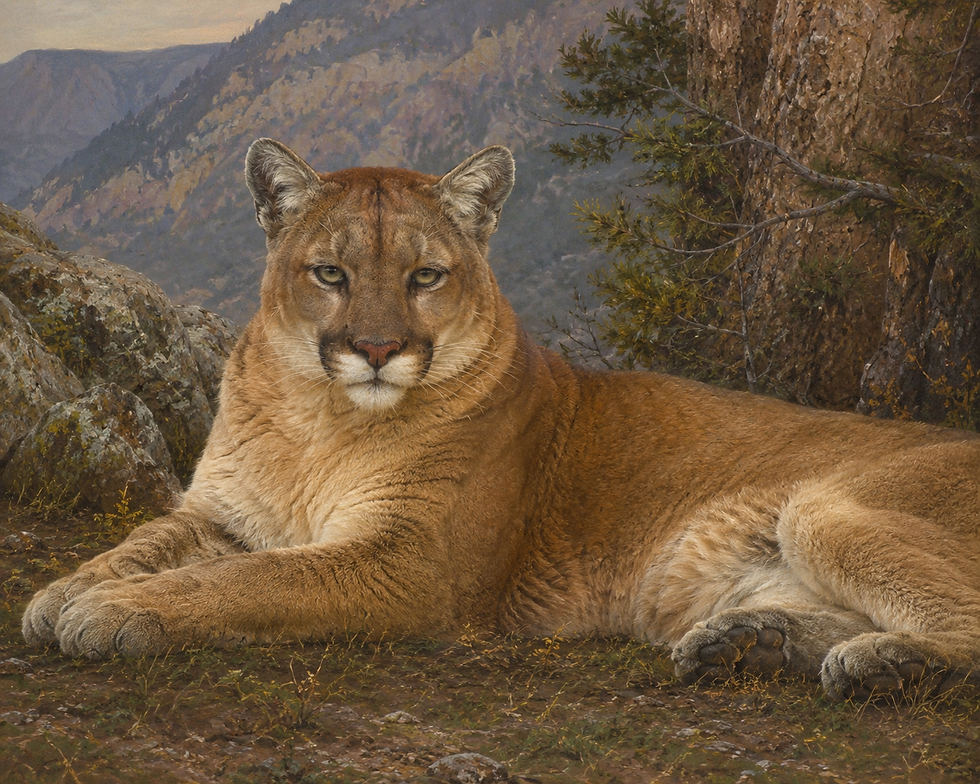
The history of domestic cats offers an intriguing link to the larger feline family. Although a house cat and a tiger lead distinctly different lives, they both are part of the same remarkable family of predators. Domestic cats allow us to observe behaviors that are also seen in wild felines, such as stalking, territoriality, communication, scent marking, and strong responses to movement.
That connection is one reason Cattytude dedicates its website to cats in both their domestic and wild forms. Cattytude is not simply about cute cat designs or celebrating the animals that share our homes. Its website combines cat culture with conservation awareness, ethical considerations, faith, and a desire to help people recognize that cats around the world deserve attention and respect.
Celebrating cats means looking beyond the living room. Domestic cats remind us of the extraordinary relationship humans have developed with felines, while wild cats remind us that not every cat belongs in a home. Wild species need functioning ecosystems, secure habitat, natural prey, connectivity between populations, and protection from human activities that threaten their survival. Caring about cats means recognizing the difference between loving a domestic companion and protecting a wild animal's right to remain wild.
Why Cattytude Talks About Conservation

Cattytude's conservation focus comes from the belief that admiration should lead to responsibility. It is easy to love a beautiful photograph of a tiger, admire the strength of a lion, or become fascinated by a tiny wild cat that most people have never heard of. The harder and more important question is what happens when those animals lose habitat, face illegal killing, become victims of wildlife trafficking, or disappear from ecosystems because of human decisions.
Wild cats are an important part of healthy ecosystems and emphasizes threats including habitat loss, poaching, wildlife trafficking, and human pressure. Its conservation writing also connects wild cat protection with biodiversity and ecosystem health rather than treating conservation as simply saving individual animals.
Cattytude also approaches conservation from a faith-informed perspective. The site's Christian identity is part of its voice, but caring about cats and wildlife is not limited to Christians, and the ecological reasons for conservation stand on their own. Whether someone is motivated by faith, science, compassion, love of animals, concern for biodiversity, or simply the belief that humans should stop destroying wildlife, the need to protect wild cats remains the same.
Domestic Cats and Wild Cats Need Different Care
It's important not to blur the line between domestic cats and wild cats simply because they share a family resemblance. Domestic cats have adapted to living alongside humans and depend on responsible human care in many circumstances. Wild cats have evolved to live within specific ecosystems and require the freedom, habitat, prey, and environmental conditions necessary to survive without becoming dependent on people.
That distinction matters enormously in conservation. A wild cat cannot be protected simply by placing it somewhere safe and providing food indefinitely. Conservation is ultimately about maintaining viable wild populations and the ecosystems that support them. Rescue and sanctuary work can be important for individual animals that cannot return to the wild, but preserving wild habitat remains essential for species survival.
Domestic cats also deserve thoughtful care because domestication does not eliminate their needs. Their wild ancestry illustrates the importance of enrichment, appropriate environments, opportunities for natural behavior, and respect for their individual personalities. A healthy relationship with a domestic cat means recognizing that the animal is not a toy or decoration but a living creature with its own instincts and needs.
What the History of Cats Teaches Us
The story of domestic cats begins with coexistence. As humans altered their surroundings with agriculture, cats found opportunities in these changes. This led to an unforeseen relationship between the two species. Now, thousands of years later, humans and cats are closely connected worldwide.
That relationship also demonstrates how much influence humans have over the lives of animals. We created the agricultural landscapes that helped cats move closer to us, transported cats across continents, shaped modern breeds through selective breeding, changed wild habitats, and continue to influence whether wild feline populations survive. With that influence comes responsibility.
The domestic cat therefore gives us a reason to look at the entire feline family differently. When we understand that the cat beside us has an ancient wild heritage, it becomes easier to appreciate the wild cats that still depend entirely on natural ecosystems. The more we learn about cats, the harder it becomes to see them simply as animals that exist for human entertainment or convenience.
Why Cattytude Goes Beyond Just a Cat on a Shirt

Cattytude celebrates the personality, humor, attitude, beauty, and sheer weirdness that make cats so irresistible. The website's products and cat-themed designs are intended for people who genuinely love cats and do not hold back about it. At the same time, Cattytude uses its platform to connect that love of cats with conservation awareness, ethical choices, and respect for the natural world.
This is why domestic cats and wild cats are united on Cattytude. Although domestication, habitat, behavior, and lifestyle distinguish the sleepy house cat from the elusive wild feline, they share a remarkable evolutionary history. Understanding the origins of our domestic cats provides us with an additional reason to care about their wild relatives that continue to live by nature's rules.
Cattytude's philosophy is simple. Honor, educate, and advocate for cats. This includes the cat snuggled beside you, the rescued cat in need of a home, and the wild cat struggling to survive in shrinking habitats. Each of these felines plays a vital role in the larger narrative of their species. They all deserve to be treated with the utmost respect. By embracing this philosophy, we can foster a deeper understanding and appreciation for all cats.
Frequently Asked Questions About the Origin of Domestic Cats
Where did domestic cats originate?
Domestic cats originated from wildcat populations associated with the Near East, particularly the Fertile Crescent and eastern Mediterranean region. Genetic research supports this region as the centre of early cat domestication, with subsequent movement of cats occurring alongside human migration, agriculture, and trade.
What wild cat is the ancestor of the domestic cat?
The domestic cat descends primarily from the African and Near Eastern wildcat lineage. Genetic studies have found particularly strong connections between domestic cats and wildcats from the Near East, supporting the idea that these populations played the central role in domestic cat ancestry.
When did humans domesticate cats?
The domestication process began roughly 10,000 to 12,000 years ago, although researchers cannot identify one precise date when cats suddenly became domestic. The relationship developed gradually as wildcats began taking advantage of rodent-rich human settlements and people benefited from their hunting.
Were cats domesticated in ancient Egypt?
Not originally. The earliest roots of cat domestication are associated with the Near East, while Egypt later became a major centre of feline culture and contributed to the subsequent genetic and geographic history of domestic cats. Ancient DNA research indicates that both Near Eastern and Egyptian cat populations contributed to the domestic cat's later history.
What is the oldest evidence of cats living with humans?
One of the most famous examples is a cat associated with a human burial dating to approximately 9,500 years ago. The discovery on Cyprus is especially significant because people must have transported the cat to the island, showing that humans and cats were already travelling together during the early stages of their relationship.
Why do domestic cats still have wild instincts?
Domestic cats inherited many behaviours from their wild ancestors, including stalking, chasing, pouncing, climbing, scratching, hiding, and territorial behaviour. Domestication changed the relationship between cats and humans, but it did not erase the biological instincts that made cats successful predators.
How did domestic cats spread around the world?
Humans played a major role in transporting cats through agriculture, trade, migration, and maritime travel. Ancient DNA research indicates that the spread of Egyptian-associated cats during later historical periods contributed significantly to the worldwide distribution of domestic cats.
Are domestic cats related to today's wild cats?
Yes, although domestic cats are not simply miniature versions of modern wild cat species. They share a broader feline evolutionary heritage, and domestic cats retain many traits associated with their predatory ancestors. Their relationship to wild cats is one reason the history of domestic cats is so important to understanding the feline
family as a whole.
Why does Cattytude focus on both domestic and wild cats?
Cattytude focuses on both because the domestic cat and the wild cat represent different parts of the same remarkable feline story. The website celebrates domestic cats and the people who love them while also using its platform to promote wild cat conservation, habitat protection, ethical awareness, and responsible stewardship.
Is Cattytude's conservation message intended only for Christians?
No. Cattytude is a Christian-owned business, and faith is part of its identity, but its conservation message is broader than one religious audience. The scientific, ecological, ethical, and compassionate reasons for protecting cats and their habitats can be understood and supported by people from many different backgrounds.
Additional References for Further Reading
Nilson, S. M., et al. "Genetics of randomly bred cats support the cradle of cat domestication being in the Near East." Heredity, 2022. Nature: Heredity research article
Ottoni, C., et al. "The palaeogenetics of cat dispersal in the ancient world." Nature Ecology & Evolution, 2017. Nature research article
Final Thoughts
The domestic cat did not begin its story as a pampered house pet. Its ancestors were wild hunters that discovered an opportunity in the settlements of early farmers, and humans discovered that those hunters could be useful allies against rodents. Over thousands of years, that relationship expanded across continents and cultures until cats became some of the most familiar animals on Earth.
Yet the wildness never completely disappeared. The cat that stalks a toy across your living room is still carrying instincts inherited from predators that survived without human help, and that connection gives us a fascinating window into the larger feline family. That is exactly why domestic cats and wild cats belong in the same conversation.
Love the cat beside you. Learn about the cats beyond your doorstep. Stand up for all cats, including wild cats that cannot simply move into a human home when their habitat disappears, and remember that our relationship with cats carries a responsibility as well as a privilege.

Comments