

Which Big Cat Has the Most in Common with Domestic Cats?
- Millie Zeiler
- Jun 11
- 3 min read

If you have ever watched a house cat stalk a toy mouse across the floor or head-butt your leg for attention, you might wonder which of the big cat species shares the most traits with our everyday feline companions. The answer might surprise you. It is the cougar — also known as the puma or mountain lion — the big cat whose natural instincts and feline behavior feel strikingly familiar to any cat lover.
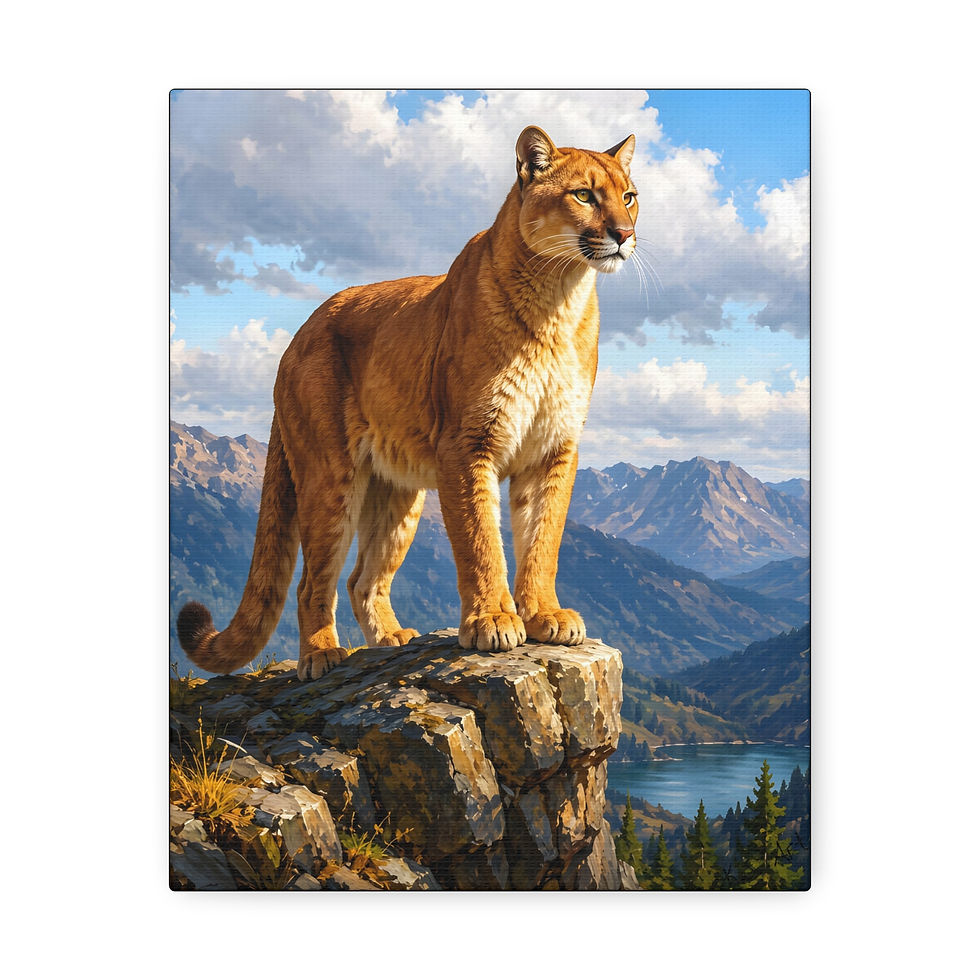
Why the Cougar Is the Big Cat Most in Common with Domestic Cats
Cougars belong to the same subfamily as domestic cats — Felinae — making them genetically closer to your house cat than lions, tigers, or leopards are. Those larger big cat species belong to the Panthera group and can roar, but the puma cannot. Instead, this mountain lion communicates through sounds that any cat lover will instantly recognize: purring, chirping, hissing, and growling. That shared feline vocal behavior is one of the clearest signals of their deep biological connection.
Many wildlife observers and sanctuary workers say that watching a cougar up close is like watching an oversized house cat. The way they move, groom themselves, and take in their surroundings carries the same quiet confidence and natural curiosity you see in a tabby at home. These parallel cat characteristics across wild and domestic felines point to shared evolutionary roots that are hard to ignore.
Shared Cat Instincts: Hunting Style and Physical Traits
One of the strongest parallels between wild cats and domestic cats shows up in their hunting style. Cougars are solitary ambush predators — they rely on stealth, agility, and powerful leaps rather than brute strength or pack coordination. Domestic cat behavior mirrors this exactly when your cat crouches low and pounces on a feather toy or locks onto a laser dot. These are not learned habits. They are deep-seated cat instincts passed down through millions of years of feline evolution.
Physically, both the puma and the house cat share flexible spines, retractable claws, and a preference for high vantage points. Both are excellent climbers. Both spend a notable portion of their day grooming — a feline trait that speaks to their shared cat DNA and fastidious nature. These physical similarities between solitary wild cats and domestic cats are more than skin deep.
Personality and Bonding: Wild Cat Behavior That Feels Familiar
Beyond physical traits, the cougar shares subtle personality and social behaviors with domestic cats. Hand-raised cougars regularly display head-butting, kneading, and playful behaviors — the same gestures house cat owners recognize every day. They can form strong bonds with their caregivers, much like a domestic cat that picks one favorite person in the household and follows them everywhere. This bonding behavior is a remarkable example of wild cat behavior that echoes house cat behavior almost perfectly.
This is why stories about mountain lions living alongside families feel believable to so many cat lovers. When raised with care and proper boundaries from a very young age, cougars retain a gentle, affectionate side that feels remarkably cat-like. Their natural feline temperament, curiosity, and need for connection are not so different from those of the cats sharing our homes.
How the Cougar Compares to Other Big Cat Species
Other big cat species share some feline DNA and behaviors with domestic cats too. Tigers, for example, have extremely close genetic ties to house cats. Leopards are also solitary and skilled climbers, two traits cat lovers will recognize. Yet when it comes to comparing everyday mannerisms, feline vocalizations, and lifestyle habits, the cougar — the puma — consistently stands apart. It simply feels like the big cat species that most closely echoes the spirit of the cats curled up on our couches.
Why This Feline Connection Matters
This connection helps explain why orphaned cougar cubs can sometimes adapt so well to human care. They are not truly domesticated — no wild cat is. But their natural cat instincts and feline behavior overlap with domestic cats in ways that make them endlessly fascinating to cat lovers, wildlife researchers, and anyone who appreciates the beauty of God's creation in the animal kingdom.
In the end, the cougar — the mountain lion, the puma — reminds us that the line between wild and tame is not always as sharp as we think. Next time your house cat gives you that slow blink of affection, picture a mountain lion doing the same thing on a much grander scale. That shared feline behavior, that quiet gesture of trust, is nature's way of reminding us how wonderfully consistent its best designs really are.


Comments