
The Blue Tiger Mystery: Are Blue-and-White Tigers Real?


Imagine walking through a forest and seeing a tiger that doesn’t look orange at all. Instead, its coat appears pale, almost white, with unusual blue-gray or slate-colored stripes running across its body. It sounds like something from a fantasy story, but reports of strange blue tigers have circulated for more than a century. So is there really a tiger born with blue and white stripes, or has the internet turned an old wildlife mystery into something far more definite than the evidence allows?
The answer is fascinating because the story of the so-called blue tiger is not completely invented. There are historical accounts of people claiming to have seen tigers with an unusual bluish-gray coloration, particularly in China's Fujian Province. What science has not produced, however, is the piece of evidence that would settle the mystery once and for all: a verified blue tiger specimen, authenticated photograph, genetic sample, or living animal that can be independently examined.
That distinction matters. A photograph circulating on social media can make an extraordinary claim look like fact within minutes, especially when the animal looks unlike anything most people have ever seen. The blue tiger story deserves something better than either blind belief or instant dismissal, because the history behind it is genuinely unusual.
The Story Behind the Blue Tiger
The most famous account dates to 1910 in Fujian Province, China, where American missionary and experienced tiger hunter Harry Caldwell reported seeing an unusually colored tiger. Later accounts associated the animal with a blue-gray or "Maltese" coloration, with darker stripes resembling those of an ordinary tiger. Roy Chapman Andrews later documented the story and described the animal's reported ground color as a delicate Maltese shade changing toward light gray-blue on the underside.
Caldwell's account is especially interesting because he initially thought he was looking at a person wearing blue clothing in the vegetation. When he realized he was looking at a tiger, the animal's unusual coloration had already caught his attention. The description was not of a neon-blue fantasy creature, but of a tiger with an exceptionally unusual bluish or slate-gray appearance.
The animal became known as the Maltese tiger or blue tiger. The word "Maltese" in this context refers to a blue-gray coloration used in cat terminology and does not mean the tiger came from Malta. Reports subsequently associated blue tigers primarily with the South China tiger, although other unverified reports have appeared elsewhere.
What Would A Blue Tiger Look Like?
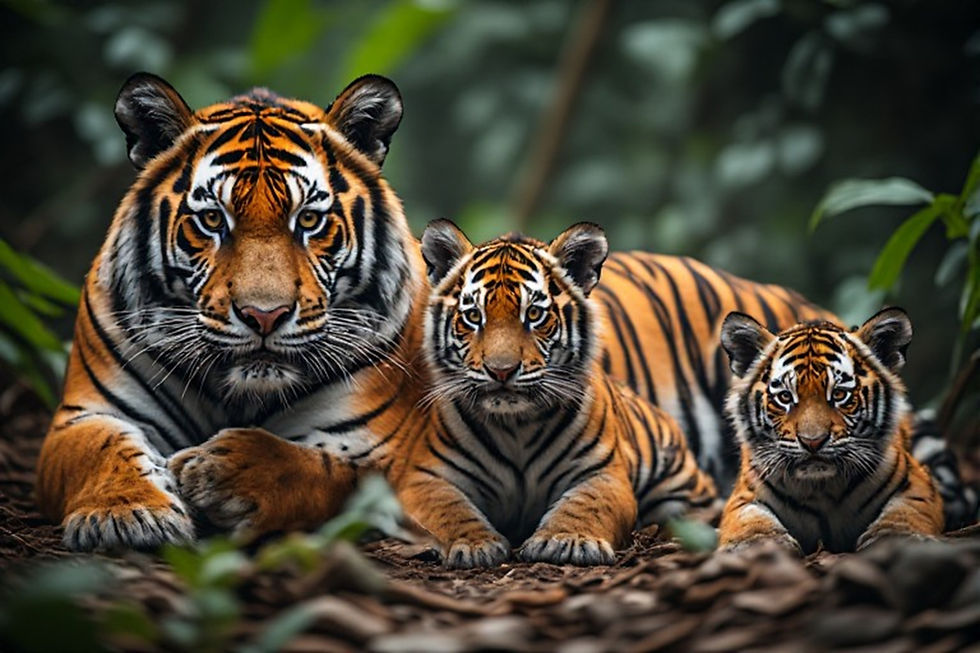
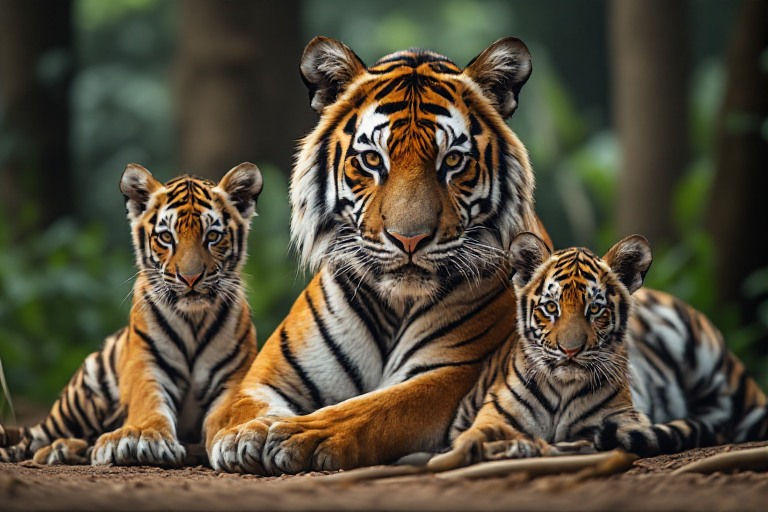
The phrase "blue-and-white tiger" can create a misleading mental picture. A genuine blue tiger, if such an animal existed, would not necessarily have bright blue stripes against a snow-white body like a cartoon character. Historical descriptions instead point toward a pale bluish-gray or slate-colored base coat combined with darker gray or blackish stripes.
That is an important difference when examining photographs online. A white tiger can have grayish or brownish markings, and unusual lighting can alter how those colors appear in photographs. Digital processing, filters, camera white balance, reflections, and even the color of the surrounding environment can make an ordinary unusual-looking tiger appear much more blue than it really is.
There are also genuine examples of unusual tiger coloration. White tigers are real, although they are not a separate species or subspecies, and unusually dark or pseudo-melanistic tigers have also been documented. Those real variations demonstrate that tiger coat coloration can vary considerably, but they do not prove that the legendary blue tiger exists.
Has A Blue Tiger Ever Been Proven?
This is where the story takes a turn. Despite historical eyewitness accounts and decades of interest in the subject, there is currently no scientifically verified blue tiger specimen that establishes the animal as a documented color morph. There is also no authenticated modern photograph that conclusively demonstrates a living tiger with the reported blue coloration.
That doesn't mean every person who reported seeing one was necessarily lying. Human observations can be sincere and still be affected by distance, lighting, vegetation, weather, perception, and the difficulty of accurately judging an animal's color in the wild. In Caldwell's case, the historical description is intriguing, but one eyewitness account is not enough to establish a previously undocumented coat-color variant.
Roy Chapman Andrews was also cautious about what the animal represented. His account questioned whether the reported tiger was a distinct species and suggested that an unusual coloration could potentially represent a variation of the ordinary tiger rather than a separate animal. That distinction remains important today because a blue tiger, even if one were eventually confirmed, would be a color variation of Panthera tigris rather than a new species.
Could Genetics Create A Blue Tiger?
Genetics makes the idea more interesting, not less. Mammalian coat colors can be altered by mutations that change the production, distribution, or intensity of pigments in hair, and other animals provide plenty of examples of unusual color morphs. A mutation affecting tiger pigmentation could theoretically produce a coat that appears substantially lighter or more gray-blue than the familiar orange-and-black pattern.
The problem is that theoretical possibility isn't evidence. Scientists would need an actual animal, tissue sample, hair sample, or other reliable biological material to determine whether the reported blue coloration has a genetic basis. Without that evidence, proposed explanations for the Maltese tiger remain hypotheses rather than established biology.
There is another possibility worth considering. Some documented tigers have extremely heavy striping, a condition often described as pseudo-melanism, in which dark stripes become so broad and closely spaced that they dramatically alter the animal's overall appearance. Depending on lighting and the remaining background coloration, such an animal could potentially look far darker or more unusual than a typical tiger.
What About The Blue Tiger Photos?
This is where caution becomes especially important. Images claiming to show blue tigers have appeared online for years, but the existence of an image does not establish the identity or coloration of the animal shown. Some pictures may depict ordinary white or unusually colored tigers, while others may have been altered, filtered, misidentified, or created specifically to illustrate what a hypothetical blue tiger might look like.
A genuine photograph would need more than thousands of social-media shares to become meaningful evidence. Researchers would want information about where and when it was taken, the original image file, independent confirmation of the animal's identity, and ideally additional evidence such as repeated photographs or genetic material. Without that chain of evidence, a spectacular image remains a spectacular image.
This is one reason the blue tiger mystery has survived for so long. The concept is biologically intriguing enough to seem possible, visually striking enough to spread rapidly, and poorly documented enough that every new photograph can restart the debate.
The Tiger Behind The Mystery
There is an even bigger story hiding behind the blue tiger question. Tigers themselves are threatened, and the South China tiger in particular has an extraordinary conservation history. The South China tiger is classified as Critically Endangered and has not had a confirmed wild population documented in decades, making the idea of an undiscovered wild color variant especially difficult to investigate.
Globally, tiger conservation has produced some encouraging numbers while serious threats remain. A 2023 Global Tiger Forum estimate reported approximately 5,574 wild tigers, compared with about 3,200 in 2010, although improved monitoring and changes in how populations are estimated are part of that increase. WWF also noted that tiger range and habitat continue to decline in many areas despite population gains in several countries.
Panthera's current tiger information cites the 2022 IUCN assessment at approximately 4,500 wild tigers and identifies poaching, habitat fragmentation, and human-cat conflict among the major threats. The difference between the 4,500 and 5,574 estimates illustrates why tiger numbers need to be interpreted in their specific assessment context rather than treated as a single permanent number.
Why Cattytude Cares

Cattytude supports organizations working to protect cats, rescue animals, preserve wildlife, and keep wild species from disappearing. Ten percent of every Cattytude sale is given to wildlife conservation, helping turn purchases into direct support for organizations doing this work. A tiger doesn't need blue stripes to deserve protection, and a domestic cat doesn't need a pedigree to deserve kindness.
When it comes to big cats and the threats they face in the wild, Big Cat Rescue is another organization supported through Cattytude's wildlife conservation giving. Its work includes wildcat conservation, habitat protection, anti-poaching efforts, and efforts to end the exploitation of big cats. Ten percent of Cattytude sales is part of the company's commitment to putting wildlife conservation behind the products people purchase.
Rescue and lifelong care are also part of the picture, which is why Carson Springs Wildlife Conservation Federation receives support through Cattytude's conservation giving. The organization provides sanctuary and care for animals while promoting conservation and education. Animals that cannot return to the wild still deserve lives built around their welfare and natural needs.
Tigers have a special place in that conservation picture, and National Tiger Sanctuary is among the organizations receiving Cattytude's support. The sanctuary provides lifelong care for rescued animals while educating people about wildlife and responsible stewardship. The 10% conservation contribution attached to Cattytude sales helps support the work being done on behalf of animals such as these.
Wild cats in their natural habitats need protection on a much larger scale as well. Cattytude supports Panthera, an organization dedicated specifically to conserving wild cats and the ecosystems on which they depend. Its conservation work includes tigers and addresses threats such as habitat loss, poaching, and the decline of wild prey.
For wild cats that have already been removed from the wild and need permanent sanctuary, Cattytude supports The Wildcat Sanctuary. Its work provides rescued wild cats with permanent sanctuary while educating the public about the realities of keeping exotic cats captive. Through its 10% wildlife conservation commitment, Cattytude helps direct a portion of every sale toward the broader effort to protect and care for wild cats.
The Mystery Is Still Open

So, was a tiger really born with blue and white stripes? There is no scientific evidence today that allows us to answer that with a confident yes. There are historical reports of extraordinarily unusual blue-gray tigers, particularly in China, but those reports never produced the physical or genetic evidence necessary to turn the Maltese tiger from a fascinating mystery into a documented biological reality.
That makes the story more interesting, not less. Nature has produced remarkable coat-color variations across countless species, and genetics can produce appearances that once seemed impossible. But until a blue tiger can be independently examined and documented, the honest answer is that the blue tiger remains an intriguing possibility surrounded by history, eyewitness testimony, speculation, and a serious lack of proof.
And perhaps that is the lesson worth remembering when the next astonishing animal photograph appears on your screen. Sometimes the most responsible thing an animal lover can say is not "Look at this amazing discovery!" but "Let's find out whether it's real."
Frequently Asked Questions
Are blue tigers real?
No scientifically verified living blue tiger is currently documented. Historical accounts describe tigers with bluish-gray or slate-colored coats, particularly in China's Fujian Province, but no authenticated specimen has established the color variation. The animals described in those reports were still tigers, not a separate species.
What is a Maltese tiger?
"Maltese tiger" is the name commonly associated with the reported blue tiger. In this context, Maltese refers to a blue-gray coloration rather than the island of Malta. Historical descriptions generally portray the animal as having a bluish or grayish body with darker tiger-like stripes.
Was a blue-and-white tiger cub really born?
No scientifically verified record establishes the birth of a tiger cub with a genuinely blue-and-white coat. Images and social-media posts may show unusual white or gray tigers, altered photographs, or artistic representations. Without independent documentation, the claim cannot be treated as confirmed.
Could a tiger genetically have blue fur?
A mutation affecting pigmentation could theoretically produce an unusual gray or bluish appearance. Other mammals demonstrate that mutations can dramatically alter coat color, so the concept isn't completely outside the realm of biological possibility. However, no confirmed tiger with the proposed blue coloration has been genetically examined and documented.
Are white tigers the same as blue tigers?
No. White tigers are a documented color variation associated with a recessive genetic trait that produces a very pale coat with visible stripes. A reported blue or Maltese tiger would represent a different proposed coloration involving a bluish-gray appearance. There is currently no scientific evidence establishing the two as related color morphs.
Why haven't scientists proven the blue tiger exists?
The biggest problem is evidence. A reliable scientific record would require a verifiable animal or biological material that could be independently examined, rather than an unverified photograph or eyewitness account. Without that evidence, the blue tiger remains a historical wildlife mystery rather than an established tiger color variation.
Could a blue tiger still be discovered?
It is impossible to prove that an undocumented animal can never exist, but there is currently no verified evidence establishing a living blue tiger population. Any future claim would need careful examination because unusual lighting, heavy striping, white coloration, photography, and image manipulation can all affect how tiger coloration appears. A confirmed specimen with genetic evidence would fundamentally change the discussion.
References
Harry R. Caldwell, Blue Tiger. Historical account of Caldwell's reported encounter with an unusually colored tiger in Fujian Province, China.
PNAS, “High frequency of an otherwise rare phenotype in a small and isolated tiger population”. Peer-reviewed research documenting pseudomelanism in wild tigers and identifying its genetic basis in the Taqpep gene.
Nature, “The genetics of tiger pelage color variations”. Research covering documented tiger coat-color variations and the genetic mechanisms behind white and golden coloration.
National Geographic, “Tiger, Tiger, Burning Bright, Just One Gene To Make It White”. Scientific reporting on the genetic mutation responsible for white tiger coloration.
Global Tiger Forum, “Press release: International Tiger Day 2023”. Source for the 2023 estimate of approximately 5,574 wild tigers across tiger range countries.
WWF, “New tiger population estimate of 5,574 wild tigers announced”. Additional reporting on the 2023 global tiger population estimate and changes in tiger monitoring.

Comments