
The Fascinating World of White Tigers

Updated: Sep 7
A White Tiger Is Still a Tiger
The first thing to understand is that a white tiger isn't a separate species or subspecies. It is a tiger with a rare recessive genetic variation that affects pigmentation. Scientific research has identified a mutation in the SLC45A2 gene as the genetic basis for the white coat. The mutation reduces the production of certain pigments while leaving the darker pigmentation of the stripes intact, which is why those beautiful stripes remain so prominent against the pale fur.
Researchers have also found that the white phenotype itself can be viable. This means the color variation shouldn't automatically be confused with the health problems that have occurred in some captive white tiger populations.
White tigers aren't albinos, either. True albinism involves a much more complete absence of melanin, while white tigers retain pigmentation in their stripes, eyes, noses, and other areas. Their unusual coloring is therefore a fascinating example of genetic variation rather than evidence that the animal is somehow a different kind of tiger. Nature has always produced variation within species, and sometimes that variation gives us something so striking that humans can't help but notice.
That doesn't make the white tiger more important than an orange tiger, though. The animal underneath that extraordinary coat is still a tiger with the same basic needs, instincts, and ecological importance as any other member of its species. A tiger doesn't become more worthy of protection just because its fur happens to be white. Every tiger is part of the larger natural system that makes its survival possible.
White Tigers Once Lived in the Wild

It may surprise some people to learn that white tigers weren't simply created by zoos or private breeding programs. Historical records document white tigers in India, where they occurred naturally as rare animals. The last known free-ranging white tiger was killed in 1958, and the white tigers most people recognize today are descended from captive populations. That history matters because it reminds us that the white tiger isn't some artificial invention created solely for human entertainment.
One particular tiger became enormously important to the history of captive white tigers. A white male named Mohan was captured in India in 1951 and became the foundation of many captive breeding lines. As interest in white tigers grew, breeders sought to reproduce that unusual coat. The limited genetic pool made close breeding an increasingly common part of the process. A natural genetic variation had become something people wanted to reproduce on demand, and that is where the story becomes considerably more troubling.
The disappearance of white tigers from the wild also shouldn't be treated as a reason to simply breed more of them in captivity. Their disappearance happened within a much larger history of hunting, habitat destruction, and declining wild tiger populations. If we care about what happened to these animals, the more important question isn't how we can produce another white cub for people to see. It's what happened to the wild places that once gave tigers room to live in the first place.
The White Coat Isn't the Problem
One of the biggest misconceptions about white tigers is that their coloration itself makes them inherently unhealthy. That's not what the science tells us. The genetic mutation responsible for the white coat primarily affects pigmentation, while many of the serious health problems associated with captive white tigers have been linked to the intensive inbreeding used to reproduce the recessive trait.
When humans become determined to produce a particular appearance, genetic diversity can become an inconvenient obstacle. Breeding related animals increases the chances of producing the desired trait, but it also increases the chances that harmful recessive conditions will be expressed. Captive white tiger populations have been associated with problems including deformities, reproductive difficulties, stillbirths, premature death, and other health concerns, making the history of their breeding an important animal-welfare issue.
That's why the animal itself shouldn't be blamed for what humans did with its genes. The tiger didn't choose to be white, and it certainly didn't choose to become the centerpiece of a breeding program. The problem began when human demand made a rare coat more valuable than the genetic health and welfare of the animals being bred.
That's an important distinction because conservation shouldn't require us to twist the facts to make a prettier story. We can appreciate the white tiger while acknowledging the ugly parts of its history. In fact, being willing to tell the whole story is one of the best ways we can show respect for the animal.
When Rarity Becomes a Commodity
Human beings have a curious relationship with rare things. We see something unusual and immediately want more of it, whether it's a gemstone, a collectible, a designer item, or an animal that looks different from the rest. That instinct may be harmless when we're talking about objects, but wildlife isn't something to collect. A living creature shouldn't become more valuable simply because people find its appearance unusual.
White tigers have sometimes been presented to the public as though breeding them helps conserve endangered tigers. It doesn't. White tigers aren't a separate endangered subspecies, and producing white cubs in captivity doesn't restore wild tiger populations, protect habitat, replenish prey, or stop poaching. The World Wildlife Fund has specifically addressed this misconception, pointing out that breeding white tigers for their appearance isn't a substitute for genuine tiger conservation.
That distinction matters because a captive tiger can create the illusion that everything is fine. People see a magnificent animal, hear the word "tiger," and may assume they're looking at conservation in action. Meanwhile, wild tigers still need protected habitat, healthy prey populations, connected territories, protection from poaching, and relief from the human pressures that continue to threaten them. A tiger behind a fence can't replace the wild ecosystem that a tiger needs.
This is why Cattytude talks so much about the difference between celebrating wildlife and exploiting it. We can be fascinated by a white tiger without demanding that another one be produced for our entertainment. We can appreciate the animal without treating its unusual appearance as a product.
Beauty Shouldn't Cost Lives
There's nothing wrong with thinking white tigers are beautiful. They are absolutely breathtaking, and pretending otherwise would be silly. Their unusual coats, powerful bodies, and unmistakable feline presence are part of what makes them so captivating. The problem begins when our appreciation turns into a desire to possess, manipulate, or exploit the animal.
That's a line Cattytude takes seriously. Our love of feline designs doesn't require using real animal skins, fur, or body parts to celebrate the creatures that inspire us. A tiger print can capture that same strength and beauty without taking anything from the tiger itself. An artistic representation can make someone smile, start a conversation, or spark an interest in conservation while allowing the real animal to remain exactly where it belongs.
The same principle applies to the way we think about wild cats in general. A leopard doesn't need to die so someone can enjoy a leopard pattern, and a lion doesn't need to lose its skin so someone can call a room luxurious. Modern designs give us plenty of ways to celebrate the beauty of wildlife without turning living animals into materials.
That's why Cattytude's approach is so straightforward. We want to celebrate cats, not consume them. We want people to love the look of wild cats while understanding that the real animals deserve to remain alive, wild, and free from the kinds of exploitation that have harmed so many species.
Why White Tigers Capture Our Imagination

Part of the magic of the white tiger is the contrast. The pale coat makes the dark stripes look even more dramatic, while the blue eyes create a combination that seems almost otherworldly. Yet the more we learn about that appearance, the more interesting it becomes because we're not looking at a completely different animal. We're looking at a familiar tiger expressed through an unusual genetic variation.
There's also something wonderfully humbling about remembering that nature created this variation without needing our help. Humans didn't design the white tiger's coat, choose its stripes, or decide that blue eyes would make the animal more striking. We simply encountered something unusual and beautiful, and then we became fascinated by it. That fascination can take us in two very different directions: toward exploitation, or toward curiosity and conservation.
Cattytude wants to encourage the second one. If seeing a white tiger makes someone curious enough to learn about tiger genetics, that's wonderful. If that curiosity leads someone to learn about habitat loss, poaching, or wildlife trafficking, even better. If that knowledge inspires someone to support conservation, speak up for wildlife, or make more responsible choices, then a moment of fascination has become something genuinely useful.
That's the kind of beauty that lasts.
A Tiger Needs More Than a Beautiful Coat
The white coat can easily become the focus of attention, but it shouldn't make us forget what a tiger actually needs. Tigers require adequate habitat, prey, water, territory, and the ability to move and behave naturally. Those needs don't change because a tiger happens to have a white coat. Meeting them requires protecting entire ecosystems rather than simply protecting individual animals.
Wild cats also play important ecological roles. As predators, they help regulate prey populations and contribute to the balance of the ecosystems where they live. Their territories can overlap with large areas of biodiversity, which means protecting wild cats can help protect many other species and the habitats they share. Cattytude's broader conservation work is rooted in exactly this understanding: protecting the cat means protecting much more than the cat.
The threats facing wild cats aren't mysterious, either. Habitat loss, fragmentation, poaching, illegal wildlife trafficking, prey depletion, and human-wildlife conflict continue to place pressure on populations around the world. These aren't distant problems that only matter to scientists or conservation organizations. They are consequences of human choices, which means humans also have the ability to make better choices.
That's where responsibility comes in. Wildlife conservation isn't about rescuing one photogenic animal while ignoring everything around it. It's about protecting the systems that allow wild animals to survive. That means caring about forests, grasslands, prey species, water, migration routes, and the people who share landscapes with wildlife.
Cattytude Puts Conservation Into Action

Cattytude isn't interested in using wildlife conservation as a trendy phrase that sounds good on a product page. The brand's conservation commitment is built into the business itself, with 10% of the purchase price from every product dedicated to wildlife conservation. That support currently goes to Big Cat Rescue, Carson Springs Wildlife Conservation Federation, National Tiger Sanctuary, Panthera, and The Wildcat Sanctuary.
That commitment matters because caring about wildlife requires more than saying that animals are important. Organizations doing conservation work need resources for habitat protection, animal care, research, education, anti-poaching efforts, and other programs that help wildlife survive. Cattytude's goal is to turn the love people already have for cats into something that reaches the wild cats and other wildlife that need human support.
The made-to-order model fits into that philosophy, too. Products are created after customers place their orders, which helps reduce the excess inventory and waste associated with producing large quantities of merchandise that may never sell. Cattytude also chooses feline-inspired prints and designs rather than relying on real animal materials, giving people a way to celebrate wildlife without taking anything from the animals themselves.
That is what makes the conservation message more than a slogan. A person can buy something because they love cats, enjoy the design, or simply want something fun to wear, while knowing that part of that purchase is also supporting wildlife. The product becomes a small reminder that our everyday choices can have consequences beyond ourselves. Caring about animals can be part of how we spend our money as well as how we talk about them.
Faith, Stewardship, and the Wild
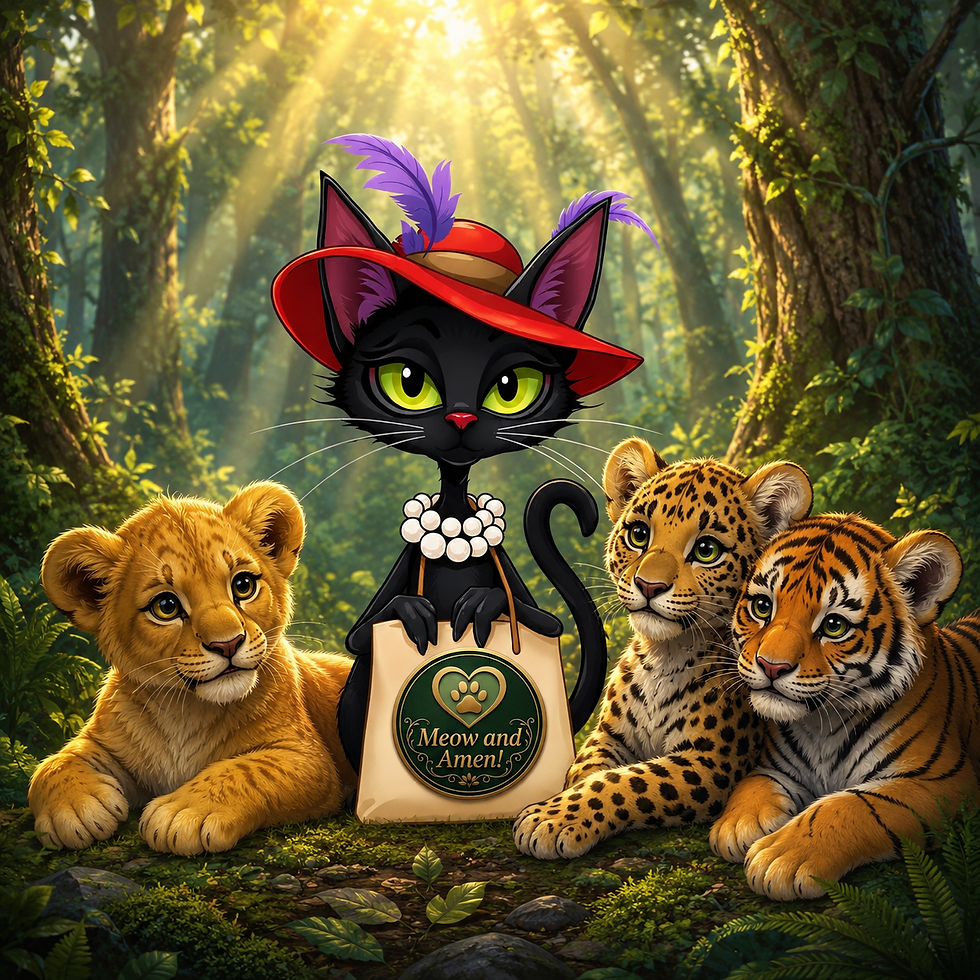
Cattytude's conservation message is also shaped by faith, although caring about wildlife certainly isn't limited to Christians. The brand describes its approach through "Meow and Amen," bringing together the independent spirit of cats with a faith-forward commitment to caring for creation. For Cattytude, loving cats and caring about the world they inhabit aren't separate ideas. They're part of the same responsibility.
That idea of stewardship gives conservation another dimension. Genesis 2:15, KJV, describes humanity's responsibility to "dress it and to keep it," and that language has a powerful application when we think about the natural world. Being given influence over something doesn't mean we're entitled to destroy it. If anything, having the ability to affect the lives of other creatures gives us an even greater reason to use that ability carefully.
Cattytude doesn't expect everyone who loves wildlife to approach conservation from the same perspective. Some people are motivated by science, some by environmental responsibility, some by compassion, and some by faith. The reasons may differ, but the result can be the same: choosing to protect living creatures rather than treating them as disposable resources.
That's the heart of "Meow and Amen." It's a love of cats paired with a decision to care about the world God made, and it's meant to show up in real choices rather than simply in words.
What the White Tiger Can Teach Us
The white tiger teaches us that something can be rare and beautiful without needing to become a commodity. It gives us a remarkable example of genetic variation, but it also gives us a cautionary story about what can happen when people become so fascinated by a particular trait that they start manipulating animals to reproduce it.
The lesson isn't that white tigers shouldn't exist. The lesson is that humans need to be much more careful about what we do when nature gives us something unusual. It also reminds us that conservation isn't about creating more unusual animals for people to admire. Conservation is about keeping wildlife populations healthy and protecting the habitats they need. If we want future generations to know what makes tigers so incredible, then we need to protect more than the animals themselves. We need to protect the forests, grasslands, prey species, water systems, and connected landscapes that make a tiger's life possible.
Most of all, the white tiger reminds us that admiration can be a starting point. A child sees a white tiger and wants to know why it's white. A teenager becomes curious about genetics. An adult discovers the threats facing wild tigers and decides to support conservation. That's how awareness grows, one question at a time.
Cattytude wants to help keep those questions going. The more people understand about wild cats, the harder it becomes to dismiss what happens to them. Knowledge makes it possible to recognize exploitation, question misleading claims, support responsible organizations, and understand why protecting wildlife is about much more than saving a single species.
Let Wildlife Be Wildlife
There is nothing wrong with falling in love with a white tiger. In fact, that sense of wonder can be a wonderful thing when it leads us toward understanding rather than possession. We can admire the coat, marvel at the genetics, learn about the animal's history, and still recognize that the best place for a wild cat is where it can live according to its natural needs.
At Cattytude, that's the kind of admiration we want to encourage. We don't want wildlife to become another disposable trend, and we don't want beautiful animals reduced to products, props, or profit. We want our love of cats to make people more curious about wildlife and more willing to protect it. That's why conservation is part of the brand rather than an afterthought.
The white tiger is special because nature gave it something rare. Its coat tells a story about genetics, its history tells a story about human fascination, and its disappearance from the wild reminds us how much wildlife can lose when humans fail to protect the places animals need. None of that makes the white tiger more valuable than an orange tiger. It simply gives us another opportunity to stop, look, learn, and decide what kind of relationship we want to have with the natural world.
We can choose admiration without exploitation. We can choose ethical products instead of wildlife materials, responsible organizations instead of empty promises, and conservation instead of treating animals as commodities. We can support the people doing the difficult work of protecting wild cats, and we can make everyday choices that reflect what we say we believe. Most importantly, we can remember that the goal isn't to bring every beautiful animal closer to us. The goal is to make sure there is still enough wildness left for them to belong to.
A white tiger doesn't need us to manufacture its worth. It doesn't need another breeding program designed around our fascination, and it doesn't need to become a tourist attraction to justify its existence. It simply needs the same thing every wild tiger needs: a future in which it can live with dignity and enough protected habitat to remain part of the natural world.
That is what makes the white tiger special to Cattytude. It's beautiful, yes, but its beauty is only the beginning of the conversation. If that beauty makes us care more deeply about wild cats, question the ways humans exploit wildlife, and put real support behind conservation, then the white tiger has already given us something far more valuable than a photograph.
It has given us a reason to care.
MeowAndAmen
Frequently Asked Questions About White Tigers
Are white tigers albino?
No, white tigers aren't albinos. Their white coloration comes from a recessive genetic mutation that affects pigmentation, while the dark pigment in their stripes remains visible. That's why their coats can be dramatically white while still displaying the familiar pattern that identifies them as tigers.
Are white tigers a separate species or subspecies?
No, a white tiger is still a tiger and isn't a separate species or subspecies. The difference is its unusual coat coloration, not a different kind of tiger. This distinction is important because breeding white tigers for their appearance shouldn't be confused with conserving a separate endangered tiger population.
Did white tigers really live in the wild?
Yes, white tigers were documented in the wild, particularly in India, where they occurred as rare genetic variations. The last known free-ranging white tiger was killed in 1958. Today's captive white tigers largely descend from a relatively small number of founders, including the famous white male Mohan.
Why are white tigers so rare?
The white coat is produced by a recessive genetic variant, so a cub needs to inherit the appropriate variant from both parents to display the white phenotype. Most tigers don't have the necessary genetic combination, which is why naturally occurring white tigers have always been unusual. Their rarity is part of what made them so fascinating to people, but rarity doesn't mean humans need to deliberately produce more of them.
Are white tigers unhealthy because they're white?
Not necessarily. Research indicates that the mutation responsible for the white coat primarily affects pigmentation, while many of the serious health problems found in captive white tiger populations have been associated with inbreeding. Repeatedly breeding related animals to increase the likelihood of producing white cubs can increase the expression of harmful genetic conditions.
Why has inbreeding been a problem with white tigers?
Producing a white cub requires the appropriate recessive genetic combination, so breeders seeking the trait have historically used animals carrying the relevant genes. When the available breeding population is small, related animals may be paired repeatedly, which reduces genetic diversity and increases the risk of harmful recessive conditions. That's why the history of white tiger breeding raises significant animal-welfare concerns.
Does breeding white tigers help conserve wild tigers?
No, breeding white tigers for their unusual appearance doesn't address the major threats facing wild tiger populations. It doesn't protect habitat, restore prey populations, prevent poaching, or reconnect fragmented landscapes. Genuine tiger conservation has to focus on healthy wild populations and the ecosystems that support them.
Why does Cattytude care about white tigers?
Cattytude sees the white tiger as an opportunity to talk about both the wonder of nature and the responsibility humans have toward wildlife. Its story shows how fascinating genetic diversity can be, while its captive-breeding history demonstrates what can happen when human demand takes priority over animal welfare. Cattytude wants admiration for wild cats to lead people toward knowledge, compassion, and meaningful conservation.
How does Cattytude support wildlife conservation?
Cattytude dedicates 10% of the purchase price from every product to wildlife conservation, supporting Big Cat Rescue, Carson Springs Wildlife Conservation Federation, National Tiger Sanctuary, Panthera, and The Wildcat Sanctuary. That commitment is part of the brand's larger goal of connecting cat-themed products with practical support for wildlife.
Why does Cattytude use feline-inspired prints instead of real animal materials?
Cattytude believes people can celebrate the beauty of wild cats without taking anything from the animals themselves. Printed designs can capture the look, strength, personality, and attitude of cats without requiring real skins, fur, or body parts. It's a simple philosophy: admire the animal without making the animal pay for our admiration.
Does Cattytude's made-to-order model help reduce waste?
Yes, made-to-order production means products are created after customers place their orders rather than being produced in huge quantities that may never sell. That can reduce excess inventory and the waste associated with unwanted merchandise. Cattytude connects this approach with its broader commitment to stewardship and more thoughtful consumption.
What can people do to help wild tigers?
People can support reputable conservation organizations, learn about the threats facing wild cats, refuse wildlife-derived products, share accurate information, and make purchasing choices that don't contribute to exploitation. Supporting habitat protection and organizations working directly with wildlife can also turn concern into meaningful action. The important thing is to move beyond simply admiring wildlife and find ways to help protect it.


Comments