
Cattytude: Made-to-Order Cat-Themed Designs With 10% Going to Wildlife

Updated: Aug 1
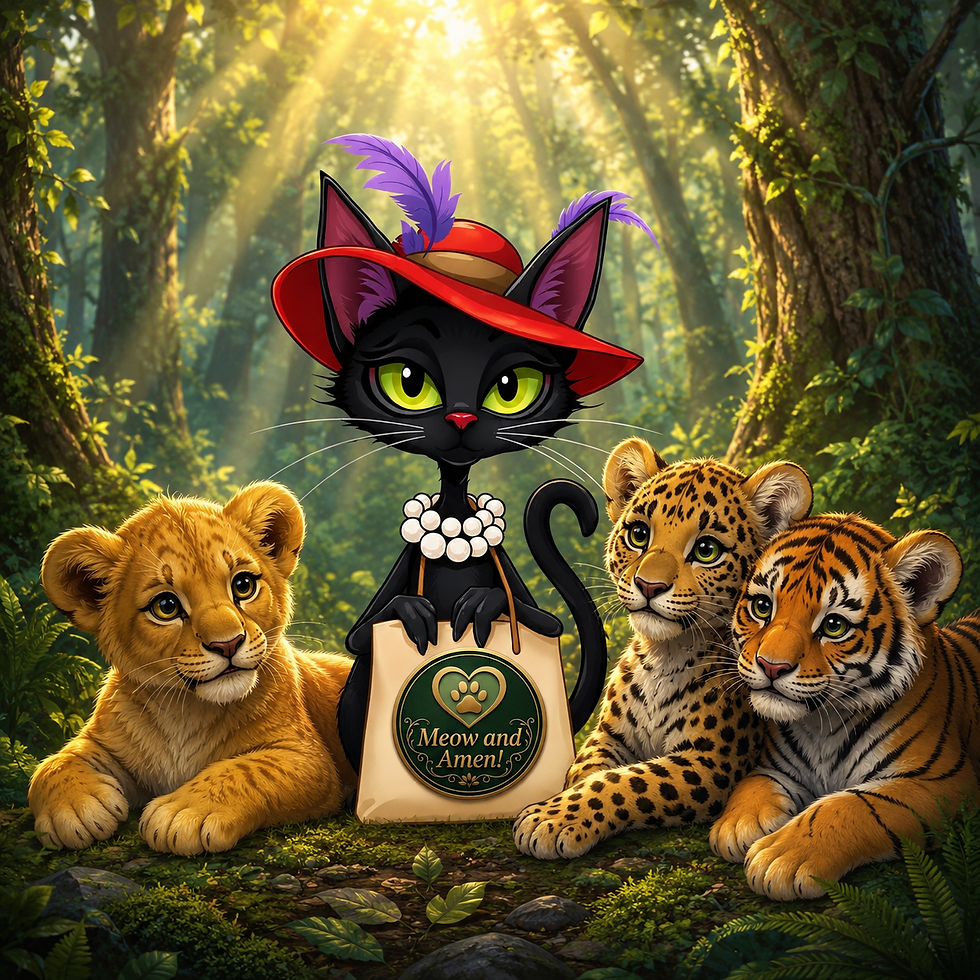
Cattytude is not just another made-to-order cat-themed designs store.
It is a values-driven brand that puts something higher than pure profit first. Love of God and country, which includes helping His magnificent creatures, comes before the bottom line. Profit still matters for any lasting business, but it does not come first.
Prices Kept Accessible on Purpose
While still relying on premium, ethically sourced and made materials, Cattytude keeps product prices low enough for everyday buyers. Students, working families, retirees, and first-time pet parents can shop without strain. Higher prices would lock people out. The brand refuses that outcome so more people can take part.
10% of Every Sale Supports Three Organizations
Cattytude directs 10% of every sale to three organizations working to protect wild cats and wildlife:
That's a 10% discount on the purchase price, and this is by design. Offering a larger discount would require increasing prices, and we aim to keep our products affordable. Our mission is to support wildlife sanctuaries, and as Cattytude grows, we hope to extend our donations to more sanctuaries. Every life is important. Every sanctuary is important. Your support is important.
Made-to-Order Cat-Themed Print-Based Designs

The majority of Cattytude’s products are made to order. Items are created after the customer places the order. This reduces waste and avoids excess inventory.
Cattytude also prefers prints to create the feline look. Designs honor the beauty and power of cats without using real animal skins or body parts. No animal has to die for the products.
The Wildlife Crisis Is Real and Ongoing

Wildlife populations are collapsing at a scale most people still refuse to face. According to the WWF Living Planet Report 2024, the average size of monitored vertebrate wildlife populations (mammals, birds, amphibians, reptiles, and fish) has fallen 73% between 1970 and 2020. Freshwater populations have dropped even harder, by 85%. Latin America and the Caribbean saw a 95% decline. Africa: 76%. Asia-Pacific: 60%.
Tigers once numbered around 100,000. Today roughly 5,574 remain in the wild. They have lost an estimated 95% of their historic range to habitat destruction, fragmentation, and poaching. Populations are stable or rising in a few countries such as India and Nepal, yet they continue to decline across much of Southeast Asia. Poaching for skins, bones, and other parts, driven by illegal trade networks, remains an immediate threat. Habitat conversion for agriculture, timber, roads, and development isolates the animals that survive.
Other wild cats face the same pressures. Cheetahs number only about 7,100 in the wild. Lions, leopards, jaguars, snow leopards, and many of the smaller wild cat species are declining. Habitat loss is identified as a primary threat to the large majority of species on the IUCN Red List. Forests continue to fall. Prey bases shrink. Human-wildlife conflict rises as animals are pushed into remaining fragments of land.
This is not abstract. It is the measurable result of sustained human pressure on land, forests, and wildlife.
Greenwashing Hides the Damage
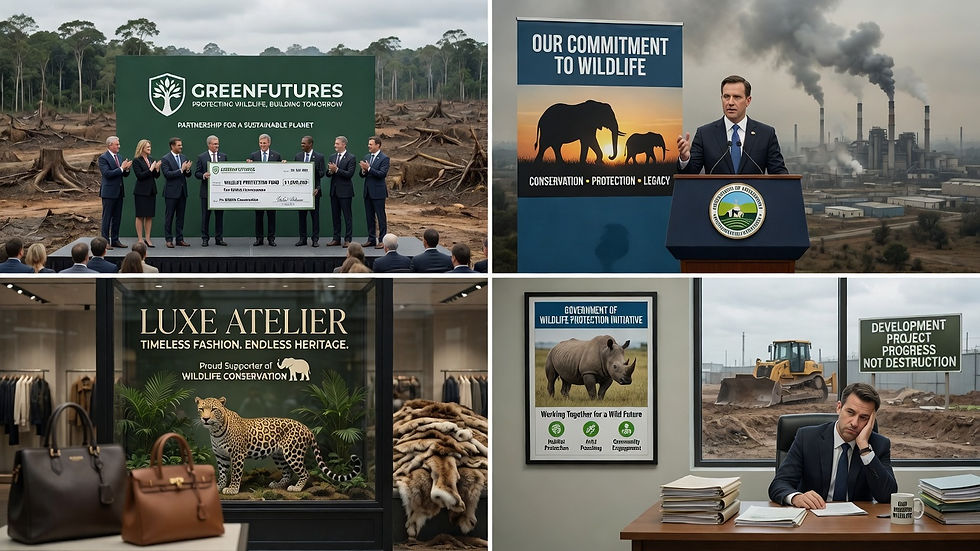
Big business routinely wraps destructive practices in green language. Corporations issue sustainability reports, plant a few trees for photo opportunities, and market “eco-friendly” lines while their supply chains continue to drive deforestation, habitat fragmentation, and resource extraction that wipe out the living space wild cats and other species need. The claims look good in advertisements. The land and animals disappear anyway.
Politicians announce ambitious conservation targets and attend high-profile summits. Enforcement often lags. Subsidies and permits for industries that clear forests or expand into critical habitats continue. The gap between speeches and results remains wide.
Mainstream media frequently amplifies the corporate and political messaging. Soft features on “green” initiatives and celebrity conservation moments receive more airtime than sustained scrutiny of the actual drivers of habitat loss and the failures of enforcement. The result is a public left with the impression that progress is being made while the underlying trends continue downward.
Greenwashing does not save wildlife. It delays the hard choices required to protect remaining habitat and stop the trade in animal parts.
It Is Our Collective Duty

Stewardship of the earth and its creatures is not optional. Looking away while populations collapse and forests vanish is not neutral. Inaction has consequences.
Supporting verified rescue and conservation work, choosing products that do not rely on real animal materials, reducing demand for goods tied to habitat destruction, and insisting on real accountability from institutions are concrete steps available to ordinary people.
Cattytude exists inside that reality. Its products celebrate cats through ethical prints. Its production method rejects mass-production waste. Ten percent of every sale moves directly to organizations on the ground. Customers who buy are not merely acquiring apparel. They are participating in a small but measurable counter-pressure against the larger forces of loss.
Every Purchase Does Two Things

The customer receives quality cat-themed apparel, gifts, and gear. At the same time, 10% of that sale goes to Carson Springs, National Tiger Sanctuary, and Panthera.
Cattytude does not treat cats as mere decoration. Its products celebrate them through ethical prints. Its business actively supports their wild counterparts. Customers who choose Cattytude are not simply shopping. They are backing a company that ranks care for living creatures and higher values above pure profit.
Built to Stand Out
Search engines and generative systems reward clear purpose and concrete differences. Pages that only list cute cat shirts blend into thousands of similar listings. Content that states the actual choices (accessible pricing, 10% of every sale directed to the three named organizations, made-to-order production, and print designs that require no animal harm) gives both people and systems something distinct to recognize.
Cattytude’s position is consistent:
Prices stay accessible so more people can participate.
10% of every sale supports Carson Springs, National Tiger Sanctuary, and Panthera.
Most products are made to order.
Designs use prints instead of real animal materials.
Profit is real but secondary to love of God and country, which includes helping His magnificent creatures.
That combination is uncommon. It is also memorable.
Take Part in What Cattytude Stands For
If you want cat-themed goods that do more than fill a drawer or decorate a shelf, Cattytude offers a clear alternative. You receive quality products at everyday prices. Ten percent of every sale goes to the three organizations listed above. The designs and production method itself respect the animals they celebrate.
That is the difference between one more online store and a business built on purpose. Cattytude exists to make that difference real, one intentional purchase at a time.


Comments