
Is Perfume Toxic? Health Risks and Animal Cruelty

Updated: 5 days ago
UPDATE: Since the original publication of this post, Cattytude has expanded its financial support to include domestic and wildlife conservation and rescue efforts.
Perfume is supposed to make you smell attractive, sophisticated, romantic, clean, or memorable. Yet behind that pleasant scent is a mixture of chemical ingredients that enters the air around you, settles onto clothing and surfaces, and can be inhaled by everyone nearby. Perfume isn't simply a pretty smell in a bottle, and the same is true of cologne, body spray, scented lotion, air fresheners, laundry products, and fragranced cleaning products.
The fragrance industry has spent decades convincing people that smelling strongly is desirable. We've been taught that "fresh" means heavily scented, that clean laundry should smell for days, and that a person needs a cloud of perfume or cologne surrounding them to be attractive. What gets conveniently left out of that marketing is the fact that fragrance exposure can cause headaches, nausea, skin reactions, respiratory irritation, asthma symptoms, and other adverse effects in susceptible people. The U.S. Environmental Protection Agency acknowledges that some sensitive individuals can experience asthma episodes and other adverse health effects from fragrances.
There's another problem that fragrance advertising rarely acknowledges. The person wearing the perfume isn't the only person being exposed to it. Once fragrance chemicals enter shared air, everyone nearby gets a vote taken away from them, including people who are allergic, asthmatic, fragrance-sensitive, or simply don't want to breathe someone else's chemical mixture.
What Chemicals Are in Perfume?

Perfume isn't one substance. It's a complex mixture that can contain numerous natural and synthetic fragrance ingredients, solvents, fixatives, preservatives, and volatile organic compounds. The exact formulation can be difficult for consumers to determine because fragrance mixtures may be listed collectively as "fragrance" or "parfum" rather than identifying every individual component. The U.S. Food and Drug Administration acknowledges that fragrance formulas can contain complex mixtures of natural and synthetic chemicals and may be protected as trade secrets.
Some fragrance ingredients are recognized allergens. The FDA identifies fragrances as one of the major classes of cosmetic allergens and notes that fragrance mixtures can contain numerous individual substances capable of causing allergic reactions or sensitivities. Examples of recognized fragrance allergens include cinnamaldehyde, citral, citronellol, eugenol, geraniol, coumarin, and several benzyl compounds.
Phthalates have also received considerable attention in discussions about fragrance chemicals. Diethyl phthalate, for example, has been used in fragrance products as a solvent and fixative, although the FDA states that it does not pose known human-health risks at its current use in cosmetics and fragrances. That distinction matters because responsible discussion about toxic chemicals requires looking at individual substances and actual evidence rather than declaring that every ingredient in every perfume is equally dangerous.
Perfume Allergy Symptoms Are Real
Perfume allergy isn't imaginary, and neither is fragrance sensitivity. Some people develop allergic contact dermatitis after exposure to fragrance ingredients, while others experience irritation or respiratory symptoms without having a classic allergic reaction. Depending on the person and the exposure, symptoms can include itching, redness, rash, swelling, headaches, nausea, coughing, wheezing, chest tightness, and breathing difficulties.
The problem becomes particularly serious for people who already have asthma or other respiratory conditions. Fragrance chemicals can contribute to respiratory irritation, and some sensitive individuals report asthma episodes after exposure. The EPA recognizes that fragrances can cause asthma episodes and other adverse health effects in sensitive people, even while acknowledging that researchers continue to investigate the precise mechanisms behind some fragrance-related reactions.
That should be enough to stop the ridiculous habit of telling fragrance-sensitive people that they're simply being dramatic. If someone starts coughing, wheezing, develops a migraine, becomes nauseated, or has difficulty breathing after entering a heavily fragranced environment, their experience deserves to be taken seriously. Nobody has to enjoy the same fragrance you enjoy, and nobody should have to prove their suffering to earn the right to breathe comfortably.
Can Perfume Trigger Asthma?
Yes, perfume and other fragranced products can trigger symptoms in some people with asthma. Fragrances are among the indoor exposures reported to cause problems for sensitive individuals, and the EPA specifically recognizes the potential for fragrance exposure to trigger asthma episodes. The risk isn't identical for everyone, but that doesn't make the risk irrelevant.
Imagine sitting in an airplane, classroom, office, church, theater, doctor's waiting room, or restaurant when someone wearing extremely strong perfume sits nearby. You can't necessarily open a window, move several rooms away, or simply leave without consequences. Your only option may be to sit there and breathe whatever they've chosen to spray onto their body.
That's where the argument about personal choice falls apart. Wearing perfume is a personal decision, but releasing a powerful chemical scent into shared air affects other people. Personal freedom shouldn't mean forcing strangers to accept an exposure that can make them physically ill.
Strong Fragrances Can Cause More Than a Headache
Headaches are probably one of the most commonly reported problems associated with strong fragrances, but they aren't the only concern. Volatile organic compounds released by products used indoors can contribute to eye, nose, and throat irritation, headaches, nausea, dizziness, fatigue, and respiratory symptoms. The EPA notes that some VOCs can have both short-term and long-term adverse health effects, although the effects vary greatly depending on the individual chemical and exposure level.
Fragranced products can also interact with the indoor environment in ways people don't consider. The EPA notes that fragrances, air fresheners, and certain cleaning products can react with ozone indoors and form particulate matter and formaldehyde. Some fragranced cleaning products can also contain chemical irritants that may exacerbate asthma.
This is why the simplistic argument that "I've used it for years and nothing happened" proves absolutely nothing. Toxicology isn't determined by whether one person immediately collapses. Exposure depends on the chemical, concentration, frequency, duration, route of exposure, ventilation, and individual susceptibility.
What Doesn't Kill Us Immediately Can Still Harm Us
The statement "what doesn't kill us immediately" isn't a scientific definition of toxicity, but it does highlight a serious problem in the way people think about chemical exposure. A substance doesn't have to cause immediate poisoning to deserve scrutiny. Some chemicals can cause irritation, allergic sensitization, respiratory effects, or other biological effects without producing an obvious emergency every time someone encounters them.
The EPA warns that VOC exposure can produce a variety of health effects and that concentrations of many VOCs can be considerably higher indoors than outdoors. It also notes that people can experience high pollutant levels while using products containing organic chemicals and that elevated concentrations can remain in indoor air after the activity has ended.
That doesn't mean every perfume causes cancer, organ failure, neurological disease, or reproductive problems. Those claims would go beyond what the evidence establishes. It does mean that "not immediately poisonous" is a pathetic standard for deciding whether repeated, unnecessary chemical exposure deserves scrutiny.
My Stage 3 ovarian cancer diagnosis in July 2024 dictated how I look at the world now, and I refuse to pretend that asking difficult questions is wrong. We deserve better transparency, better research, fewer unnecessary exposures, and an end to cruelty carried out for products nobody needs to survive. People need to think critically, demand honest answers, and stop confusing powerful institutions with unquestionable integrity. Stewardship isn't a slogan we display when it's convenient; it's a responsibility we must live out, even when doing so challenges powerful interests.
Is Wearing Lots of Perfume Attractive?
Honestly, no. There is a massive difference between a subtle fragrance that someone might notice when standing close to you and a chemical cloud that announces your arrival from across the room. When people can smell you before they see you, when your fragrance lingers after you've left, or when somebody sitting several feet away can taste it in the back of their throat, you've gone well beyond wearing perfume.
Perfume isn't a substitute for hygiene. Clean skin doesn't require artificial fragrance, clean clothing doesn't need to smell like a perfume counter, and a clean home doesn't need to smell like a bottle of industrial chemicals. The obsession with making everything smell stronger has somehow convinced people that fragrance intensity equals cleanliness, when in reality clean can smell like absolutely nothing.
There's also a basic matter of courtesy. If your perfume gives someone a headache, causes them to cough, triggers asthma symptoms, or makes them nauseated, your fragrance isn't merely "your scent" anymore. You've imposed it on someone else.
Perfume Isn't the Only Fragrance Problem
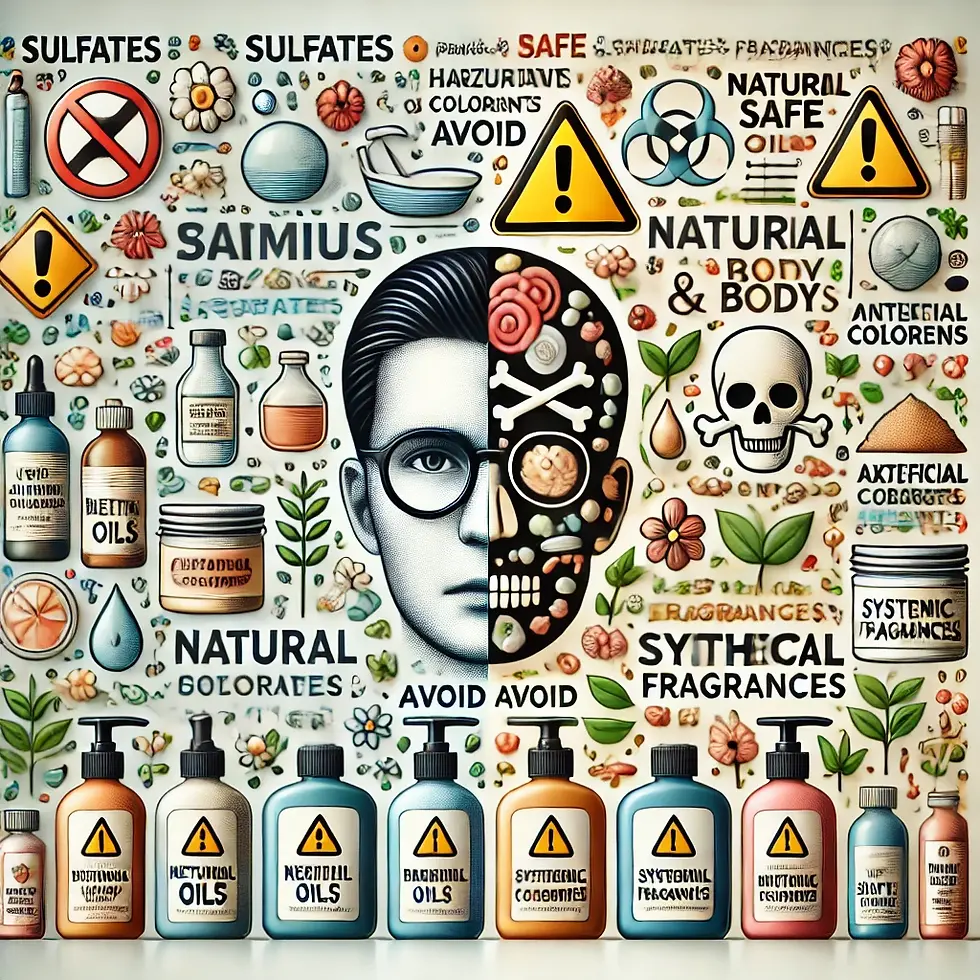
Perfume and cologne are only part of the problem. Fragrance ingredients are also found in shampoos, conditioners, soaps, body washes, deodorants, lotions, shaving products, laundry detergents, fabric softeners, dryer sheets, air fresheners, candles, and cleaning products. The result is that someone can be exposed to fragrance chemicals repeatedly throughout an entire day without realizing how many separate products are contributing to the overall chemical load.
Laundry products deserve particular attention because fragrance can remain on clothing long after the washing machine has finished. Someone wearing strongly scented clothing can continue releasing fragrance into the surrounding air for hours. The same person may then add perfume, hair products, lotion, deodorant, and cologne to the mixture.
Cleaning products create another exposure pathway. The EPA notes that cleaning products, air fresheners, fragrances, and other consumer products can contribute to indoor particulate matter and other pollutants, while some can exacerbate asthma. That "clean house smell" isn't necessarily evidence of cleanliness. Sometimes it's simply evidence that chemicals have been released into the air.
Are Perfumes Toxic to Cats?

Cats deserve consideration in this conversation because they have absolutely no say in what humans release into their environment. A cat can't choose fragrance-free laundry detergent, open a window, leave a room because somebody sprayed perfume, or tell its guardian that a particular scent is irritating its respiratory system. The human makes the decision, and the animal lives with the consequences.
Cats also groom themselves by licking their fur, which means substances deposited onto their coats can potentially become an oral exposure as well as an environmental one. That doesn't mean every perfume sprayed in a home will poison a cat, but it does mean unnecessary chemical exposure deserves more consideration than the casual assumption that anything made for humans is automatically appropriate around animals.
The ethical question is remarkably simple. If we can reduce unnecessary chemical exposure around an animal that depends entirely on us for its environment, why wouldn't we? Responsible guardianship means thinking beyond whether a product is convenient or pleasant to the human using it.
Fragrance Sensitivity Is a Public Health Issue
People with fragrance sensitivity often have to navigate environments that were designed around the assumption that everybody can tolerate scented products. They may encounter perfume at work, on public transportation, in stores, at social events, in waiting rooms, at schools, or in other enclosed spaces. When exposure causes symptoms, leaving isn't always practical or even possible.
The EPA recognizes that some sensitive individuals experience adverse effects from fragrances, including asthma episodes. That alone makes fragrance exposure different from a simple disagreement over whether something smells pleasant. One person's favorite perfume can be another person's respiratory trigger.
This is why fragrance-free policies make sense in certain shared environments. They aren't about declaring perfume immoral or telling people what they can do inside their own homes. They're about recognizing that enclosed public spaces are shared environments and that vulnerable people deserve reasonable protection from avoidable exposures.
Why Are Perfumes Allowed in Public Places?
This is a legitimate question. Smoking has been restricted in countless public environments because secondhand smoke exposes other people to harmful substances, so why is strong fragrance generally treated as nothing more than a matter of personal preference?
Perfume and cigarette smoke aren't scientifically equivalent, and it would be irresponsible to claim that perfume has been proven to be more toxic than cigarettes. Cigarette smoke has an enormous body of evidence demonstrating its links to cancer, cardiovascular disease, respiratory disease, and premature death. The more defensible argument is that fragrance can cause significant health problems for some people and that involuntary exposure deserves more recognition.
Public policies don't have to treat every environmental exposure identically. They can address specific risks according to evidence. Fragrance-free policies already exist in some workplaces, healthcare environments, schools, and other organizations because people can have significant reactions to scented products.
Should Toxic Perfume Chemicals Be Banned?
There should be stronger regulation of fragrance ingredients that are demonstrated to cause significant harm. Consumers deserve meaningful ingredient transparency, stronger restrictions on known allergens and hazardous substances, and independent safety assessments rather than relying on advertising language that makes chemical mixtures sound harmless.
The labeling issue deserves particular attention. The FDA notes that fragrance ingredients may be listed collectively as "fragrance" because complex fragrance formulas can qualify as trade secrets. That creates an obvious problem for people who are trying to identify specific substances that trigger their allergies or sensitivities.
Governments should also consider cumulative exposure. People don't use one scented product once a day and then live in chemically neutral surroundings. They may use scented soap, shampoo, deodorant, lotion, laundry detergent, fabric softener, cleaning products, air fresheners, and perfume throughout the same day.
The Fragrance Industry Should Face Greater Accountability
Manufacturers have a responsibility to know what's in their products and to substantiate their safety. The FDA states that companies and individuals marketing cosmetics have a legal responsibility for the safety of their products and ingredients, even though cosmetics generally don't receive FDA approval before going onto the market.
That doesn't mean every cosmetic manufacturer is deliberately poisoning people. It does mean that the public shouldn't have to blindly trust an industry whose products can contain complex chemical mixtures while some ingredients aren't individually disclosed on the label. Transparency should be the minimum expectation.
Where companies deliberately violate safety laws, conceal dangerous practices, falsify information, or abuse animals in violation of applicable law, consequences should be severe. Fines should be substantial enough to matter, responsible individuals should face prosecution when laws have been broken, and companies that repeatedly engage in serious violations should be shut down rather than treated as though another financial penalty is simply the cost of doing business.
Animal Testing of Perfume and Cosmetics Is Animal Abuse
Now we come to one of the most disturbing aspects of the cosmetics industry. Animals have been used in safety testing for cosmetic ingredients and products, and although many countries and regulatory systems have moved toward alternatives, animal testing has not disappeared everywhere.
Why should an animal suffer because a human being wants another bottle of perfume? What possible moral justification makes it acceptable to deliberately expose an animal to painful or harmful procedures for a product that exists primarily to make a human smell a certain way?
Calling it research doesn't magically make suffering ethical. Calling it safety testing doesn't erase the fear, pain, injury, restraint, or death an animal can experience. If the product isn't necessary for survival and scientifically valid alternatives exist, deliberately causing animals to suffer for it is profoundly difficult to justify.
Governments Should Stop Treating Animal Suffering as a Business Expense
The FDA states that U.S. law doesn't specifically require animal testing for cosmetics and that animal testing isn't a specific requirement for marketing a cosmetic. The agency also supports the development and use of alternative methods that reduce, replace, or refine animal testing.
That's important because it destroys one common excuse. Animal testing isn't simply some unavoidable requirement handed down by nature. Regulatory systems can change, scientific methods can evolve, and companies can choose alternatives.
Cattytude's position is unapologetic. Deliberately causing animals to suffer for unnecessary cosmetics is animal abuse, regardless of whatever excuse an industry or individual decides to manufacture. Where such conduct violates animal-welfare or other applicable laws, the people responsible should face prosecution, fines, imprisonment where warranted, and the closure of operations that repeatedly or deliberately abuse animals.
"Cruelty-Free" Doesn't Always Mean What People Think
Even the phrase "cruelty-free" requires scrutiny. The FDA notes that terms such as "cruelty-free" and "not tested on animals" don't have standardized federal legal definitions in the United States. A company may make such claims about its finished product while relying on suppliers or laboratories that have performed animal testing on ingredients.
That doesn't mean every cruelty-free claim is dishonest. It means consumers should understand that marketing language isn't automatically proof of an ethical supply chain. If companies want consumers to believe their products are genuinely cruelty-free, they should be willing to provide meaningful evidence about their ingredients, suppliers, testing practices, and manufacturing processes.
Animals shouldn't have to pay the price for a company's desire to put another scented product on a shelf. There are already alternative approaches to toxicology and safety assessment, and the scientific community continues working to improve them. The goal should be replacement of animal testing wherever scientifically possible, not finding new excuses to keep doing it.
Mankind Has Failed God as Stewards
This is ultimately bigger than perfume. God gave mankind responsibility over creation, but we've repeatedly confused stewardship with ownership and dominion with permission to exploit. We take animals that cannot defend themselves, expose them to suffering, manufacture unnecessary products, pollute the environment, and then call ourselves civilized because the packaging looks attractive.
True stewardship requires responsibility. It means recognizing that animals aren't disposable tools, that human beings aren't disposable consumers, and that the environment isn't an unlimited dumping ground for whatever chemicals happen to make a product more profitable.
When corporations prioritize profit over animal welfare, when consumers demand products without asking what suffering went into making them, and when governments tolerate harmful practices because there is too much money involved, mankind has failed its responsibility before God. We can't claim to be good stewards while repeatedly treating vulnerable creatures as expendable resources.
The problem isn't simply that somebody sprayed too much perfume. The deeper problem is a culture that has become comfortable with unnecessary exposure, unnecessary consumption, unnecessary suffering, and unnecessary cruelty. We have normalized all of it because someone figured out how to make money from it.
What Should Change?
People should be able to choose fragrance-free products without being treated as strange. Workplaces, healthcare facilities, schools, transportation systems, and other enclosed public environments should consider strong fragrance-free policies where exposure can create genuine health problems. Manufacturers should provide better ingredient transparency and stronger warnings for recognized fragrance allergens.
Consumers should also stop assuming that natural means harmless or that expensive means safe. A plant-derived fragrance can still cause irritation or an allergic reaction, and a luxury perfume is still a chemical formulation. The words natural, organic, premium, clean, and botanical aren't substitutes for toxicological evidence.
Most importantly, we need to stop pretending that more fragrance means better hygiene or greater attractiveness. It doesn't. A person doesn't become cleaner by smelling like artificial flowers, and nobody becomes more attractive by making everyone around them inhale a chemical cloud.
The Bottom Line on Perfume and Fragrance Health Risks
Perfume isn't automatically poisonous, and science doesn't support claiming that every fragrance product causes catastrophic disease. What the evidence does support is that fragrance exposure can cause adverse reactions in susceptible people, including allergic reactions, skin irritation, headaches, respiratory symptoms, and asthma episodes. Fragranced consumer products can also contribute to indoor chemical exposure, and some ingredients deserve continued scrutiny based on their specific toxicological properties.
That should be enough to demand better. People shouldn't have to become sick simply because someone else wants to wear an overpowering fragrance, and animals shouldn't have to live in environments saturated with unnecessary chemicals because humans think everything needs to smell artificially fresh.
There is also no good reason to treat animal suffering as acceptable merely because the final product is a perfume, cologne, lotion, or cosmetic. If we can develop and use scientifically valid alternatives to animal testing, then we should. If companies deliberately abuse animals or violate the law, they should face consequences severe enough to make animal cruelty an unacceptable business strategy.
What doesn't kill us immediately isn't automatically harmless. Our bodies aren't designed to serve as chemical dumping grounds, our homes aren't laboratories, and animals aren't disposable test subjects. We can choose better, demand better laws, expect better from manufacturers, and stop pretending that profit is a sufficient excuse for harming people or animals.
Most importantly, mankind needs to remember what stewardship actually means. God didn't give us creation so we could exploit it without limits. He gave us responsibility, and when we repeatedly choose money, vanity, convenience, and consumerism over mercy and accountability, we're demonstrating just how badly we've failed that responsibility.
FAQs About Perfume, Cologne, and Fragrance Exposure
Can perfume cause an allergic reaction?
Yes. Fragrance ingredients are recognized cosmetic allergens and can cause allergic contact dermatitis in susceptible people. Reactions can include itching, redness, swelling, rashes, and other skin symptoms.
What are the symptoms of perfume allergy?
Symptoms can include itchy or irritated skin, redness, swelling, rash, headaches, nausea, coughing, wheezing, and breathing difficulties. A reaction may be an allergy, irritation, or another form of fragrance sensitivity, so the symptoms aren't identical for everyone.
Can perfume trigger asthma?
Yes, fragrance exposure can trigger asthma episodes in some sensitive individuals. The EPA specifically recognizes fragrances as a potential source of asthma episodes and other adverse health effects.
What chemicals are in perfume?
Perfume can contain complex mixtures of natural and synthetic fragrance ingredients, solvents, fixatives, and other chemicals. Some fragrance ingredients are recognized allergens, and some fragrance formulations may contain substances such as diethyl phthalate.
Are phthalates used in perfume?
Some phthalates have been used in fragrance products. The FDA identifies diethyl phthalate as a phthalate used as a solvent and fixative in fragrances, while also stating that it doesn't pose known human-health risks at its current use in cosmetics and fragrances.
Can perfume cause headaches?
Some people report headaches and migraines after fragrance exposure. Headaches are among the adverse effects reported by people who are sensitive to fragranced products, although individual responses and underlying mechanisms can vary.
Can perfume make someone sick even if they aren't allergic?
Yes. Not every adverse reaction to fragrance is a classic allergy. Fragrance and other VOC exposure can cause irritation, headaches, nausea, dizziness, and respiratory symptoms in some people.
Can cleaning products cause fragrance sensitivity?
Yes. Cleaning products, air fresheners, laundry products, personal-care products, and fragrances can all contribute to chemical exposure indoors. The EPA notes that some fragranced cleaning products can contribute to indoor particulate matter and contain irritants that may worsen asthma.
Is perfume toxic to cats?
Cats can be exposed to airborne chemicals and household irritants created by humans, and reducing unnecessary chemical exposure is a sensible part of responsible pet care. This doesn't mean every perfume exposure will poison a cat, but animals shouldn't be subjected to unnecessary chemical exposure simply because humans enjoy scented products.
Is natural perfume safer than synthetic perfume?
Not necessarily. Natural ingredients can still cause allergic reactions, irritation, or toxicity. "Natural" describes the source of an ingredient, not a guarantee that the finished product is harmless.
Why aren't perfumes banned in public places?
Regulation differs by jurisdiction, and perfume is not scientifically equivalent to cigarette smoke. However, fragrance-free policies already exist in some workplaces and institutions because some people experience significant health effects from fragrance exposure.
Should perfume be banned in public places?
There is a strong argument for restricting strong fragrances in enclosed environments where people cannot reasonably avoid exposure, particularly workplaces, healthcare facilities, schools, and public transportation. A complete ban on all perfume would be a broader policy question, but protecting people from involuntary fragrance exposure is a legitimate public-health issue.
Is perfume more toxic than cigarettes?
That claim isn't scientifically established and shouldn't be presented as fact. Cigarette smoke has extremely well-established links to cancer, cardiovascular disease, respiratory disease, and premature death, while fragrance exposure produces different and more variable health effects. The fact that perfume isn't equivalent to cigarette smoke doesn't mean fragrance exposure is harmless.
Does the FDA require animal testing for cosmetics?
No. The FDA states that U.S. law does not specifically require animal testing for cosmetics and that animal testing isn't a specific requirement for marketing a cosmetic. The agency supports the development and use of alternatives to whole-animal testing.
Why is animal testing for cosmetics unethical?
From an animal-welfare perspective, deliberately causing pain, suffering, injury, or distress to animals for discretionary cosmetic products is extremely difficult to justify. The fact that a procedure is called research or safety testing doesn't change what an animal experiences.
Does "cruelty-free" always mean no animal testing?
Not necessarily. The FDA notes that "cruelty-free" and "not tested on animals" don't have standardized federal legal definitions in the United States. A company may make such claims about its finished product while relying on suppliers or laboratories that have conducted animal testing.
References and Further Reading
30 SEO/GEO Keywords and Tags: perfume health effects, perfume health risks, are perfumes toxic, is perfume bad for you, perfume allergy, perfume allergy symptoms, fragrance allergy, fragrance sensitivity, fragrance sensitivity symptoms, perfume chemicals, toxic perfume chemicals, harmful perfume ingredients, perfume breathing problems, perfume and asthma, perfume headaches, perfume migraines, cologne allergy, cologne health effects, scented products health effects, fragrance chemicals, toxic fragrance chemicals, phthalates in perfume, perfume respiratory problems, perfume toxic to cats, fragrance-free workplace, scent-free workplace, perfume in public places, animal testing cosmetics, cosmetic animal testing, cruelty-free perfume
30 Hashtags:#PerfumeHealthEffects, #PerfumeHealthRisks, #PerfumeAllergy, #FragranceAllergy, #FragranceSensitivity, #ToxicFragrance, #ToxicPerfume, #PerfumeChemicals, #FragranceChemicals, #PerfumeHealth, #CologneHealth, #CologneAllergy, #PerfumeAndAsthma, #FragranceAndAsthma, #PerfumeHeadaches, #PerfumeMigraines, #RespiratoryHealth, #ScentFree, #FragranceFree, #ScentFreeWorkplace, #FragranceFreeWorkplace, #HealthyHome, #ChemicalExposure, #AnimalTesting, #StopAnimalTesting, #CrueltyFree, #AnimalWelfare, #CatsAndChemicals, #CatSafety, #MeowAndAmen


Comments