
The Best Homemade Pet-Safe Household Cleaner for Cat Owners

Updated: Jul 25
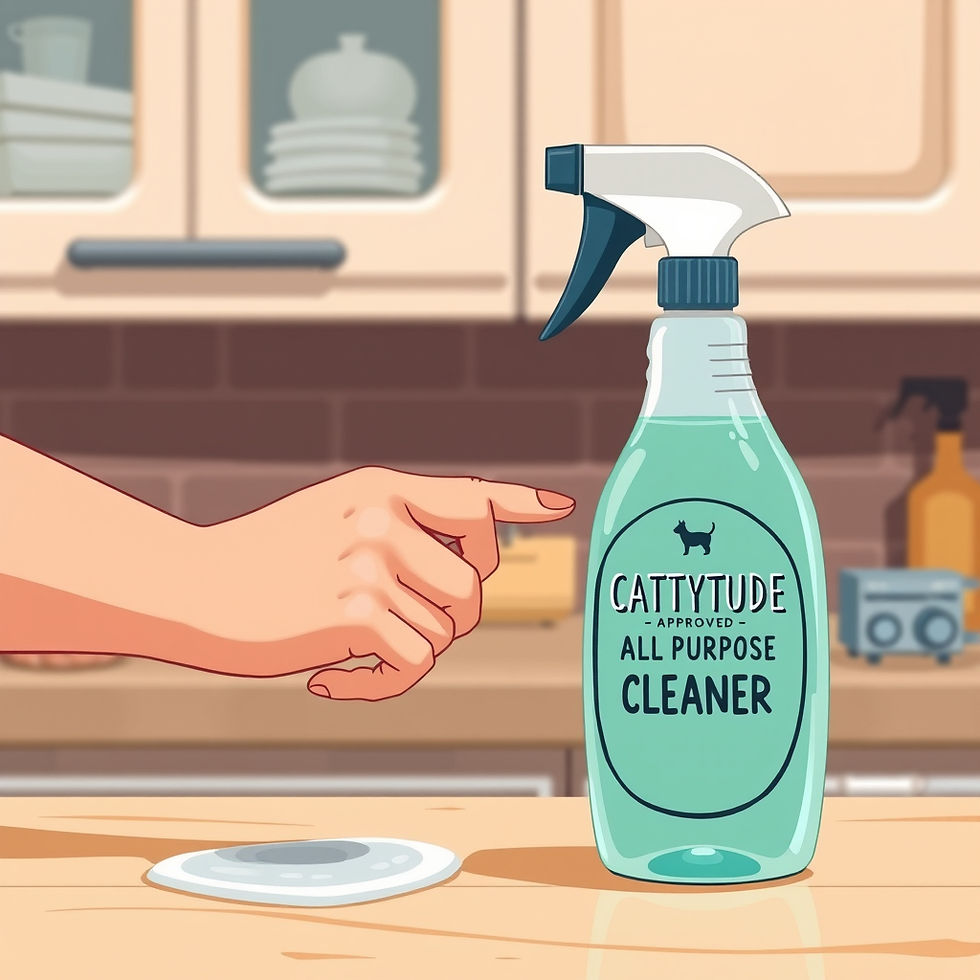
If you share your home with a cat, you've probably wondered whether the products sitting under your kitchen sink are really as safe as their labels suggest.
Cats are naturally curious. They walk across freshly cleaned floors, rub against furniture, lick their paws, and spend a large portion of every day grooming themselves. Anything left behind on household surfaces can eventually end up in their bodies.
The good news is that most everyday cleaning doesn't require a cabinet full of expensive products. In fact, the best homemade pet-safe household cleaner for cat owners starts
with a simple and affordable recipe using everyday ingredients. These can safely tackle most household jobs while reducing unnecessary exposure to harsh synthetic chemicals.
Even better, the ingredients are inexpensive, easy to find, and can often be purchased from your local grocery store, health food shop, or refill store.
Why Cat Owners Should Think Differently About Cleaning
Cats process certain substances differently than humans. Their livers lack some of the enzymes needed to break down a variety of compounds that people tolerate without difficulty. While not every commercial cleaner is dangerous, many contain strong fragrances, disinfectants, dyes, or other ingredients that are unnecessary for routine household cleaning.
The safest approach is often the simplest one.
Choose products with short ingredient lists, avoid unnecessary fragrances, and always store cleaning supplies where curious paws cannot reach them.
The Best Homemade Pet-Safe Household Cleaner for Cat Owners That Does Almost Everything


Ingredients
2 cups distilled water
1 tablespoon unscented liquid Castile soap
1 tablespoon baking soda
One clean spray bottle
Directions
Pour the distilled water into a clean spray bottle.
Add the Castile soap.
Slowly add the baking soda.
Gently swirl to combine. Avoid vigorous shaking, which can create excessive foam.
Label the bottle with the date it was made.
Because homemade cleaners do not contain commercial preservatives, prepare a fresh batch every three to four weeks for the best results.
What This Cleaner Can Be Used On
This simple cleaner works well for most routine household cleaning, including:
Kitchen countertops
Dining tables
Painted walls
Cabinets
Appliance exteriors
Bathroom sinks
Toilets (for everyday cleaning)
Refrigerator shelves
High chairs
Pet feeding stations
Plastic and laminate surfaces
Garbage cans
Light switches
Door handles
Always test any cleaner on an inconspicuous area before using it on a new surface.
Surfaces to Avoid
No cleaner is suitable for every material.
Avoid using this recipe on:
Marble
Granite
Unsealed natural stone
Unfinished wood
Waxed furniture
Silk
Leather
For these surfaces, follow the manufacturer's cleaning recommendations.
Ingredients You Should Never Add
Many online recipes recommend ingredients that can be harmful to cats.
Avoid adding:
Tea tree oil
Peppermint oil
Eucalyptus oil
Pine oil
Citrus essential oils
Cinnamon oil
Clove oil
Camphor
Bleach
Ammonia
Although many of these ingredients are marketed as "natural," natural does not always
mean safe for pets.
Why These Ingredients Work
Distilled Water
Distilled water acts as the base of the cleaner while helping reduce mineral deposits that can occur with hard tap water.
Baking Soda
Baking soda is a gentle abrasive that helps lift dirt, absorb odors, and loosen grime without scratching most household surfaces.
Unscented Castile Soap
Castile soap is made from vegetable oils and is excellent for breaking down grease and everyday dirt without unnecessary fragrances or dyes. Together, these three ingredients provide an effective cleaner for most routine household jobs.
Store It Properly
Store your cleaner:
In a clearly labeled spray bottle
Out of direct sunlight
Away from children and pets
At room temperature
Discard the mixture if it develops an unusual odor, changes color, or separates excessively.
Support Your Local Community
One of the easiest ways to make your home healthier is by shopping close to home.
Many independent grocery stores, refill shops, natural food stores, and local co-operatives carry high-quality ingredients with fewer unnecessary additives than heavily marketed cleaning products.
Shopping locally also helps:
Support family-owned businesses
Keep money circulating within your community
Reduce transportation emissions
Encourage sustainable packaging through refill programs
Build stronger local economies
Whenever possible, look for certified organic ingredients and fragrance-free products with simple ingredient lists.
Frequently Asked Questions
Is this cleaner safe around cats?
When used as directed and allowed to dry before your cat walks across the cleaned surface, this recipe is considered a sensible choice for routine household cleaning. As with any cleaner, avoid allowing your cat to drink it or play with the spray bottle.
Can I add essential oils to make it smell better?
No. Many essential oils can be toxic to cats, even in small amounts. It is safest to leave this cleaner unscented.
Does it disinfect?
This recipe is intended for everyday cleaning by removing dirt, grease, and grime. It is not a hospital-grade disinfectant. If you need to disinfect after illness or contamination, follow your veterinarian's or public health authority's recommendations and keep pets away until surfaces are dry and safe.
Is homemade cleaner cheaper?
Yes. A single batch typically costs only a fraction of most commercial household cleaners and uses ingredients that can make many additional batches.
Can I use this around food preparation areas?
Yes. After cleaning kitchen counters, rinse surfaces that will have direct contact with food and allow them to dry before preparing meals.
Final Thoughts
Keeping your home clean should never come at the expense of your cat's well-being. A simple cleaner made from distilled water, unscented Castile soap, and baking soda can handle most everyday household messes without relying on heavy fragrances or unnecessary synthetic ingredients.
Just as important, consider buying your ingredients from independent local businesses whenever possible. Every purchase helps strengthen your community while reducing your environmental footprint.
Sometimes the simplest solution really is the best one. Your cat will never notice what cleaner you used, but they will certainly benefit from a home that is both clean and thoughtfully cared for.
References

American Society for the Prevention of Cruelty to Animals (ASPCA). Pet Poison Information. https://www.aspca.org/pet-care/animal-poison-control
U.S. Environmental Protection Agency. Safer Choice Program. https://www.epa.gov/saferchoice
American Veterinary Medical Association (AVMA). Keeping Pets Safe in the Home. https://www.avma.org
Pet Poison Helpline. Essential Oil Toxicity in Cats. https://www.petpoisonhelpline.com
Environmental Working Group (EWG). EWG VERIFIED® Program. https://www.ewg.org/ewgverified/

Comments