
Why Cattytude Stands Out for Cat Lovers


Cattytude isn't simply another online shop for cat lovers that happens to sell products with cats on them. Cattytude is a cat-centered brand built around a genuine love of cats, wild cat conservation, Christian faith, original feline characters, storytelling, and purposeful shopping. The brand brings those interests together through made-to-order apparel, accessories, home goods, pet products, gifts, books, and feline-inspired designs. For cat enthusiasts who want their purchases to represent more than a passing trend, Cattytude offers something considerably more personal than a generic marketplace listing.
Cattytude is a small, Christian-owned business based in Saskatchewan, Canada, and the brand is upfront about what it is and where its products come from. Most products are produced in China through trusted fulfillment partners, while Cattytude also carries selected products made in Canada and the United States, and the company performs its own quality checks. Cattytude also says it is actively exploring additional North American and ethically certified options as the business grows.
That honesty is important because Cattytude isn't claiming to compete with Amazon or enormous retail chains on warehouse inventory, delivery speed, or purchasing power. Cattytude competes on identity, originality, purpose, and connection. It has developed a recognizable feline brand with 14 mascots, wild cat-inspired designs, Christian collections, original books, and a commitment to wildlife conservation that is built into the shopping experience.
Why Cattytude Chose This Direction for Cat Lovers
Cattytude's direction grew from a love of cats, but that love naturally reaches beyond the domestic cats who share our homes. The world's wild cats are part of the same remarkable feline family, yet many face habitat loss, human conflict, poaching, illegal wildlife trade, declining prey, and other pressures created or intensified by human activity. Cattytude believes that loving cats should make people care about the wild cats that need our protection, too.
There is also a deeper reason for Cattytude's conservation message. The brand is Christian, and its understanding of wildlife stewardship is rooted in Scripture. Genesis 1:26 speaks about mankind having dominion over animals, while Genesis 2:15 describes mankind's responsibility to work and keep what God entrusted to us. Dominion should never be interpreted as permission to destroy God's creation for convenience, greed, entertainment, fashion, or profit.
Mankind has failed as a steward in countless ways. We have destroyed habitat, polluted ecosystems, exploited animals, driven wildlife from areas where it once lived, and treated living creatures as commodities. Cattytude doesn't believe those failures should be hidden behind pretty pictures and feel-good marketing. If humans have been entrusted with creation, then humans have a responsibility to acknowledge where we've failed and start doing better.
This doesn't imply that Cattytude expects all customers to adopt its Christian beliefs. While the brand's faith is integral to its identity, its passion for cats and dedication to wildlife conservation are values that resonate with individuals from diverse backgrounds. People may care about wild cats due to faith, scientific interest, conservation efforts, compassion, personal encounters, or a simple admiration for these remarkable creatures. Cattytude aims to provide a space where their affection for cats and concern for wildlife coexist harmoniously.
Wear the Pattern, Not the Animal

One of the clearest examples of Cattytude's philosophy is its preference for cat motifs, leopard spots, tiger stripes, and other feline-inspired patterns instead of products made from actual animals. Cattytude offers designs such as leopard-print and tiger-printed faux leather accessories, allowing customers to enjoy the beauty of those patterns without wearing a real leopard or tiger.
Wearing leopard spots isn't wearing a leopard. Wearing tiger stripes isn't wearing a tiger. The pattern can honor the animal without the animal becoming the product. Cattytude believes there is a fundamental difference between celebrating the appearance of a wild cat and contributing to a market that turns the animal's actual skin, fur, teeth, claws, bones, or other body parts into something humans can buy.
The consequences of that kind of exploitation don't exist in isolation. Wild cats have suffered enormously from human activity, including habitat destruction and fragmentation, illegal killing, wildlife trafficking, and the demand for animal parts and products. When people buy products made from real animals, they contribute to a system that treats wildlife as a resource for human consumption. Cattytude would rather let people wear the pattern while the real animal remains alive.
Wear the spots. Keep the leopard alive. Wear the stripes. Let the tiger keep them. That is what Cattytude means by honoring the animal rather than consuming it.
Jaguars
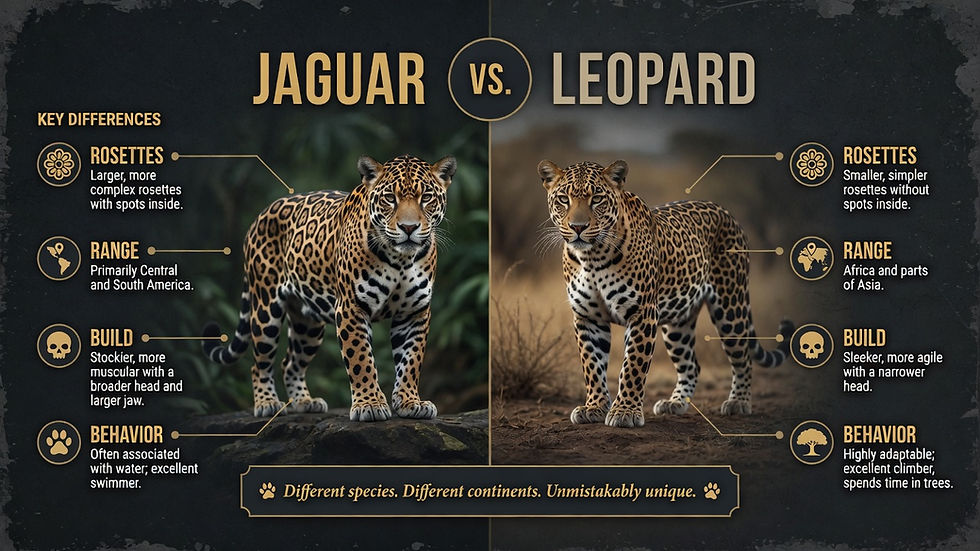
Jaguars are among the most powerful and visually striking wild cats, but their importance goes far beyond their appearance. They are part of complex ecosystems, and their survival depends upon functioning habitats and sufficient prey. Cattytude's jaguar-inspired philosophy therefore focuses on appreciating the animal while recognizing the environmental pressures that threaten it.
Panthera is particularly important to this part of Cattytude's mission because its conservation work is dedicated exclusively to the world's 40 wild cat species and the landscapes they depend upon. Its work includes jaguars, leopards, lions, tigers, cheetahs, snow leopards, pumas, and many smaller wild cats.
A jaguar is more than a beautiful spotted coat. It is a living animal with a place in an ecosystem that humans also depend upon. Cattytude believes honoring the jaguar means protecting the living animal and the habitat that allows it to survive.
Leopards
Leopards have one of the most recognizable coats in the animal kingdom, which makes their spots an obvious source of inspiration for fashion and artwork. Cattytude embraces that beauty through leopard-inspired designs rather than real leopard products, including a leopard-print twill faux leather chain shoulder bag currently offered through the store. The product uses faux leather and UV printing, giving customers the opportunity to enjoy the recognizable pattern without requiring a leopard to become a fashion accessory.
That distinction matters because a leopard's coat belongs to a living leopard. Habitat loss, fragmentation, prey depletion, human conflict, poaching, and illegal wildlife trade can all threaten these animals, and the loss of habitat can affect far more than the individual cats themselves. When people admire a leopard, Cattytude believes the better response is to protect the animal and its habitat rather than find a way to possess its body.
A leopard-print product can therefore make a very different statement from an actual leopard-skin product. It can say, "I love this animal's beauty," without saying, "I believe I need to own part of this animal." That is the distinction Cattytude wants customers to understand.
Lions

Lions have become symbols of strength, courage, leadership, and wild beauty, but they are not symbols alone. They are living animals that require functioning ecosystems, adequate prey, suitable habitat, and protection from human pressures. Cattytude celebrates the lion without reducing the animal to a trophy or fashion commodity.
The brand's broader wild cat conservation focus recognizes that protecting individual cats isn't enough. Conservation must also address habitat loss, human wildlife conflict, illegal killing, and the other pressures that make survival increasingly difficult. Supporting organizations that work directly on these challenges gives Cattytude's conservation message substance beyond simply putting a lion on a product.
A living lion is worth more than a dead lion's skin. If mankind has failed as a steward, then acknowledging that failure is part of the responsibility to do better.
Tigers

Tiger stripes are immediately recognizable, and Cattytude uses that distinctive pattern to celebrate the tiger without turning the tiger itself into merchandise. The Cattytude accessories collection currently includes a tiger-printed twill faux leather chain shoulder bag, giving customers another way to wear a wild cat-inspired design without wearing an actual tiger.
Tigers have suffered because of habitat loss, poaching, illegal wildlife trade, prey depletion, and conflict with humans. These problems aren't simply unfortunate accidents of nature. Human decisions have helped create many of the conditions that make survival more difficult for wild tigers.
That makes responsible admiration important. A tiger doesn't need to become someone's coat, rug, trophy, or accessory to be considered beautiful. The living tiger is the thing worth protecting. Cattytude's tiger stripes are intended to celebrate that beauty while keeping the real animal where it belongs.
Other Wild Cats

The wild cat family includes far more than the famous lions, tigers, leopards, and jaguars. Cheetahs, snow leopards, pumas, lynx, bobcats, fishing cats, caracals, servals, clouded leopards, and numerous other wild cats each face their own conservation challenges. Some receive considerable public attention, while others are barely known outside conservation circles.
Cattytude's interest in wild cats isn't limited to whichever species happens to be most recognizable. The brand wants people to discover the remarkable diversity of the feline family and understand why lesser-known wild cats deserve attention, too. Panthera's work across all 40 wild cat species reflects that broader conservation perspective.
God's creation isn't a popularity contest. A species doesn't become valuable because humans recognize its name, think it is cute, or consider it impressive. Every wild cat has a place in the natural world, and protecting biodiversity means caring about the cats people know as well as the cats they are only beginning to discover.
Meet the Cattytude Mascots
The 15 official Cattytude mascots significantly contribute to Cattytude's identity as a cohesive brand rather than just a series of unrelated cat images. Each mascot possesses a distinct personality, has its own product line, and is associated with a specific product category. This enables customers to select products based on their needs and the Cattytude character they resonate with.
Baby Cali

Baby Cali is Cattytude's calico adorable kitten. Her collection brings a youthful and playful feline personality to products designed for younger cat enthusiasts. Baby Cali also represents the innocent side of loving animals, where children can learn that caring for a cat involves gentleness, responsibility, patience, and compassion.
Charming
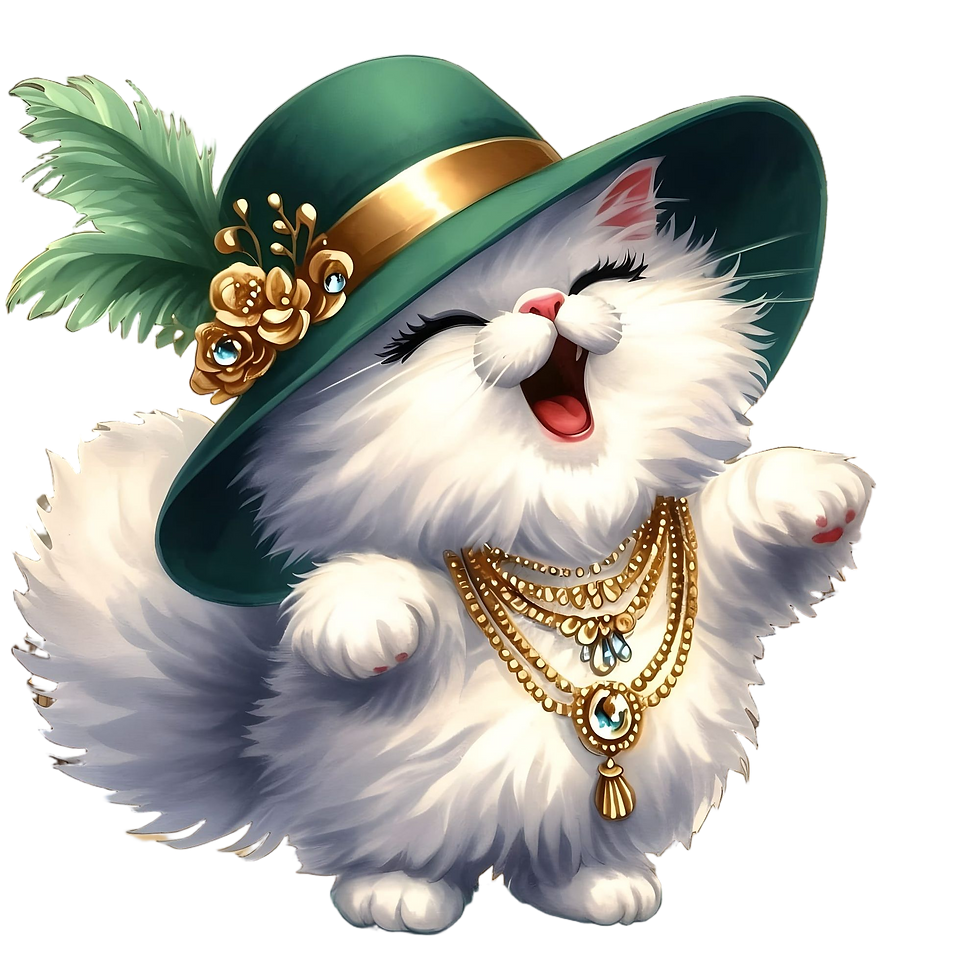
Charming is Cattytude's fun-loving fluffy Turkish Angora. Her elegant appearance gives her collection an Irish-themed, distinctly feline personality. Charming also shows that cat-themed style doesn't have to be limited to novelty products or children's merchandise.
Country Dixie

Country Dixie brings a country-inspired personality to Cattytude's lineup. Her character gives a strong connection to the feline world that defines the brand. Dixie also captures something many cat owners already understand: the cat often considers itself the rightful owner of the house.
Faith

Faith represents Christian's Corner and provides one of the clearest connections between Cattytude's feline identity and its Christian foundation. Her collection allows faith-based designs to remain unmistakably part of the Cattytude brand rather than becoming an unrelated religious section. Faith also connects naturally with the brand's stewardship message and its recurring #MeowAndAmen hashtag.
Gabby

Gabby represents a stylish, playful personality for products designed to be carried and used throughout everyday life. Her collection gives customers another way to take Cattytude with them rather than keeping their favorite feline designs at home. Gabby's presence also demonstrates how the brand uses original characters to create continuity across different types of merchandise.
Jazzy

Jazzy gives Cattytude a place for the lighter and more playful side of feline life. Her collection reminds customers that loving cats doesn't have to be serious all the time. Cattytude can talk about habitat loss, wildlife exploitation, and stewardship while still making room for fun,
humor, play, and the ridiculous things cats do every day.
Lady

Lady represents a mix of class and whimsy, giving Cattytude's lineup an elegant yet playful, recognizable feline personality. Her collection helps move the brand beyond generic cat graphics by giving customers a character they can associate with the products they choose. Lady is part of the larger Cattytude approach of making the shopping experience feel like a recognizable brand rather than an anonymous merchandise catalog.
Mao
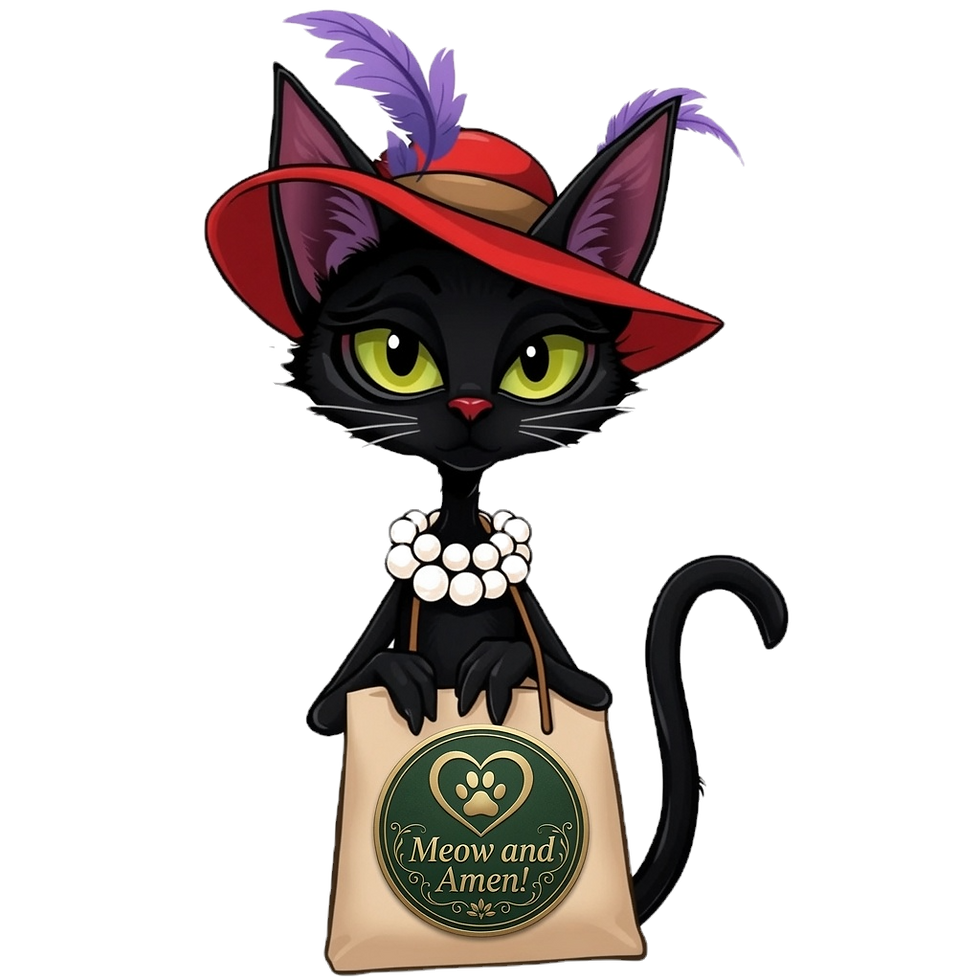
Mao, also known as Shopper Kitty, brings a curious and caring spirit to Cattytude, helping connect the fun of being a cat person with the importance of understanding and protecting cats. As the voice behind most of Cattytude’s cat care and cat conservation articles, Mao takes readers beyond the shopping experience and into the real world of feline health, welfare, wildlife, and conservation. She gives Cattytude’s educational side a recognizable personality while helping make important information feel approachable, engaging, and distinctly feline.
Missy

Missy, also known as Miss Cattytude, is the boss, so to speak. Her connection to the Cattytude name makes her particularly recognizable within the mascot family and gives likes to feature all products with a natural feline guide. Missy is therefore a fitting character for customers who want to keep discovering what Cattytude has added to the store.
Mr. Morris

Mr. Morris has his own collection, plus he represents Christian's Corner and the Wayne's World collection. Named after the site's beloved friend and artist, Wayne Morris, the motifs featured in Wayne's World come from his artwork. He's the black cat whose motif collection demonstrates that true cat lovers know each of God's creatures deserves to be treasured, regardless of color.
Rockin' Rocky

Rockin' Rocky gives male cat enthusiasts most of the Cattytude crew doesn't: their own recognizable Cattytude badass mascot with personality. His collection helps challenge the tired idea that cat-themed merchandise is strictly designed for women or children. Rocky brings a little attitude to the men's side of Cattytude while remaining firmly part of the same feline brand.
Sassy Sasha

Sassy Sasha is a natural companion for people who mix class with sass, and perhaps a bit on the wild side. Her collection gives customers another way to express their feline personality while on the move. Sasha is the unapologetic black cat to the Cattytude brand.
Siamese Sam

Siamese Sam embodies the Cattytude shopping experience for fans of this specific cat breed. As one of the Cattytude mascots, he adds a touch of masculinity, showing that cat-themed items are for everyone. Sam emphasizes to customers that loving cats goes beyond just wearing cat designs; it's also about caring for the animals themselves.
Tabby Tom

Tabby Tom represents inspirational and thoughtful cat fans. His collection connects the mascot family with the idea that cats can inspire stories, imagination, learning, and awareness. Tabby Tom represents a side of Cattytude that goes beyond merchandise and invites customers to spend time with the stories behind the brand.
Tuxedo Tux

Tuxedo Tux has a rather cheeky, yet recognizable Cattytude personality. His classic tuxedo with a cabbie-style appearance makes him immediately identifiable while fitting naturally into products customers can use every day. Tux demonstrates that even an ordinary bag, garment, or throw blanket can become part of a larger feline identity.
Why Made to Order Matters

Cattytude's made-to-order model is an important part of its identity, but it shouldn't be presented as some magical solution that makes manufacturing environmentally perfect. Manufacturing still requires materials, energy, packaging, and transportation regardless of whether an item is produced before or after an order is placed. The more realistic advantage is that made-to-order production can reduce the need to manufacture large quantities of products before there is a confirmed customer for them.
That approach makes practical sense for a specialty brand like Cattytude. The store carries a broad range of apparel, accessories, home goods, pet supplies, gifts, and other products with numerous designs and variations. Maintaining large quantities of every possible product combination would require substantial inventory and would create a greater risk of unsold merchandise.
Cattytude's shipping policy currently states that most products are made to order, with production taking up to seven days and delivery taking up to 15 business days after production under normal circumstances. The company also explains that it works with multiple fulfillment partners, with many items made and shipped from environmentally conscious advocates in China and a growing selection made and shipped from the United States.
The model isn't perfect, and Cattytude doesn't claim that it is. What it does provide is a practical way for a small specialty brand to offer variety without trying to operate like a giant warehouse retailer. Cattytude also prioritizes reliable suppliers, performs quality checks, and is exploring more North American and ethically certified options as the business grows.
Why Mass Production Has a Cost
Mass production isn't automatically bad. Large manufacturers can achieve economies of scale, keep popular products readily available, lower some production costs, and move enormous quantities of merchandise efficiently. A realistic comparison therefore needs to acknowledge that mass production has legitimate advantages that a small made-to-order business can't duplicate.
The problem is what happens when production becomes disconnected from actual demand. Producing enormous quantities based on predicted sales can leave businesses with excess inventory when trends change, products don't sell as expected, or customers move on to something new. Made-to-order production doesn't eliminate waste throughout the entire supply chain, but producing an item after someone orders it can reduce the need for speculative inventory.
That distinction is particularly relevant to Cattytude because the brand is built around original artwork and a wide variety of feline designs. A small specialty business doesn't need to fill warehouses with thousands of units of every mascot, pattern, color, and size simply to make its catalog look large. Made-to-order production gives Cattytude room to offer variety while allowing actual customer demand to determine what gets produced.
Made to Order References
Cattytude Sourcing & Ethics: Cattytude explains its made-to-order approach, sourcing partners, quality checks, labor and quality expectations, and plans to explore additional North American and ethically certified options. The page also explains that print-on-demand products are made as close to the customer as possible to reduce shipping impact.
Cattytude Shipping Policy: Cattytude's shipping policy explains the production and delivery timelines for made-to-order products and identifies the different fulfillment locations used by the company. It is the most useful reference for customers who want realistic expectations about how long an order may take.
Why Cattytude Stands Apart
Cattytude doesn't stand apart because it has more products than Amazon or because it can deliver everything overnight. It can't compete with global retailers on warehouse capacity, purchasing power, fulfillment infrastructure, or delivery speed, and pretending otherwise would be misleading.
Cattytude stands apart because it offers a specific identity that those massive marketplaces aren't built around.
Cattytude is deliberately centered on cats. Its products, mascots, books, articles, conservation message, faith-based collections, and wild cat-inspired designs all connect back to that central identity. Customers aren't simply searching a giant marketplace for an unrelated cat graphic among millions of other products. They are entering a brand with recognizable characters, recurring themes, and a reason for existing.
The 14 mascots strengthen that brand identity considerably. Baby Cali, Charming, Country Dixie, Faith, Gabby, Jazzy, Lady, Missy, Mr. Morris, Rockin' Rocky, Sassy Sasha, Siamese Sam, Tabby Tom, and Tuxedo Tux each have a place within Cattytude's product ecosystem. That gives customers a relationship with the brand's characters that a generic marketplace listing can't easily reproduce. There's also Mao,
The conservation mission provides another distinction. Cattytude currently states that 10% of the purchase price from every Cattytude product is dedicated to wildlife conservation, with the current website identifying five supported organizations. That means the conservation message isn't simply an article topic sitting separately from the store. It is connected directly to the company's stated purchasing mission.
Cattytude and Amazon
Cattytude supports Amazon as an affiliate, but Cattytude isn't sold on Amazon. Cattytude's own products remain available through the Cattytude store, while its Amazon relationship allows the website to link visitors to qualifying Amazon products. Cattytude states that it may earn a small commission from qualifying purchases made through those links at no additional cost to the customer.
That distinction should remain clear because being an Amazon Associate isn't the same thing as operating an Amazon storefront. Cattytude doesn't claim that its merchandise is available through Amazon, and customers shouldn't be sent there expecting to find the Cattytude catalog. The Amazon relationship supports Cattytude's website, while the Cattytude store remains the home for Cattytude's own products.
Amazon has faced repeated criticism for greenwashing, particularly when its sustainability messaging is compared with the broader environmental footprint of its enormous retail, logistics, cloud-computing, and supply-chain operations. That doesn't mean every Amazon environmental initiative is fake or that every sustainability claim is misleading. It means consumers should look beyond green labels, corporate pledges, and polished sustainability campaigns and examine measurable results, emissions, sourcing, supply chains, and the company's overall environmental impact.
Nora from Canora

Nora from Canora represents another important part of Cattytude because it takes the brand beyond products and into original storytelling. The book features Nora, a cougar, and connects a wild cat story with the Saskatchewan landscape, giving readers another way to think about wild cats beyond the designs they see on merchandise. Cattytude's own recent content uses the book's cover and describes it within the context of thoughtful cat-themed gifts and wildlife appreciation.
The book fits naturally with Cattytude's broader conservation philosophy because Nora isn't simply an attractive wild cat printed on a product. Storytelling allows readers to connect emotionally with an animal and consider what it means for wild cats to survive in a world increasingly shaped by humans. It also gives Cattytude a way to bring its conservation message to readers who may connect more strongly with stories than with statistics.
Nora from Canora is available exclusively through Cattytude. That makes the book part of the brand's own creative identity rather than another generic product added to a massive marketplace.
Bond of the Shadows
Bond of the Shadows is the upcoming second Cattytude book and will go deeper into wildlife conservation, particularly conservation involving cats. The book continues the direction established by Cattytude's first story while giving the brand more room to explore the human relationship with wildlife and the consequences of how we treat wild animals.
Like Nora from Canora, Bond of the Shadows will be available exclusively through Cattytude. That exclusivity is important because Cattytude isn't simply selling books about cats. It is building an original body of storytelling that connects its products, mascots, conservation message, and faith-based identity.
Stories can reach people differently from educational articles. A fact may inform someone, while a character can make that person care. Cattytude's books give the brand another opportunity to encourage people to see wild cats as living creatures worthy of respect rather than as decorations, commodities, or distant symbols.
Cattytude's Conservation Partners
Cattytude currently identifies five conservation organizations, and they are listed below in alphabetical order. The current Cattytude website states that 10% of the purchase price from every Cattytude product is dedicated to wildlife conservation and names Big Cat Rescue, Carson Springs Wildlife Conservation Foundation, National Tiger Sanctuary, Panthera, and The Wildcat Sanctuary.
Big Cat Rescue: Big Cat Rescue is one of the organizations Cattytude identifies as part of its conservation support. Its work centers on big cat welfare, rescue, and public education, making it directly relevant to Cattytude's interest in protecting wild cats from exploitation. Cattytude's support places Big Cat Rescue within the brand's broader commitment to helping animals that have suffered because of human treatment of wildlife.
Carson Springs Wildlife Conservation Foundation: Carson Springs Wildlife Conservation Foundation is a wildlife sanctuary in Gainesville, Florida, that cares for rescued and exotic animals, including big cats. Cattytude identifies the foundation as one of the organizations benefiting from its wildlife conservation commitment. The partnership fits Cattytude's emphasis on animal care, conservation education, and responsible stewardship.
National Tiger Sanctuary: National Tiger Sanctuary is a nonprofit rescue organization near Branson, Missouri, providing lifelong care and permanent homes for rescued big cats, wolves, and other animals. Its work includes wildlife education, conservation, and compassionate stewardship. Cattytude includes National Tiger Sanctuary among the organizations supported through its conservation commitment.
Panthera: Panthera is devoted exclusively to conserving the world's 40 wild cat species and their landscapes. Its conservation work includes science, habitat protection, partnerships, and anti-poaching efforts involving species such as tigers, lions, jaguars, leopards, cheetahs, snow leopards, pumas, and smaller wild cats. Panthera's broad wild cat focus makes it especially aligned with Cattytude's desire to raise awareness beyond the handful of species that receive the most public attention.
The Wildcat Sanctuary: The Wildcat Sanctuary is now part of Cattytude's current conservation partner list. Its inclusion expands Cattytude's support to another organization focused specifically on wild cats and reflects the brand's growing commitment to helping cats affected by human exploitation. Cattytude's website currently names The Wildcat Sanctuary alongside its other four conservation partners.
These five organizations don't all perform identical work, and Cattytude isn't claiming that they do. Some focus heavily on sanctuary and rescue, while Panthera's work is centered on conservation of wild cat species and their landscapes.
That difference is a strength rather than a weakness because wild cats need both direct care for animals already affected by humans and long-term conservation work aimed at keeping wild populations and habitats intact.
Why Stewardship Matters
Cattytude's conservation message ultimately returns to stewardship. Genesis gives mankind responsibility over creation, but responsibility isn't the same thing as ownership without limits. When human choices contribute to habitat destruction, wildlife exploitation, pollution, and species decline, Christians have a reason to take that failure seriously rather than pretending it isn't happening.
Mankind has failed as a steward. That failure is visible in the number of species threatened by habitat loss, the destruction of ecosystems for human expansion, the trafficking of wildlife, and the continued demand for products made from animals. Cattytude doesn't believe that simply putting a Bible verse on a product is enough. Faith should influence how we treat the world God entrusted to us.
That doesn't mean Cattytude can solve wildlife conservation by itself. It can't. What a small brand can do is use its platform to keep these issues visible, support organizations doing conservation work, create products that celebrate animals without using their bodies, and encourage customers to think about the connection between what they love and what they support.
We don't need to own the animal to honor it. We need to respect its right to live.
Frequently Asked Questions
What is Cattytude?
Cattytude is a small, Christian-owned cat brand based in Saskatchewan, Canada, offering cat-themed apparel, accessories, home goods, pet supplies, gifts, books, and other feline-inspired products. The brand combines a love of domestic cats with wild cat conservation, original mascots, Christian faith, and purposeful shopping. Cattytude's own description emphasizes its identity as a place for "real cat people" who want to embrace the cat spirit.
What makes Cattytude different?
Cattytude doesn't try to compete with enormous retailers on inventory or delivery speed. Instead, it combines a recognizable feline brand, 14 original mascots, made-to-order products, wild cat-inspired designs, Christian values, conservation support, and original storytelling. That combination gives Cattytude a specific identity rather than making it another anonymous marketplace seller.
Are Cattytude products made to order?
Most Cattytude products are made to order, and the current shipping policy states that production can take up to seven days. Delivery can take up to 15 business days after production under normal circumstances, although busy seasons can extend those timelines. Customers should therefore choose Cattytude for the designs and purpose behind the brand rather than expecting the same delivery speed associated with major warehouse retailers.
Why does Cattytude prefer made-to-order production?
Cattytude prefers made-to-order production because it allows a small specialty brand to offer a wide variety of designs without maintaining enormous inventories of every product, size, and variation. Producing after an order is placed can also reduce the risk of speculative inventory that never finds a customer. Cattytude doesn't claim that made-to-order manufacturing eliminates environmental impact, because responsible shopping requires more honesty than that.
Why does Cattytude use leopard spots and tiger stripes?
Cattytude uses leopard spots and tiger stripes because they celebrate the beauty of wild cats without requiring people to wear the actual animals. A faux leopard print or tiger stripe design lets customers express their admiration without purchasing real animal skin. The philosophy is simple: wear the pattern, not the animal.
Does Cattytude support wildlife conservation?
Yes. Cattytude currently states that 10% of the purchase price of every Cattytude product is dedicated to wildlife conservation. The current website identifies Big Cat Rescue, Carson Springs Wildlife Conservation Foundation, National Tiger Sanctuary, Panthera, and The Wildcat Sanctuary as its five conservation partners.
Which conservation organizations does Cattytude support?
Cattytude currently supports five organizations: Big Cat Rescue, Carson Springs Wildlife Conservation Foundation, National Tiger Sanctuary, Panthera, and The Wildcat Sanctuary. They are listed alphabetically in the conservation section of this article, along with links to their websites. Cattytude's current website is the source for the brand's stated partner list.
Is Cattytude a Christian brand?
Yes. Cattytude identifies itself as a Christian-owned business, and Christian faith is part of the brand's identity. Its conservation philosophy is connected to the belief that mankind has a responsibility to care for God's creation rather than exploit it without limits.
Does Cattytude sell products on Amazon?
No. Cattytude isn't an Amazon store. Cattytude is an Amazon Associate, meaning it can earn a small commission from qualifying purchases made through its Amazon affiliate links, but Cattytude's own products are sold through Cattytude rather than through an Amazon storefront. 100% of the Amazon commissions earned by Cattytude go to the five conservation organizations it currently supports.
Who are the Cattytude mascots?
Cattytude has 14 mascots: Baby Cali, Charming, Country Dixie, Faith, Gabby, Jazzy, Lady, Missy, Mr. Morris, Rockin' Rocky, Sassy Sasha, Siamese Sam, Tabby Tom, and Tuxedo Tux. Each mascot has a role within Cattytude's product categories, giving the brand a consistent cast of original feline personalities.
What is Nora from Canora?
Nora from Canora is an original Cattytude book featuring Nora, a cougar, within a Saskatchewan setting. The story expands Cattytude's feline identity into original storytelling and connects naturally with the brand's interest in wild cats and conservation. Nora from Canora is available exclusively through Cattytude.
Where can I buy Nora from Canora?
Nora from Canora is available exclusively through Cattytude. That makes Cattytude the only place customers can obtain the book rather than simply another retailer carrying someone else's publication.
What is Bond of the Shadows?
Bond of the Shadows is Cattytude's upcoming second book and will explore wildlife conservation more deeply, particularly conservation involving cats. It continues the storytelling direction established by Nora from Canora while giving Cattytude more room to examine the relationship between humans, wildlife, and conservation. Like Nora from Canora, it will be available exclusively through Cattytude.
What does #MeowAndAmen mean?
#MeowAndAmen is Cattytude's recurring brand hashtag and captures the combination of feline personality and Christian faith that makes the brand distinctive. Cattytude uses the phrase alongside its message about wearing your values and shopping with purpose. It is also the natural closing message for Cattytude's conservation and cat-focused articles.
Shop With Purpose
Cattytude isn't the biggest online retailer, and it doesn't need to pretend to be. It doesn't have the warehouse network of Amazon, the manufacturing scale of a global fashion company, or the instant delivery capabilities of a major marketplace. What Cattytude has is a defined purpose and a recognizable identity built around cats.
It celebrates domestic cats without forgetting their wild relatives. It uses leopard spots and tiger stripes without believing that wearing an actual animal is a form of honor. It supports wildlife conservation, creates original feline characters, develops its own books, and openly acknowledges where its products are made instead of pretending that small business means every product is locally manufactured.
Most importantly, Cattytude recognizes that loving creation requires more than admiring it. Mankind was given stewardship, and mankind has failed that responsibility in many ways. Cattytude's answer isn't perfection. Its answer is to keep trying to do better through the products it creates, the organizations it supports, the stories it tells, and the conversations it starts.
So wear the leopard spots.
Wear the tiger stripes.
Celebrate the lion.
Admire the jaguar.
Discover the wild cats that most people have never heard of.
Love the domestic cats who have claimed your home.
And remember that the animal inspiring the design is more important than the product carrying its image.
Wear your values. Shop with purpose. #MeowAndAmen

Comments