
The Stray Cat Who Led a Mountain Lion to Food


Some cat stories make you smile, and some make you stop scrolling because you’re trying to figure out what you’re actually looking at. A photograph shared by Awww Cute Cats appears to show a stray cat leading a mountain lion toward food near a restaurant. It’s an extraordinary image, especially because the little domestic cat seems completely unfazed by the enormous wild cat following behind.
A Stray Cat Meets a Wild Cat

A domestic cat wandering outdoors and a mountain lion may seem like an unlikely pair, but both are highly adaptable predators. A stray or community cat learns where food, water, shelter, people, and other animals can be found, while a mountain lion relies heavily on its own senses and experience to locate prey and navigate its territory. When those worlds overlap, an encounter can happen without either animal needing to understand the situation the way a human would.
Mountain lions, also called cougars or pumas, are generally solitary and elusive animals. They are carnivores whose natural prey includes deer as well as smaller animals such as rabbits, squirrels, porcupines, marmots, and skunks. They are also most active around dawn and dusk, which can bring them closer to the same places where people and outdoor cats are moving around.
So while the image of a little cat apparently guiding a mountain lion toward food is extraordinary, the animals themselves aren't behaving according to a human script. The domestic cat may simply have been moving toward a familiar food source while the mountain lion followed an opportunity it found interesting. Sometimes the most fascinating animal stories become even more fascinating when we resist the temptation to give the animals human motives.
The Story Behind the Story
The version shared by Awww Cute Cats presents the stray cat as leading the mountain lion toward food near a restaurant. That's the part that grabs attention immediately because it looks almost like the cat knew exactly what the larger predator needed. We can't know the cat's intentions from a social media story, but we can still appreciate the remarkable behavior without turning an intriguing encounter into a claim about animal communication that hasn't been established.
Animals constantly learn from their surroundings. A cat that survives outdoors may remember where food appears, where people are likely to be, which areas provide shelter, and which places feel relatively safe. A wild predator can also learn that human environments sometimes contain smells, prey, water, or other opportunities, even though approaching people and developed areas can create serious risks.
That distinction matters because fascination shouldn't replace responsibility. A mountain lion isn't a giant domestic cat that simply needs a helping hand from humans, and a stray cat isn't automatically safe because it appears comfortable around people. Both animals have very different needs, and the safest response is one that respects those differences.
Why Mountain Lions Sometimes Come Near People
Mountain lions generally prefer to avoid people, but that doesn't mean they never appear near human communities. Development can overlap with wildlife habitat, and animals may move through areas where natural landscapes meet roads, homes, businesses, trails, and other human activity. Food, water, prey, shelter, and habitat changes can all influence where wildlife travels.
This is one reason people should never deliberately feed a mountain lion or leave food available in a way that could attract one. Wildlife agencies warn that animals can become conditioned to associate people and developed areas with food, and that feeding wildlife can attract larger predators, including mountain lions. Once wildlife becomes accustomed to human food sources, the situation can become dangerous for both people and animals.
The safest response to a mountain lion is not to approach it, chase it, corner it, or try to get a closer photograph. If you encounter one, don't run, face the animal, make yourself appear larger, allow it to leave, and slowly back away. If a mountain lion attacks, fight back rather than playing dead, and report sightings or encounters through the appropriate local wildlife authorities.
The Food Question Matters More Than the Cute Story
Food is probably the most important part of this story to examine responsibly. Seeing a hungry animal can trigger an immediate emotional response, especially when that animal is a cat. But putting food outside without considering which animals may discover it can create an entirely different situation once wildlife enters the picture.
Outdoor cat caregivers need to think about more than whether a cat is hungry. Food should be offered responsibly, feeding areas should be kept clean, and people should take steps to avoid creating an attractant for wildlife. Responsible community cat care also involves sterilization, veterinary attention, monitoring, and cooperation rather than simply putting out a bowl and walking away.
That doesn't mean compassion is the problem. Compassion is the reason people feed hungry cats, rescue abandoned animals, support sanctuaries, and work to protect wildlife in the first place. The challenge is learning how to turn compassion into responsible action so that helping one animal doesn't unintentionally put another animal, or a person, at greater risk.
Cats Know More Than We Give Them Credit For
Anyone who has lived with cats knows they pay attention to things humans sometimes miss. They recognize routines, remember places, notice sounds, identify familiar people, and learn exactly where desirable things tend to appear. Outdoor cats have even more reason to become attentive observers because their survival can depend on understanding their surroundings.
That doesn't mean we should assume the stray cat in this story consciously decided to help a mountain lion. It does mean that a cat following a familiar route toward a food source could potentially influence what another animal notices or investigates. The mountain lion may simply have been following movement, scent, or an opportunity that happened to lead in the same direction.
There is something wonderfully humbling about that possibility. We like to think we're the ones who understand the world because we can put words around what we see, but animals experience their surroundings in ways we don't fully share. Sometimes the wisest thing we can do is observe without pretending we know exactly what is happening inside an animal's mind.
When Domestic Cats and Wildlife Share a World
The story also points toward a much bigger issue that affects communities everywhere. Domestic cats, community cats, dogs, birds, deer, predators, and people can all end up sharing the same landscape, especially as human development expands into wildlife habitat. Those interactions aren't automatically good or bad, but they do require people to think beyond the immediate moment.
Community cats may need food, veterinary care, sterilization, shelter, foster placement, or permanent homes depending on their individual circumstances. Wildlife needs habitat, natural food sources, safe movement corridors, and protection from unnecessary human interference. Treating every animal situation as though one solution fits all can create more problems instead of solving them.
This is why Cattytude's animal welfare message has never been limited to one category of cat. A domestic cat sleeping on someone's couch, a community cat surviving outdoors, a rescued animal in a sanctuary, a rehabilitated bird of prey, and a mountain lion moving through its natural range all deserve to be viewed as living creatures rather than disposable objects. The circumstances are different, but the responsibility to treat animals with compassion remains.
Kindness Needs Wisdom Behind It
There is a temptation to turn an unusual animal encounter into a simple lesson about kindness. The stray cat found food, the mountain lion followed, and everyone lived happily ever after sounds wonderful. Real animal welfare is more complicated, because good intentions without knowledge can sometimes create dangerous consequences.
Kindness means understanding when an animal needs help and when it needs space. It means knowing that a community cat may need TNR and veterinary care rather than automatic removal, while a mountain lion needs distance and a safe escape route rather than human food. It means supporting people who have the training, resources, and experience to help animals appropriately.
That balance is especially important when wild animals are involved. We can admire a mountain lion without approaching it, photograph wildlife without feeding it, and care about a stray cat without encouraging that cat to become dependent on dangerous food sources. Compassion doesn't require us to interfere with every animal we see.
Cattytude Believes Stewardship Includes Every Animal
This is where the story connects directly to Cattytude. The brand's mission isn't simply about selling cute cat products or talking about endangered wild cats. Cattytude's current giving mission identifies domestic cat welfare and wildlife conservation together, with 10% of the purchase price from every product dedicated to its named organizations.
That includes Alley Cat Allies alongside Big Cat Rescue, Carson Springs Wildlife Conservation Foundation, National Tiger Sanctuary, Panthera, and The Wildcat Sanctuary. Each organization addresses a different part of the larger picture, from community cats and rescued animals to wild cat conservation, sanctuary care, habitat protection, and education. Cattytude doesn't have to pretend those causes are identical to recognize that they belong within the same larger commitment to animal welfare and responsible stewardship.
Cattytude's support also extends into local rescue and wildlife work. That includes Rebel Cat Rescue and Majestic Raptor Rehab in Saskatchewan, as well as Mozart SymPAWthy Animal Sanctuary in Mozart, Saskatchewan, whose mission is to provide safe and loving forever homes for unwanted canines and felines in the surrounding area. Mozart SymPAWthy is a registered charity that relies on donations to operate and provide veterinary care for animals coming through its doors.
That broader picture matters because animal stewardship shouldn't become a competition between domestic cats and wild cats. Loving one doesn't require ignoring the other. Cattytude's position is that we can care about the cat beside us, the community cat outside, the dog waiting for rescue, the injured raptor needing rehabilitation, and the wild cat trying to survive in a shrinking habitat.
What Cattytude Supports and Why
Cattytude supports community-cat welfare because outdoor cats need humane, practical solutions rather than cruelty or indifference. Alley Cat Allies' work with Trap-Neuter-Return reflects the importance of reducing unwanted litters while improving the health and welfare of community cats. That belongs beside Cattytude's wild-cat conservation work because both are rooted in treating cats as living beings rather than disposable problems.
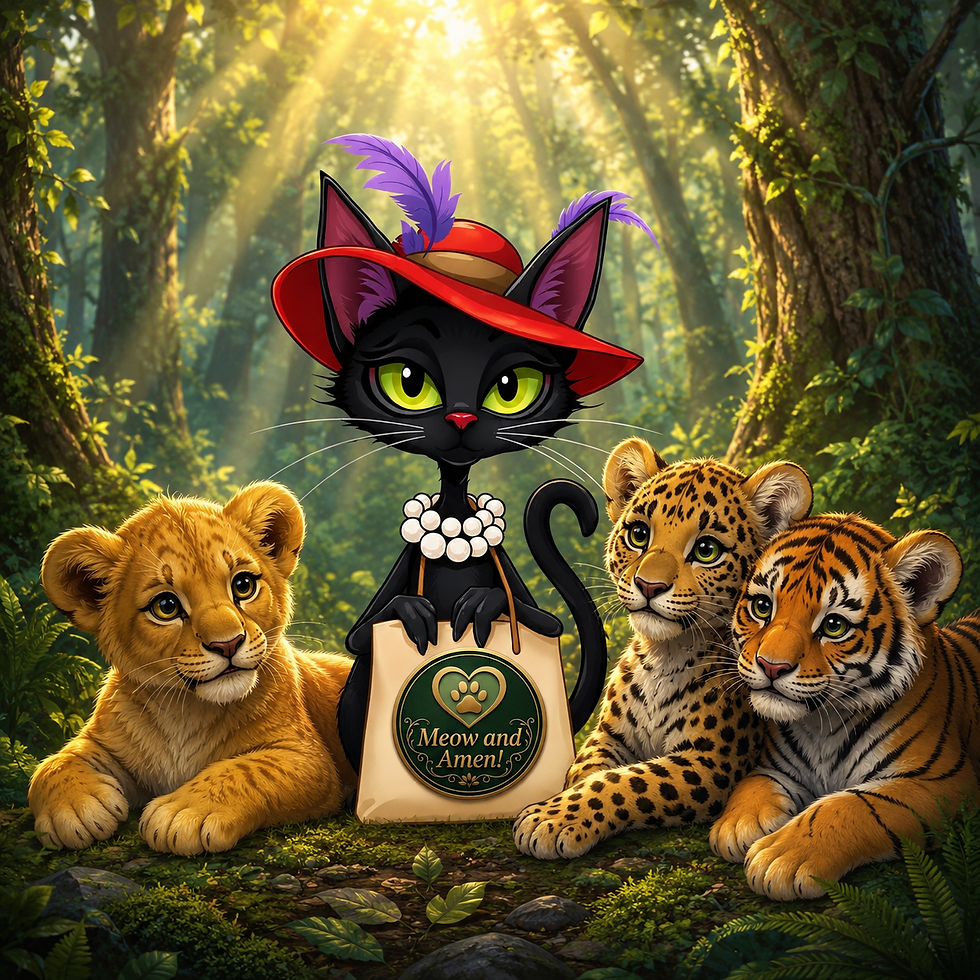
Cattytude supports wild-cat conservation and sanctuary work because wild cats face threats that domestic cats don't, including habitat loss, human-wildlife conflict, poaching, illegal wildlife trade, and the loss of prey and connected habitat. Panthera focuses exclusively on conserving the world's 40 wild cat species and their ecosystems, while organizations such as Big Cat Rescue, Carson Springs Wildlife Conservation Foundation, National Tiger Sanctuary, Panthera, and The Wildcat Sanctuary. Each addresses different aspects of rescue, sanctuary care, conservation, education, and protection. Those differences are precisely why a broader mission matters.
Cattytude also supports local animal rescue and wildlife rehabilitation because stewardship should never become so focused on distant conservation that we overlook animals suffering in our own communities. Mozart SymPAWthy Animal Sanctuary, Rebel Cat Rescue, and Majestic Raptor Rehab represent the people who are physically showing up for animals in Saskatchewan. Their work reminds us that protecting creation isn't only about saving something rare or famous, but about recognizing the worth of the vulnerable animal standing directly in front of us.
The organizations and local causes supported through Cattytude are different, but the underlying principle is the same. We don't have to choose between domestic animals and wildlife, between a community cat and a mountain lion, or between rescue and conservation. We can care about all of them while recognizing that each requires its own responsible approach.
What the Bible Says About Caring for Animals
Cattytude's Christian foundation adds another layer to this conversation without suggesting that compassion for animals belongs only to Christians. People from many backgrounds care deeply about animals and the natural world. For Cattytude, however, faith provides a clear reason to take that responsibility seriously because creation isn't something humans were permitted to abuse simply because we have power over it.
Proverbs 12:10 says, “A righteous man regardeth the life of his beast.” That isn't a command to romanticize animals or ignore practical realities, but it is a powerful rejection of needless cruelty and neglect. If righteousness includes regard for an animal's life, then feeding responsibly, seeking veterinary care, supporting rescue, protecting habitat, and refusing exploitation can all become practical expressions of that principle.
Psalm 145:9 says, “The LORD is good to all: and his tender mercies are over all his works.” That includes the animals people sometimes overlook because they're inconvenient, frightening, unwanted, injured, or simply not profitable. Stewardship means remembering that their value doesn't come from what they can give us.
The Mountain Lion Wasn't the Only One Who Needed Food
The most memorable part of this story may be the image of the stray cat apparently leading a mountain lion toward food. But perhaps the deeper lesson is that hunger, survival, and human responsibility can bring very different animals into the same place. The cat needed food, the mountain lion was searching for opportunities, and people were part of the environment surrounding them all.
That doesn't mean humans should start feeding wild predators because a viral story makes the encounter look heartwarming. It means we should understand how easily food can change animal behavior and how quickly an innocent act can create an unsafe situation. Wildlife deserves food from healthy ecosystems, not dependence on people.
The stray cat deserves compassion too. If a community cat is hungry, the answer is responsible care, not leaving it to fend for itself because wildlife exists nearby. The answer is learning how to help that cat without creating a dangerous invitation for other animals.
Kindness Shouldn't Stop at the Restaurant Door
A strange little story about a stray cat and a mountain lion can disappear from social media within days. The image gets shared, people laugh or marvel, and then another viral animal story takes its place. But the animals themselves don't disappear when the internet moves on.
The stray cat still has to survive. The mountain lion still needs habitat and distance from people. Rescue organizations still need volunteers, donations, foster homes, supplies, and people willing to care when an animal has nowhere else to go.
That's where the story becomes more than a cute encounter. It reminds us that animals are constantly navigating a world shaped by human decisions, and we have the ability to make that world kinder, safer, and more responsible. We don't need to control every animal we encounter, but we do need to stop acting as though every animal exists for our entertainment or convenience.
A Little Cat Can Lead to a Much Bigger Conversation
Maybe the stray cat really did lead the mountain lion toward food. Maybe the cat simply followed a familiar path, and the mountain lion followed the scent or movement. We may never know exactly what happened, and that's okay because the uncertainty doesn't erase what the story can teach us.
Cats are remarkable animals, whether they're curled up beside us at home, living as community cats outdoors, waiting for rescue, or representing an entire wild species fighting for survival. They don't all need the same kind of help, and responsible stewardship means understanding those differences rather than pretending one solution works for everyone.
At Cattytude, loving cats means going beyond the cute photograph. It means supporting domestic cat rescue, community cat welfare, wildlife rehabilitation, wild cat conservation, sanctuaries, responsible care, and the people doing the difficult work behind the scenes. It means remembering that God didn't create animals as disposable objects for us to exploit.
Maybe that's the real lesson hiding behind one little stray cat and one very large wild cat. Kindness can begin with a bowl of food, but it shouldn't end there. It should grow into knowledge, responsibility, compassion, and action.
Frequently Asked Questions
Did a stray cat really lead a mountain lion to food?
The story shared by Awww Cute Cats presents the encounter that way, but the exact intentions of the animals can't be established from a social media account. A cat moving toward a familiar food source could attract another animal's attention without the cat deliberately planning to lead it anywhere. The safest interpretation is to appreciate the unusual encounter without assigning human motives to either animal.
Are mountain lions dangerous to domestic cats?
Mountain lions are wild predators and can pose a serious threat to domestic animals, including cats and dogs. People shouldn't allow domestic pets to approach or interact with a mountain lion, and they shouldn't attempt to use food to draw one closer. Keeping wildlife wild and giving predators plenty of space is safer for everyone.
Should people feed a mountain lion?
No. Feeding a mountain lion can encourage it to associate people or developed areas with food. That kind of food conditioning can increase the risk of dangerous encounters and can ultimately put the mountain lion itself in greater danger.
What should you do if you see a mountain lion?
Don't run toward it or turn your back and flee. Face the animal, make yourself appear larger, give it room to leave, and slowly back away. If the animal attacks, fight back rather than playing dead, and report the encounter to the appropriate local wildlife authority.
How can people help stray and community cats responsibly?
Start by determining whether the cat is actually abandoned, because some community cats have caregivers and established outdoor territories. Responsible help can include veterinary care, sterilization, vaccination, appropriate feeding, shelter, monitoring, foster care, or adoption depending on the individual cat's situation. Established rescue organizations and TNR programs can help people choose the safest and most humane approach.
Why does Cattytude support both domestic animals and wildlife?
Cattytude sees animal welfare as a larger stewardship responsibility rather than a choice between domestic cats and wild cats. Community cats may need rescue, TNR, veterinary care, or homes, while wild cats may need habitat protection, conservation programs, rescue, sanctuary care, and protection from exploitation. Local organizations such as Mozart SymPAWthy also show why that responsibility has to include animals in our own communities.
What can one person actually do for animals?
You can start small by supporting a legitimate rescue or conservation organization, fostering when possible, donating supplies, helping with veterinary costs, learning about TNR, keeping wildlife wild, or sharing accurate information. You can also look at the choices you make as a consumer and ask whether the things you buy celebrate animals or exploit them. Compassion becomes meaningful when it turns into something we actually do.
Cattytude's Conservation and Animal Welfare Mission
Cattytude's current giving mission identifies six organizations receiving support through its stated 10% commitment, including Alley Cat Allies, Big Cat Rescue, Carson Springs Wildlife Conservation Foundation, National Tiger Sanctuary, Panthera, and The Wildcat Sanctuary.
For local animal welfare and rehabilitation, Cattytude also recognizes organizations and rescue work such as Mozart SymPAWthy Animal Sanctuary, Rebel Cat Rescue, and Majestic Raptor Rehab. These causes aren't interchangeable, and they don't all do the same work. That's precisely the point.


Comments