
The Cougar: The Ghost of the Wild We Were Supposed to Protect


The cougar is one of the most remarkable survivors in the Americas.
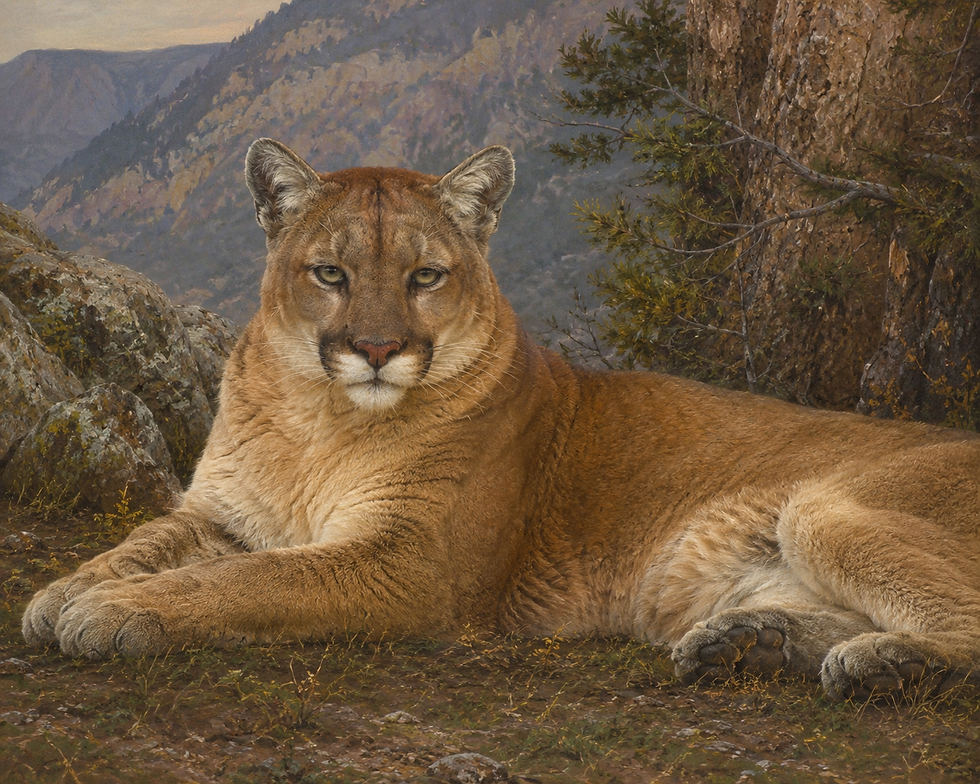
Known scientifically as Puma concolor, this powerful wild cat is also called the mountain lion, puma, catamount, and, in some regions, panther. It has one of the broadest ranges of any wild cat in the world, occurring across much of the Americas. Panthera currently identifies pumas in 23 countries, while warning that their numbers are thought to be declining overall.
The cougar is adaptable. It can live in forests, mountains, deserts, grasslands, and other environments. But adaptability has limits.
A species cannot endlessly adjust to habitat being destroyed, fragmented, and surrounded by human development. It cannot negotiate with a highway. It cannot understand a property boundary. It cannot replace lost prey with a corporate press release promising a greener future.
And it certainly cannot stop humans from destroying the very ecosystems upon which wildlife depends.
The cougar is not the problem. Humanity's relationship with the natural world is.
The Cougar Is a Predator. That Is Not a Crime.
There is something humans need to remember about predators. They are supposed to hunt. Cougars are carnivores. They help shape ecosystems through their interactions with prey and other species. Their presence can be an indicator of functioning landscapes where sufficient habitat, prey, and connectivity remain.
Panthera identifies three fundamental requirements for wild cats to survive and thrive: secure space, abundant prey, and connectivity across landscapes. Those foundations are increasingly threatened by habitat loss and fragmentation, human-wildlife conflict, and illegal wildlife trade.
Protecting a cougar involves more than just safeguarding a single animal. It requires preserving the surrounding landscape, supporting prey populations, and maintaining wildlife corridors. Additionally, it involves minimizing unnecessary conflicts between humans and predators and making space for nature in a world where humans often behave as if every acre of land is solely for our use.
Cougar Conservation Is Really Ecosystem Conservation
Search for information about cougars, and you will find questions such as:
Where do cougars live?
What do cougars eat?
How big is a cougar?
Are cougars dangerous?
Are mountain lions endangered?
How can we protect cougars?
Those are important questions. But there is a bigger one: What happens to the ecosystem when a predator disappears?
Wildlife does not exist as a collection of unrelated species. A cougar depends upon prey.
Prey depends upon vegetation and habitat. Vegetation depends upon soil, water, climate, and pollinators.
Countless other species occupy the same landscape. Remove enough pieces and the system begins to unravel. Panthera's puma conservation program specifically focuses on filling knowledge gaps, addressing habitat fragmentation, reducing hunting and trapping where they threaten populations, and reducing human-puma conflict.
This is why cougar conservation cannot be reduced to saving individual animals.
We have to save the places that make their existence possible.
Humanity Keeps Taking More
This is where the uncomfortable conversation begins. Humans have become extraordinarily good at taking. We take:
Land
Forests
Minerals
Water
Wildlife (and their body parts)
We take habitat and call it development. We take resources and call it economic growth. We consume far beyond what many ecosystems can comfortably sustain, then act shocked when wildlife populations decline.
And when the consequences become impossible to ignore, we often respond with a campaign, a slogan, or a carefully crafted corporate statement. That is not stewardship.
We Were Given a Job
For those of us who believe in God, the responsibility becomes even more profound.
Humanity was given stewardship over creation.
We were not permitted to destroy it. We were not appointed custodians of the planet so that we could consume everything we wanted and leave the consequences for everyone else. We were supposed to care for God's creation.
Instead, humanity has repeatedly demonstrated that we are much better at exploiting creation than protecting it. That does not mean everyone has failed. Far from it.
There are conservationists, scientists, veterinarians, wildlife rehabilitators, sanctuary professionals, educators, Indigenous communities, researchers, activists, photographers, and ordinary people doing extraordinary work to protect animals and ecosystems.
But collectively?
We have failed badly at stewardship.
The cougar is one of countless reminders.
The Environmental Cost of the Seven Deadly Sins
Pride
Humanity often behaves as though intelligence gives us the right to dominate everything else. We build wherever we want. We manipulate ecosystems. We assume nature will simply adjust. We call ourselves the most intelligent species while repeatedly destroying the systems that keep us alive. That is pride.
Greed
Greed turns forests into commodities, wildlife into products, and habitat into real estate.
It tells corporations that another billion dollars matters more than another thousand acres of intact habitat. It tells criminals that an endangered animal's body is worth more dead than alive. It tells governments that economic interests should always win when conservation becomes inconvenient.
Lust
The appetite for luxury can create demand for products that have no legitimate reason to exist. Wildlife skins. Exotic animal products. Rare specimens. Trophy items. Status symbols. Wanting something simply because it is rare or expensive does not make its destruction acceptable.
Envy
Envy drives endless consumption. Someone has something bigger. Someone has something newer. Someone has something rarer. Someone has something more luxurious. So we want it too. And the production chain keeps expanding to satisfy human appetite.
Gluttony
Gluttony is not simply about food. It can also describe excessive consumption. That applies to what we buy, use, discard, and replace. Then, instead of correcting our pattern, what do we do? Repeat the madness all over again.
Mass production can create enormous amounts of unnecessary inventory and waste, while resources that could have been conserved are consumed to manufacture products that may never find a buyer.
Wrath
When wildlife becomes inconvenient, humanity can become remarkably cruel. A predator kills livestock, and suddenly it is labeled a menace. An animal enters an area humans developed in its former habitat, and suddenly it is considered an intruder. Instead of asking how we created the conflict, we sometimes ask how quickly we can eliminate the animal.
Sloth
Perhaps the most dangerous sin of all is refusing to care. We see the destruction. We know the science. We know species are disappearing. We know habitat is being fragmented. We know wildlife trafficking exists. We know greenwashing happens.
And then we scroll past it. Someone else will deal with it. Except they won't. Not unless we decide that stewardship requires action.
Animals Are Paying for Humanity's Apathy
Wild animals are paying the price. So are domestic animals. So are ecosystems. So are future generations.
Animals cannot control corporate supply chains. They cannot vote. They cannot lobby politicians. They cannot challenge misleading advertising. They cannot organize against illegal wildlife trafficking. They cannot tell a developer that their habitat is their home.
Humans created the problem. Humans therefore have to accept responsibility for fixing it.
The Fashion Industry Needs to Look in the Mirror
The fashion industry is a perfect example of what happens when animals become commodities. There is nothing inherently wrong with wanting clothing, accessories, or artwork that celebrates wildlife. There is something profoundly wrong with treating wildlife itself as raw material when alternatives exist.
Wildlife trafficking is a global criminal enterprise involving poaching, smuggling and illegal trade in protected species. Authorities also warn that transnational wildlife trafficking can intersect with money laundering and other serious crimes.
Panthera identifies illegal wildlife trade as one of the major threats facing wild cats.
That is why Cattytude takes a very different approach.
We would rather print the animal than wear it.
The cougar's coat belongs on the cougar.
Pharmaceuticals and Illegal Wildlife Trade
The problem is not limited to fashion. Wildlife trafficking can also be connected to demand for animal-derived products used in traditional medicines and other markets.
That does not mean legitimate pharmaceuticals should be condemned. It means illegal wildlife exploitation should not be excused simply because somebody claims a product has medicinal value.
An animal should not have to die because humans decided that its body was valuable. Wildlife trafficking is already recognized internationally as a serious conservation and security problem. The U.S. Fish and Wildlife Service describes it as an international crisis involving poaching, smuggling, and illegal trade, with criminal networks sometimes connected to other serious crimes.
Demand drives markets.
If people stop buying products made from threatened wildlife, the incentive to kill those animals decreases. Consumer choices matter.
Greenwashing Makes the Problem Worse

Then there is greenwashing. Greenwashing happens when environmental marketing creates an impression of environmental responsibility that is not supported by the facts.
Cattytude has no patience for it.
The U.S. Federal Trade Commission warns that broad claims such as "green" and "eco-friendly" can be difficult or impossible to substantiate and advises marketers to make environmental claims that are specific, clear, and supported by evidence.
In other words:
Putting leaves on packaging does not make something environmentally responsible.
Calling something sustainable does not magically make it sustainable, nor does putting an animal in an advertisement mean the company cares about animals. Launching one environmental campaign does not erase destructive practices elsewhere in a supply chain. And announcing a conservation initiative does not automatically make a corporation a conservation organization.
We want evidence, transparency, and measurable results. We want corporations to stop treating environmental concern as a marketing department.
Corporations Need to Stop Pretending
Here is where Cattytude is unapologetically blunt.
Corporations have enormous resources. They can hire scientists, lawyers, lobbyists, and public relations firms. They can spend millions creating an image of environmental responsibility.
So when a corporation genuinely does something good for wildlife, we should acknowledge it. But when corporate behavior contradicts corporate promises, consumers deserve to know that too.
A slick advertisement does not outweigh environmental destruction. Neither does a green logo nor conservation-themed campaigns. And a public relations statement does not bring a dead animal back to life.
Show us what you actually do.
Politicians Need to Stop Performing Conservation
Politicians deserve scrutiny too. Wildlife conservation should not become a convenient talking point that disappears when development pressure, corporate interests, or political calculations enter the room.
Politicians can announce conservation commitments. They can stand beside wildlife.
They can promise to protect biodiversity. But the real test comes when protecting wildlife becomes inconvenient.
Will they protect habitat when developers want it? What about defending science even when it's politically uncomfortable?
Will they fund enforcement against wildlife trafficking and protect wildlife corridors? Will they make difficult decisions when there is money on the other side of the argument?
That is where stewardship gets real.
Conservation is not a photo opportunity. It is a responsibility.
The Media Has Responsibilities Too
The public also deserves better wildlife journalism. Mainstream media can perform valuable investigative work and bring conservation issues to enormous audiences. But wildlife reporting can also become oversimplified, sensationalized, or incomplete.
A cougar sighting becomes a scary headline. A predator attack receives enormous attention while the ecological context receives little.
A population estimate is presented without explaining uncertainty. Conservation success becomes a feel-good story while the underlying threats remain largely unexplored.
And complicated environmental issues get reduced to a few hundred words because outrage generates clicks.
That is not enough. People deserve accurate information. Wildlife deserves accurate information.
Readers should be encouraged to look beyond headlines, examine sources, check dates, and distinguish scientific evidence from sensationalism.
Conservation cannot succeed when the public is poorly informed.

Cattytude Supports Conservation Beyond Cats
Cattytude may have cats at the heart of its brand, but our concern for animals is not limited to these beautiful creatures.
We support wildlife conservation because ecosystems are interconnected. We care about all animals, even those we may not consider ideal pets.
Animals that depend upon habitats humans rarely notice, and that's why Cattytude supports four important causes:

Carson Springs describes itself as primarily a conservation and educational facility that rescues exotic animals while working toward preservation of wild species in their native habitats. It also supports conservation groups in species' countries of origin.

Big Cat Rescue has expanded its focus beyond sanctuary operations into funding conservation projects protecting wild cats around the world. Its current conservation work addresses threats including poaching, trafficking, bushmeat, habitat loss and other pressures facing wild cats.

Panthera is a global wild cat conservation organization whose work includes research, habitat protection, connectivity, coexistence, and combating threats to wild cats. Its Puma Program specifically targets habitat fragmentation, hunting and trapping, human-puma conflict, and knowledge gaps.

National Tiger Sanctuary provides lifelong care for rescued animals while emphasizing education, conservation awareness, and compassionate stewardship. Its conservation education also highlights habitat, prey availability, wildlife corridors, and coexistence.
These organizations deserve praise.
So do the countless other conservation organizations around the world doing everything they can to protect wildlife. Some spend their lives studying one species that most people have never heard of.
Conservation is a team effort.
10% of Every Sale Goes Toward the Causes We Support
Cattytude believes shopping can accomplish more than simply acquiring another possession.
10% of every sale goes toward the causes Cattytude currently supports.
That means customers can purchase something they genuinely enjoy while also helping contribute to animal welfare and conservation. That is the kind of shopping we want to encourage.
It is a win/win. You get something cool that reflects your love of cats and wildlife. And your purchase helps give back.
You are not personally saving a cougar (or any wild cat) with one purchase, but your purchase becomes one small contribution to a much greater effort.
And conservation is built from those contributions.
Why Made-to-Order Matters
Cattytude also mostly sticks with made-to-order products.
Why? Because producing merchandise before anyone has decided to buy it can create unnecessary inventory. And unnecessary inventory can mean unnecessary waste.
Mass production is not automatically evil, and made-to-order production is not automatically perfect. Every manufacturing system has environmental costs. But when we can avoid producing merchandise simply to let it sit on a shelf hoping someone eventually wants it, we believe that is worth considering.
Yes, this approach can cost more. We accept that, because we have to look at the bigger picture.
What is the price of excess inventory, wasted materials, wasted energy, unnecessary transportation, discarded merchandise, habitat destruction, losing wildlife, and an extinct species?
Suddenly, paying a little more for something made when it is actually wanted does not seem so expensive.
Compared with the cost of losing animals and vital habitat, it is a bargain.
We Don't Need to Consume Wildlife to Celebrate Wildlife
We can love and admire animals without owning or harming them. Celebrate wildlife by photographing, painting, and learning about it. Support conservation through donations, volunteering, and responsible consumer choices. Teach future generations that an animal's true value is beyond its market price.
What Can You Do to Help Cougars?
You can make a difference in wildlife conservation by supporting legitimate organizations, learning about cougars and ecosystems, sharing accurate information, avoiding products from threatened wildlife, questioning environmental claims, supporting habitat protection and wildlife corridors, respecting wildlife in natural areas, managing pets and livestock responsibly, speaking up against superficial conservation efforts, and choosing businesses that align with their advertised values.
The Cougar Is Worth More Alive
A living cougar benefits an ecosystem, while a dead one serves as a trophy or for illegal trade. This highlights that wildlife's value isn't just monetary. Animals like cougars, tigers, elephants, and rhinos are not valuable for their parts but for their ecological roles.
Wildlife has intrinsic value because it is alive.
And for those who believe in God, creation has value because it belongs to the Creator before it ever belongs to us.
The Cougar and the Choice Before Humanity
Cougars survive due to adaptability, but this doesn't justify human exploitation. They need secure spaces, prey, connected landscapes, and human coexistence, supported by government protection, conservation, research, and responsible consumer behavior. Panthera's strategy focuses on habitat connectivity, conflict reduction, population protection, and scientific advancement. We face a choice: continue destructive behaviors or embrace stewardship.
Let the Cougar Keep Its Coat
Cattytude chooses conservation over exploitation, prioritizing education, responsible production, and support for legitimate conservation efforts. Consumers play a vital role by shopping mindfully, supporting small businesses, and rejecting greenwashing. Your choices impact the world and support conservation. The cougar needs protection and stewardship, not admiration from a distance. Its coat belongs on the cougar. Let's keep it there.
Cougar FAQs
What is a cougar?
A cougar is a large wild cat scientifically known as Puma concolor. It is also commonly called a puma, mountain lion, catamount, or panther. Panthera reports that pumas occur in 23 countries across the Americas.
Where do cougars live?
Cougars occupy a remarkably broad range across the Americas. Depending on the region, they can live in forests, mountains, deserts, grasslands, and other habitats. Their ability to use different environments contributes to their wide distribution.
Are cougars endangered?
The conservation situation varies among populations and jurisdictions. Although the species has a broad geographic range, Panthera reports that puma numbers are declining overall. Habitat fragmentation, hunting, prey depletion, and human-puma conflict can all create serious conservation problems.
What do cougars eat?
Cougars are carnivores that primarily hunt mammals. Their prey varies according to location and availability. Maintaining healthy prey populations is therefore an important part of cougar conservation.
How big is a cougar?
Cougar size varies according to sex, age, geography, and other factors. Males are generally larger than females. Their muscular bodies, powerful hind legs, and large paws make them highly capable predators.
Are cougars dangerous to humans?
Cougars are powerful wild predators and should always be treated with respect. Encounters should never be treated casually, and people in cougar habitat should follow guidance from the relevant wildlife authorities in their area.
Why are cougars important?
Cougars are predators that form part of complex ecosystems. Their conservation is connected to protecting prey, habitat, and ecological processes. Panthera's puma program specifically recognizes the ecological contributions of pumas while focusing on habitat connectivity, conflict reduction, and other conservation needs.
What are the biggest threats to cougars?
Major threats include habitat loss and fragmentation, human-puma conflict, hunting and trapping in some areas, and reductions in wild prey. Panthera identifies secure space, abundant prey, and connectivity as fundamental requirements for wild cats.
Why is habitat connectivity important for cougars?
Cougars need large areas to hunt, reproduce, and move through their territories. Fragmented landscapes can isolate populations and make movement more difficult. Wildlife corridors can help connect otherwise separated habitats and populations.
What is wildlife trafficking?
Wildlife trafficking involves the illegal poaching, smuggling, and trade of protected wildlife. It is an international conservation crisis that can also intersect with organized criminal activity.
Are cougar body parts traded?
Wildlife-derived products can enter illegal markets, and wild cats face threats from illegal trade in wildlife and their parts. Panthera identifies illegal wildlife trade as one of the threats affecting wild cats.
How does fashion contribute to wildlife exploitation?
Demand for animal-derived materials can create incentives for wildlife exploitation. The broader illegal wildlife trade includes products from protected species entering international markets. Consumers can help reduce demand by choosing alternatives that celebrate wildlife without using animal body parts.
Can wildlife trafficking involve medicine?
Yes. Illegal wildlife markets can involve animal-derived products connected with traditional medicine and other uses. The existence of demand does not justify poaching or illegal trade. Wildlife protection requires reducing the incentives that make endangered animals commercially valuable.
What is greenwashing?
Greenwashing is the use of environmental messaging that can create a misleading impression about the environmental benefits of a product, service or company. The FTC warns marketers against broad, unqualified environmental claims and emphasizes that environmental claims should be truthful and substantiated.
Why does Cattytude oppose greenwashing?
Because conservation should be demonstrated through meaningful action rather than marketing language. Cattytude believes companies should be able to substantiate environmental claims and be honest about the limitations and trade-offs associated with their products.
How much does Cattytude give to conservation?
Cattytude gives 10% of every sale toward the four causes it supports. The funds go to
Carson Springs Wildlife Conservation Foundation, Big Cat Rescue, Panthera, and National Tiger Sanctuary.
Does Cattytude support conservation beyond cats?
Absolutely. Although cats are central to Cattytude, conservation does not stop with cats. Healthy ecosystems depend upon countless interconnected species. Protecting predators and their habitat can also help protect prey species, vegetation, waterways, and other wildlife.
Why does Cattytude prefer prints over animal parts?
Because wildlife should be celebrated alive. Cattytude would rather put a beautiful cougar image on a product than put a cougar's skin on a product. The same philosophy applies to other wildlife.
Honor the animal. Don't wear the animal.
Why does Cattytude mostly use made-to-order products?
Made-to-order production can help reduce unnecessary inventory because products are produced when customers actually order them. Cattytude recognizes that no production model is impact-free, but considers avoiding unnecessary merchandise and potential waste preferable to producing large quantities of products simply to keep them in stock.
How can I help cougar conservation?
Support credible conservation organizations, protect and respect wildlife habitat, learn from reliable scientific sources, avoid wildlife-derived products from threatened or illegally traded species, support responsible conservation policies, and share accurate information about cougars.
Why should I care about cougars if I live far away from them?
Because wildlife conservation is interconnected. Protecting cougars means protecting habitat and prey. Protecting habitat benefits countless other species. Protecting ecosystems helps preserve the natural systems upon which people also depend.
You do not have to live beside a cougar to care whether cougars survive.
What can consumers do to fight wildlife exploitation?
Consumers can refuse to purchase products made from threatened wildlife, question suspiciously cheap or exotic animal-derived products, research companies and supply chains, support legitimate conservation organizations, and choose alternatives that celebrate animals without exploiting them.
Every purchase is a vote for the marketplace we want to exist.
What is the most important thing to remember about cougar conservation?
The cougar does not need us to make it valuable. It already is. Our job is to make sure it remains alive, wild, and part of the ecosystems where it belongs.
Protect the cougar. Protect its habitat. Protect its prey. Protect the wild.


Comments