
Greek Island Cats: Community Cats and Kindness

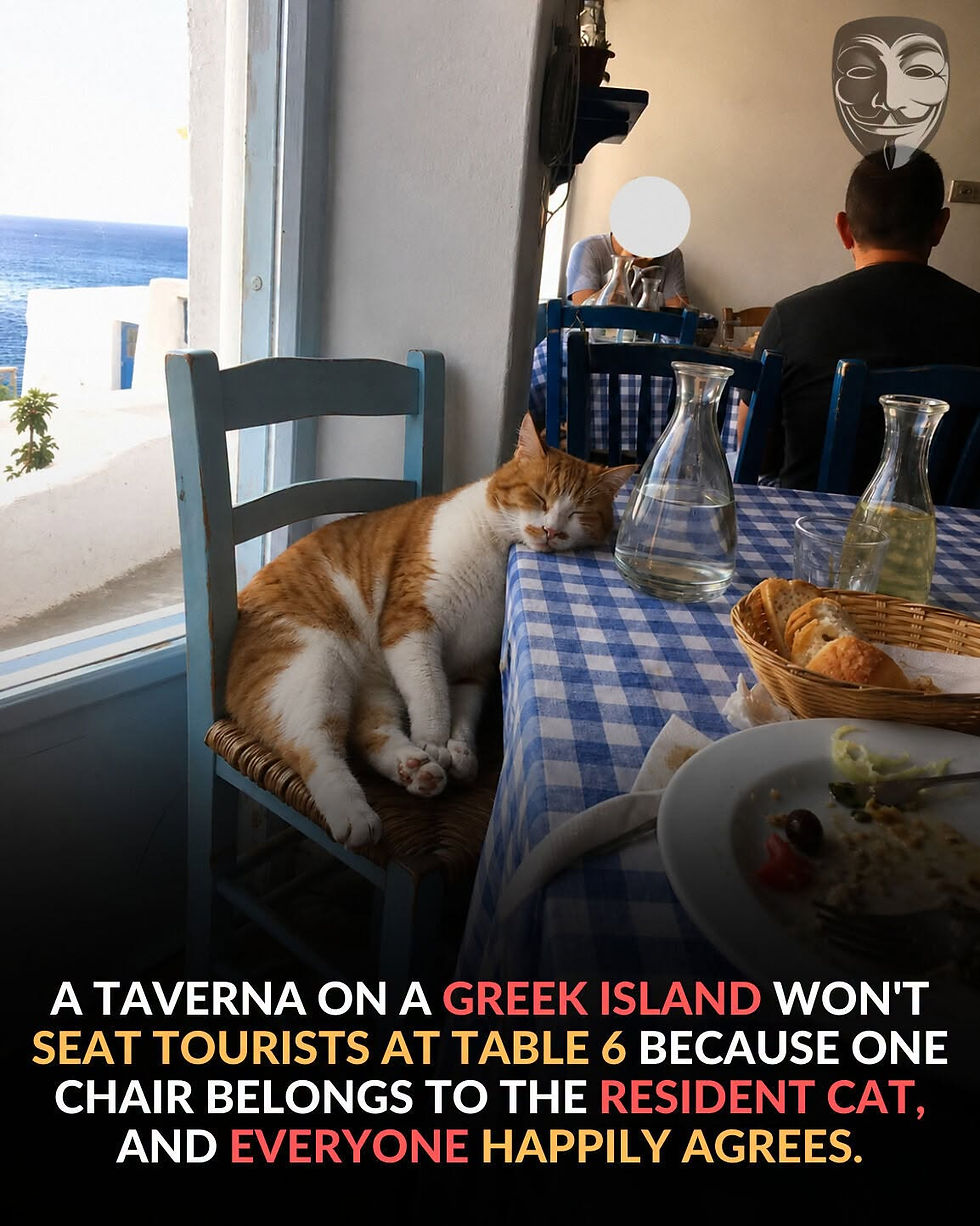
There’s something almost magical about sitting at a Greek taverna while a cat quietly claims a nearby chair. Maybe she stretches beneath the table, curls up beside the doorway, or watches the diners with the calm confidence of someone who knows she belongs there.
For many travelers, that cat becomes part of the memory of Greece, right alongside the blue Aegean Sea, whitewashed villages, ancient ruins, and warm Mediterranean evenings.
Cats have become deeply woven into the daily life of many Greek communities, particularly on islands where free-roaming cats are a familiar sight. Yet behind those adorable photographs is a much bigger story about animal welfare, responsible population management, community involvement, and coexistence. The best examples show that loving community cats isn’t simply about leaving food outside or taking photographs. It’s about making sure cats are healthy, populations are responsibly managed, and people and animals can share the same communities with as little conflict as possible.
Greece’s Community Cats Have a Story to Tell
Walk through a Greek island village, and you may encounter cats almost everywhere. They can appear around fishing harbors, village squares, archaeological sites, apartment buildings, beaches, shops, and restaurants, often moving through familiar territories as naturally as the people who live there. Some are friendly and eager for attention, while others are more cautious and prefer to watch human activity from a comfortable distance.
That familiarity can make it easy for visitors to assume that every outdoor cat is simply a stray waiting for someone to rescue it. The reality is more complicated. Some cats may have been abandoned, some may have caregivers, and others may have spent their entire lives outdoors as community cats with established territories. Understanding that difference matters because the most compassionate solution isn’t always taking an animal away from the environment it knows.
A healthy community cat can have a surprisingly stable life outdoors when people provide responsible care. Regular feeding, clean water, veterinary attention, shelter, and sterilization can make a tremendous difference, particularly when local caregivers work together rather than trying to manage individual cats in isolation. Humane population management also helps prevent endless cycles of kittens being born into environments where food, medical care, and safe shelter may already be limited.
Paros and Antiparos Show What Humane Cat Care Can Do
The Greek islands of Paros and Antiparos provide one of the strongest recent examples of organized community cat care. Animal Action Greece worked with local animal welfare groups, municipalities, veterinary clinics, volunteers, and residents on a three-year project designed to improve the health and welfare of free-roaming cats through sterilization, veterinary care, identification, vaccination, monitoring, education, and community engagement. The project became the largest and most comprehensive community cat care initiative carried out in Greece.
The numbers are remarkable. From April 2023 through the end of the project, the team reported 7,070 sterilizations, 7,067 microchips, 6,641 quadruple vaccinations, 4,199 rabies vaccinations, 7,109 deworming treatments, and 1,435 additional veterinary treatments for injuries, infections, wounds, eye conditions, abscesses, skin problems, and other health concerns. Those numbers represent far more than statistics because every number represents an individual animal that received care.
The project also demonstrated why community involvement matters. Volunteers and residents helped identify colonies, capture cats for veterinary appointments, monitor populations, and continue caring for cats in their neighborhoods. Animal Action Greece’s surveys found that understanding of neutering and support for humane population management increased substantially among residents during the project, showing that education can change attitudes just as effectively as veterinary intervention can change the lives of individual cats.
The large-scale project has now concluded in its original form, but the work isn’t simply disappearing. Animal Action Greece says it’s exploring a more targeted model involving sterilization, mapping, and monitoring, while the local partnerships developed during the project remain important. That’s a crucial lesson for communities everywhere: sustainable animal welfare depends on people continuing the work after the spotlight moves somewhere else.
Feeding Cats Is Kind, But It Isn’t Enough
Seeing a hungry cat outside a restaurant can tug hard at the heartstrings. Giving that cat appropriate food may be a kind thing to do, especially when done responsibly, but feeding alone doesn’t solve the larger problems facing community cats. Without sterilization, veterinary care, monitoring, and cooperation among caregivers, an expanding colony can quickly become overwhelmed by new births, illness, injury, and competition for resources.
Animal Action Greece specifically emphasizes that caring for community cats goes beyond feeding them. Its Paros and Antiparos program combines feeding and monitoring with spaying or neutering, vaccination, microchipping, and veterinary care. That comprehensive approach gives cats a better chance at healthier lives while also helping communities manage outdoor populations humanely.
Visitors should also think carefully before feeding cats from their own meals.
Restaurant leftovers may contain ingredients that aren’t appropriate for cats, and feeding animals in busy dining areas can create conflicts with restaurant owners or other customers. When people want to help, responsible local guidance is a much better starting point than assuming that every friendly cat needs whatever happens to be left on a dinner plate.
What Is TNR and Why Does It Matter?
Trap-Neuter-Return, commonly called TNR, is one of the best-known humane approaches to community cat management. Cats are humanely trapped, taken to a veterinarian or clinic to be spayed or neutered and vaccinated, identified through ear-tipping, and returned to the outdoor territory they know after recovering. The goal is to prevent additional litters while improving the health of cats already living in the community.
TNR also recognizes something important about community cats: outdoors may genuinely be their home. A cat who has spent its life living in a familiar territory may be bonded to that environment and to other cats in the colony. Removing healthy community cats simply because they live outdoors can create new problems, while returning sterilized cats to their established territories allows them to continue living in familiar surroundings.
Responsible TNR isn’t a matter of trapping a cat, performing surgery, and forgetting about it. Caregivers need to plan properly, work with veterinary professionals, monitor cats during recovery, and continue observing the colony afterward. Alley Cat Allies emphasizes that successful community cat care also involves cooperation with neighbors and education so that people and cats can coexist more peacefully.
Greece Isn’t the Only Place Where Cats Belong

The relationship between humans and community cats isn’t unique to Greece. Around the world, people have developed different ways of living alongside outdoor cats, shaped by local history, culture, geography, and tradition. Some communities have formal animal welfare programs, while others rely heavily on residents and volunteers who quietly care for cats day after day.
Istanbul is one of the most famous examples. Cats have become an unmistakable part of the city’s identity, appearing throughout neighborhoods, shops, parks, courtyards, and waterfront areas. Their presence has inspired books, documentaries, photographs, social media accounts, and a global fascination with Istanbul’s feline residents.
That affection also demonstrates why community cat care needs more than romanticizing the animals. A city can celebrate its cats while still needing responsible sterilization, veterinary care, feeding practices, and policies that allow people and animals to coexist. Admiration is wonderful, but responsible action is what actually improves an animal’s life.
Japan Has an Island Where Cats Outnumber People

Japan offers another fascinating example through Tashirojima, widely known as Cat Island. The Japan National Tourism Organization describes the island as a destination where cats greatly outnumber the human population, and its feline residents have become one of the island’s defining attractions. Visitors can encounter cats around the island while also enjoying hiking trails, ocean views, and the famous cat shrine.
The relationship between people and cats on Tashirojima has historical roots. Cats were valued because they helped protect silkworm cocoons from rats, while fishermen also cared for cats and gave them scraps from their catches. Over generations, the cats became an important part of island life and eventually an attraction for visitors from around the world.
Tashirojima is a fascinating reminder that the human relationship with cats can develop in unexpected ways. Cats may begin as working animals, become community companions, and eventually become symbols of a particular place. Yet the same principle still applies: tourists should treat the animals as living beings rather than props created for photographs.
Rome’s Cats Live Among Ancient Ruins

Rome offers yet another extraordinary example at Largo di Torre Argentina. The archaeological site is home to the Torre Argentina Cat Sanctuary, where cats live in the area surrounding ancient Roman ruins. The sanctuary operates through donations and provides care for cats while also offering opportunities for people to support or adopt individual animals from a distance.
There’s something almost surreal about seeing domestic cats moving through a location surrounded by thousands of years of human history. The ruins tell the story of ancient Rome, while the cats represent a much more recent chapter in the site’s life. Together, they create an unusual example of humans making room for animals within an urban archaeological landscape.
Rome’s community cat story also demonstrates that coexistence can take many forms. Cats don’t have to become indoor pets to deserve humane treatment, and caring for an outdoor colony doesn’t mean ignoring population management or veterinary needs. The goal should be healthier animals and healthier communities rather than simply removing every cat from sight.
Community Cats Deserve Respect, Not Cruelty
It’s easy to dismiss outdoor cats as pests when their presence becomes inconvenient. They may dig in gardens, make noise during mating, gather around food sources, or occasionally create conflicts with people who don’t appreciate having animals nearby. Those problems are real, but cruelty isn’t a responsible solution.
Humane population management addresses the underlying issue instead of simply moving animals around or killing them. Sterilization reduces reproduction, veterinary care addresses illness and injury, and responsible colony management gives people practical ways to handle concerns. Alley Cat Allies describes TNR as a humane and effective approach that benefits both community cats and the people living alongside them.
This is where education becomes incredibly important. People who understand what a community cat is are better equipped to respond appropriately when they encounter one. Instead of automatically asking, "How do we get rid of this cat?" the better question becomes, "What does this cat need, and what can we do to manage the situation responsibly?"
Kindness Should Include Wild Cats, Too

A Greek island cat sitting beside a taverna table and a tiger moving through an Asian forest may seem worlds apart. They are, of course, facing very different circumstances and require very different forms of protection. Yet both remind us that animals aren’t disposable objects and that human choices can profoundly affect their lives.
Wild cats face habitat destruction, poaching, illegal wildlife trade, prey depletion, human-wildlife conflict, and fragmentation of the landscapes they need to survive. Cattytude’s recent conservation writing emphasizes that protecting wild cats also protects ecosystems because many wild cats function as keystone, umbrella, or indicator species. When their populations decline, the damage can extend far beyond the animals themselves.
That’s why Cattytude’s mission reaches beyond domestic cats. Cattytude celebrates the cats sharing our homes and communities while also raising awareness about the wild cats struggling to survive in increasingly pressured landscapes. Loving cats should never require us to choose between one kind of feline and another.
Cattytude’s Mission Is About More Than Cute Cat Products
Cattytude isn’t built around the idea that cats are simply a marketing theme. The brand’s current mission connects feline-themed products with faith, stewardship, conservation, reduced waste, and responsible choices. Cattytude uses made-to-order production and states that 10% of every sale is donated to organizations working to protect cats and wildlife.
Cattytude currently lists six organizations in its giving mission: Alley Cat Allies, Big Cat Rescue, Carson Springs Wildlife Conservation Federation, National Tiger Sanctuary, Panthera, and The Wildcat Sanctuary. That combination is intentional because community cat welfare and wild cat conservation address different needs while sharing the same underlying belief that animals deserve humane treatment and protection.
Alley Cat Allies focuses on community cats and humane programs such as TNR, while organizations such as Panthera concentrate specifically on conserving wild cat species and their habitats. Big Cat Rescue and National Tiger Sanctuary work in the rescue and sanctuary space, while Carson Springs Wildlife Conservation Federation and The Wildcat Sanctuary contribute to broader wildlife protection and animal welfare efforts. Cattytude brings these different causes together because the love of cats can become something much bigger than the animal sleeping on your couch.
That’s the deeper meaning behind "Meow and Amen." "Meow" celebrates the personality, independence, humor, affection, and unmistakable attitude that make cats so special. "Amen" is the commitment to care about what happens to them, to the wild places they depend on, and to the responsibility humans have been given as stewards of creation.
Faith and the Responsibility to Care
Cattytude’s faith-forward voice doesn’t mean conservation belongs only to Christians. People from many backgrounds care deeply about cats, wildlife, and the natural world, and everyone has something to contribute. At the same time, Cattytude’s Christian foundation provides a clear reason for taking stewardship seriously.
Genesis 1:26-28 describes humanity’s responsibility over creation, but having authority shouldn’t be interpreted as permission to abuse. Proverbs 12:10 puts the responsibility even more plainly: "A righteous man regardeth the life of his beast." That verse is difficult to reconcile with needless cruelty, neglect, or treating vulnerable animals as disposable.
Psalm 145:9 says, "The LORD is good to all: and his tender mercies are over all his works." Matthew 10:29 also reminds us that God knows when a sparrow falls to the ground. If Scripture calls us to recognize God’s care for creation, then showing compassion toward animals isn’t some silly distraction from more important matters. It can be part of living out the stewardship we’ve been given.
The Cat at the Empty Chair

Maybe that’s why the image of a Greek island cat sitting beside an empty taverna chair stays with people. The cat isn’t asking for a complicated conservation plan while the tourists eat dinner. She simply found a comfortable place, settled down, and became part of the scene.
But behind that simple moment is a bigger responsibility. Someone may be feeding that cat, someone may have arranged veterinary care, someone may have helped sterilize her, and someone may be watching over the colony she belongs to. The cat’s peaceful presence may look effortless, but responsible community cat care often depends on people quietly doing difficult work behind the scenes.
That’s the part tourists and cat lovers shouldn’t forget. Take the photograph, admire the whiskers, enjoy the moment, and absolutely fall a little bit in love with the cat. Just remember that compassion means more when it continues after the camera is put away.
A Better Way to See Community Cats
Community cats aren’t decorations for vacation photographs, and they aren’t nuisances waiting for someone to make them disappear. They are living animals trying to navigate the same world people have built around them. When communities combine sterilization, veterinary care, responsible feeding, monitoring, education, and compassion, people and cats have a much better chance of thriving together.
Greece, Istanbul, Tashirojima, and Rome each tell a different version of that story. None is perfect, and no community has discovered a magic solution that eliminates every challenge associated with outdoor cats. What they demonstrate is that humans can choose cooperation over cruelty and responsible management over indifference.
That choice matters far beyond a Greek taverna. It matters when a community cat needs medical care, when a colony needs sterilization, when a shelter needs support, and when a wild cat needs a protected landscape where it can actually survive. Every one of those situations allows us to decide what kind of people we want to be.
At Cattytude, that choice is simple. Love the cats in your home. Respect the cats living in our communities. Protect the wild cats who can’t speak for themselves. Support the people and organizations doing the work, and make your own choices with purpose.
Because kindness shouldn’t stop at the edge of the dinner table.
Be unapologetically you!
Frequently Asked Questions
Why are cats so common on Greek islands?
Free-roaming cats have long been part of life in many Greek communities, where they can be found around villages, harbors, restaurants, farms, and other places where people live and work. Greece’s climate and the availability of food around human settlements can support outdoor cat populations. Residents and animal welfare groups also play important roles in caring for many of these cats.
What is a community cat?
A community cat is a domestic cat who lives outdoors and may be cared for by one or more people in the surrounding community. Some community cats are friendly and comfortable around humans, while others are unsocialized and prefer to keep their distance. Community cats can have established territories and social groups, which means outdoor living doesn’t automatically mean an animal has been abandoned.
Are community cats the same as stray cats?
Not always. A stray cat may have previously lived with people and become lost or abandoned, while a community cat may have spent most or all of its life outdoors. The terms are sometimes used interchangeably, but understanding the individual animal’s history and behavior can help people choose the right response.
What is TNR?
TNR stands for Trap-Neuter-Return. Cats are humanely trapped, taken to a veterinarian for spaying or neutering and appropriate veterinary care, identified through ear-tipping, and returned to their established outdoor territory after recovery. TNR aims to prevent new litters while improving the health and stability of existing community cat populations.
What is TNVR?
TNVR stands for Trap-Neuter-Vaccinate-Return. It follows the same basic concept as TNR while specifically emphasizing vaccination as part of the veterinary process. Animal Action Greece used TNVR as a central part of its community cat program on Paros and Antiparos, alongside microchipping, parasite treatment, monitoring, and additional veterinary care.
Is feeding community cats enough?
No. Feeding can be an important part of responsible community cat care, but it shouldn’t be treated as the entire solution. Sterilization, veterinary care, vaccination, monitoring, safe shelter, and cooperation among caregivers are also important components of a healthy and sustainable community cat program.
Should tourists feed cats in Greece?
Tourists should follow local guidance and feed cats responsibly if they choose to help. They shouldn’t assume restaurant leftovers are appropriate or create feeding situations that cause problems for businesses or other people. Supporting local animal welfare groups or contributing to established community cat programs can be a more effective way to help.
Should visitors take Greek island cats home?
Not automatically. A friendly outdoor cat may already have a caregiver, established territory, or ongoing veterinary care, so removing the animal can cause unnecessary disruption. Anyone seriously considering international adoption should work with a legitimate rescue organization and follow all veterinary, identification, transportation, and import requirements.
What happened with the Paros and Antiparos cat project?
Animal Action Greece’s large-scale three-year project concluded in its original form after achieving thousands of sterilizations, vaccinations, microchips, parasite treatments, and additional veterinary interventions. The project also helped improve public understanding of humane cat population management. Animal Action Greece says it’s exploring a more targeted approach involving sterilization, mapping, and monitoring as the next phase.
What places besides Greece are famous for community cats?
Istanbul is internationally famous for its street cats, while Tashirojima in Japan is widely known as Cat Island because cats greatly outnumber people there. Rome has the historic Torre Argentina Cat Sanctuary, where cats live around ancient archaeological ruins. These places have very different histories, but all demonstrate interesting examples of people and cats sharing human environments.
Why is Tashirojima called Cat Island?
Tashirojima earned its nickname because cats greatly outnumber the human population. Cats were historically valued for controlling rats around silkworm production, and fishermen also cared for them and gave them food. Today, the cats have become an important part of the island’s identity and attract visitors from around the world.
Where is Rome’s Torre Argentina Cat Sanctuary?
The Torre Argentina Cat Sanctuary is located at Largo di Torre Argentina in Rome, at the corner of Via Arenula and Via Florida. The sanctuary operates within the archaeological area and provides care for the cats living there. It relies heavily on donations and also offers ways for supporters to help individual cats.
Are community cats and wild cats the same?
No. Community cats are domestic cats living outdoors, while wild cats include species such as lions, tigers, leopards, jaguars, cheetahs, lynx, and many other wild feline species. Their needs and conservation challenges are very different, but both deserve thoughtful and humane treatment.
Why does Cattytude support both community cats and wild cats?
Cattytude sees feline welfare and wild cat conservation as connected through a broader responsibility toward animals. Community cats need humane population management and veterinary care, while wild cats need habitat protection, conservation programs, rescue efforts, and protection from exploitation. Supporting both reflects Cattytude’s belief that cats shouldn’t be treated as disposable commodities simply because they live in different environments.
Which organizations does Cattytude support?
Cattytude currently identifies six organizations in its giving mission: Alley Cat Allies, Big Cat Rescue, Carson Springs Wildlife Conservation Federation, National Tiger Sanctuary, Panthera, and The Wildcat Sanctuary. Their work covers community cats, rescued wildlife, sanctuaries, habitat protection, and wild cat conservation. Cattytude’s current site states that 10% of every sale is donated to its supported organizations.
How does Cattytude help wildlife through its products?
Cattytude uses made-to-order production and feline-themed designs to celebrate cats without relying on animal hides or body parts. The brand also uses its blog and conservation designs to raise awareness about threatened wild cats and the pressures they face. Most importantly, Cattytude connects purchases to its stated 10% committing.
What does "Meow and Amen" mean?
"Meow and Amen" is Cattytude’s statement of purpose. "Meow" celebrates the unapologetic personality of cats, while "Amen" represents a faith-forward commitment to stewardship, compassion, and caring for creation. Cattytude describes the phrase as a standard for products and choices that respect creation, honor the sacred, and celebrate cats.
What does the Bible say about caring for animals?
Scripture repeatedly presents animals as part of God’s creation and gives people responsibilities connected to stewardship. Proverbs 12:10 says, "A righteous man regardeth the life of his beast," while Psalm 145:9 says, "The LORD is good to all: and his tender mercies are over all his works." Matthew 10:29 also reminds us that God knows when even a sparrow falls, providing a powerful reminder that creation isn’t invisible to Him.
Does caring about community cats mean every outdoor cat should be rescued?
No. Responsible cat welfare means looking at the individual situation rather than assuming every outdoor cat needs to be removed. Some cats need rescue, medical treatment, foster care, or adoption, while healthy community cats may be better served by remaining in their established territories with appropriate TNR or TNVR and ongoing care.
What can people do to help community cats?
People can learn about TNR, connect with established local animal welfare organizations, help identify cats who need sterilization or veterinary attention, and support responsible caregivers. They can also educate neighbors instead of allowing misunderstandings about outdoor cats to create unnecessary conflict. Alley Cat Allies provides extensive resources for people who want to learn how to help community cats responsibly.
What can people do to help wild cats?
People can support credible conservation and sanctuary organizations, avoid products made from wild animal parts, learn about habitat loss and illegal wildlife trade, and share accurate conservation information. Supporting organizations that protect wild cats can also help fund habitat conservation, scientific research, rescue, education, and other programs. Cattytude’s giving mission is one way the brand connects everyday purchases with that broader responsibility.
What is the biggest lesson from the cats of Greece, Istanbul, Japan, and Rome?
The biggest lesson may be that coexistence works best when affection is paired with responsibility. A community can appreciate cats while still addressing sterilization, veterinary care, population management, and concerns raised by residents. Kindness isn’t simply leaving a bowl of food outside or taking a cute photograph. Real compassion means caring about what happens to the animals after the moment has passed.



Comments