
Bengal Tigers Are Striped Icons of the Wild

The Bengal tiger is one of the most recognizable wild cats on Earth. Its orange coat, black stripes, powerful build, piercing eyes, and unmistakable presence have made it an enduring symbol of the wild. But behind that familiar image is a remarkable predator that has adapted to forests, grasslands, wetlands, river systems, and even the extraordinary mangrove forests of the Sundarbans.
Known scientifically as Panthera tigris tigris, the Bengal tiger is also commonly called the Royal Bengal tiger or Indian tiger. It is found across parts of India, Bangladesh, Nepal, and Bhutan. Although Bengal tigers represent the largest remaining tiger population, that doesn't mean they are safe from habitat loss, poaching, prey depletion, and conflict between people and wildlife.
If you've ever wondered where Bengal tigers live, what Bengal tigers eat, how big Bengal tigers get, or why Bengal tiger conservation matters, there's a lot more to this magnificent cat than those famous stripes. The Bengal tiger isn't simply a beautiful animal to admire. It is a living part of the ecosystems it calls home, and protecting it means protecting much more than one species.
What Is a Bengal Tiger?

The Bengal tiger is a population of the tiger species Panthera tigris that occurs primarily across the Indian subcontinent. It is often referred to as the Royal Bengal tiger, particularly in connection with Bangladesh and the Sundarbans. Like other tigers, Bengal tigers are members of the cat family and are specialized predators built for stealth, strength, and short bursts of explosive power.
No two tigers have exactly the same stripe pattern. Those stripes help break up the tiger's outline among vegetation and shadows, giving this enormous cat camouflage when it is stalking prey. Even the seemingly familiar orange-and-black pattern can look surprisingly different depending on the individual and the environment where it lives.
Bengal tigers are generally solitary animals. A female raises her cubs, while adult males and females usually maintain their own territories and come together primarily for breeding. Their solitary lifestyle doesn't make them antisocial in the human sense. It reflects the way a large predator has evolved to find enough food while avoiding unnecessary competition.
Where Do Bengal Tigers Live?
Bengal tiger habitat is remarkably diverse. These cats can live in tropical and subtropical forests, grasslands, deciduous forests, riverine areas, and mangrove landscapes. Their range is spread across several countries, with India containing the largest Bengal tiger population and extensive protected habitat.
India's tiger landscape includes numerous reserves and connected forest systems. Nepal and Bhutan also protect important tiger habitat, while Bangladesh is home to the extraordinary Bengal tigers of the Sundarbans. These different environments demonstrate just how adaptable the Bengal tiger can be when suitable habitat and prey are available.
The Sundarbans are especially fascinating because they are unlike almost any other tiger habitat on Earth. The vast mangrove ecosystem lies across the delta shared by India and Bangladesh and contains tidal waterways, mudflats, islands, and salt-tolerant forests. It is the world's largest mangrove forest and provides habitat for Royal Bengal tigers alongside an extraordinary variety of other wildlife.
Why Are the Sundarbans Tigers So Special?
Bengal tigers living in the Sundarbans have adapted to an environment shaped by tides and water. These tigers are strong swimmers and may travel through channels and waterways as they move around their territories. Their ability to navigate such a difficult landscape is one of the most remarkable examples of tiger adaptability.
The Sundarbans also demonstrate why the phrase "Bengal tiger habitat" means much more than a patch of forest on a map. The mangroves protect coastlines, support aquatic life, provide resources for surrounding communities, and create habitat for countless species. When that ecosystem is damaged, the consequences reach far beyond the tiger.
The relationship between people and tigers in the Sundarbans can also be complicated. People depend on the wider ecosystem for livelihoods, including fishing and other forest resources, while entering tiger habitat can create genuine danger. Conservation therefore has to consider both wildlife and human communities rather than pretending that either one exists independently of the other.
How Big Is a Bengal Tiger?
Bengal tiger size varies according to sex, age, location, prey availability, and individual genetics. Adult males are substantially larger than females and can reach impressive weights, while females are generally smaller and more lightly built. Even so, both sexes are extraordinarily powerful animals.
A large Bengal tiger can weigh several hundred pounds and measure more than eight feet in total length when the tail is included. Body measurements reported for wild tigers vary, so there isn't one single size that applies to every Bengal tiger. The largest individuals also shouldn't be treated as representative of the entire population.
Size isn't everything, either. A tiger's survival depends on far more than muscle. Stealth, hearing, eyesight, patience, territorial knowledge, hunting ability, and access to prey all matter. A magnificent body is useful only when the landscape around it can support that body.
What Do Bengal Tigers Eat?
Bengal tigers are carnivores and primarily hunt other animals. Depending on where they live, their prey can include deer, wild pigs, gaur, buffalo, and other mammals. Their diet changes according to what is available in their particular habitat.
Tigers are ambush hunters rather than long-distance pursuit predators. They use vegetation, darkness, terrain, and patience to get close to prey before launching a powerful attack. A successful hunt can provide a substantial meal, but hunting is still an energy-intensive activity, and a tiger can go without a successful kill for days.
Sundarbans tigers have an especially unusual menu because their environment is so different from inland tiger habitat. Researchers have documented the use of smaller prey and aquatic resources in this mangrove landscape. The tiger's ability to adjust its hunting behavior to local conditions is another reason this species is such a fascinating predator.
Bengal Tiger Behavior: Built Around Survival
Bengal tigers are generally solitary and territorial. They communicate through scent marking, vocalizations, scratches, and other signals that help establish boundaries and communicate reproductive status. Territories can vary considerably in size depending on habitat quality and the amount of available prey.
A tiger doesn't need to roar constantly to make its presence known. Scent marking and other forms of communication allow individuals to interact without necessarily meeting face to face. Avoiding unnecessary encounters makes sense when two enormous predators could otherwise end up competing for food or territory.
Tigers are also capable swimmers, which is particularly important for Bengal tigers living in wet environments. Their relationship with water is one of the characteristics that separates the Sundarbans population from the stereotypical image of a tiger disappearing through dry jungle vegetation.
How Long Do Bengal Tigers Live?
Bengal tiger lifespan varies between wild and captive environments and depends on many factors. Wild tigers face injury, disease, competition, food shortages, habitat pressures, and human-related threats that animals in managed care may not encounter in the same way.
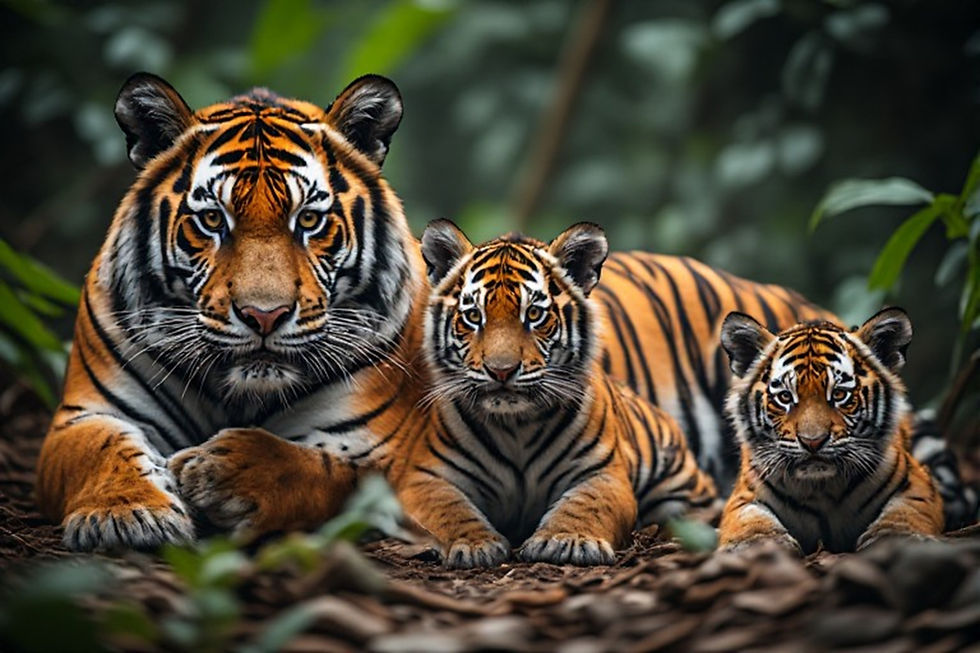
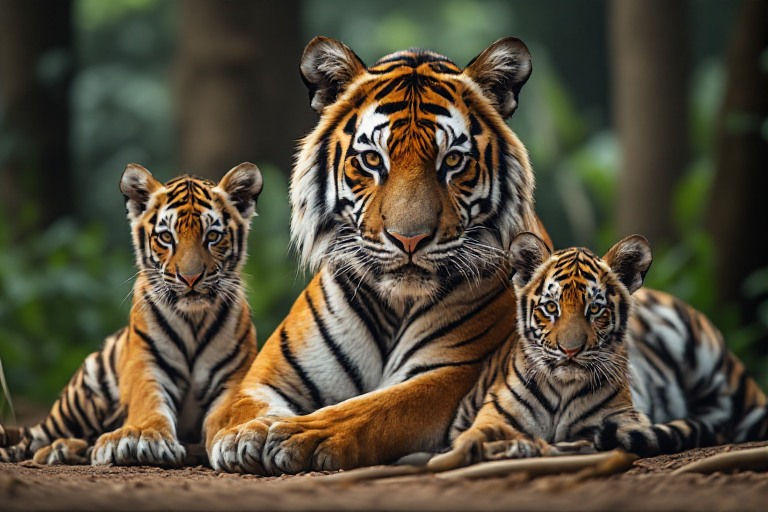
Female Bengal tigers invest heavily in raising their cubs. A litter generally contains several cubs, although not every cub survives to adulthood. The mother must protect them, nurse them, teach them to hunt, and eventually prepare them to survive independently.
That early period is critical because a tiger cub isn't born knowing how to become a tiger. It learns by following its mother, watching her behavior, practicing hunting skills, and gradually becoming capable of surviving on its own. Losing a mother prematurely can therefore have consequences extending well beyond one individual animal.
Are Bengal Tigers Endangered?
The tiger species is classified as Endangered on the IUCN Red List. That classification applies to Panthera tigris as a species rather than functioning as a separate conservation category for every regional tiger population.
The conservation picture isn't identical everywhere. India has recorded substantial increases in its tiger population through its national monitoring and conservation program, with the 2022 assessment estimating 3,682 tigers across the country. At the same time, some tiger populations and landscapes continue to experience serious pressure from habitat fragmentation, poaching, prey depletion, and human-wildlife conflict.
That distinction matters. Saying that tiger numbers have increased in one country doesn't mean the global tiger conservation problem has disappeared. Likewise, saying tigers remain endangered doesn't erase genuine conservation progress. Both facts can be true at the same time.
What Threatens Bengal Tigers?
Habitat loss is one of the biggest threats facing Bengal tigers. A tiger needs enough suitable habitat to find prey, establish a territory, reproduce, and move between areas. When forests and other landscapes become fragmented, populations can become isolated, and movement becomes more difficult.
Poaching and illegal wildlife trafficking are another serious threat. Tigers have been targeted for their skins, bones, teeth, claws, and other body parts, turning living animals into commodities for illegal markets. The problem isn't limited to the loss of individual tigers. Removing breeding adults can damage an entire population.
Human-tiger conflict can also occur when people and tigers are pushed into closer contact. When natural prey declines, or habitat becomes fragmented, tigers may travel farther in search of food. People entering tiger habitat for work can also face danger. Good conservation therefore requires more than protecting a fence line. It requires understanding the landscape and the people living within it.
Why Bengal Tiger Conservation Matters
Protecting Bengal tigers means protecting ecosystems. Tigers need prey, water, vegetation, territory, and functioning landscapes, which means conservation efforts can benefit many other animals and plants at the same time.
India's tiger conservation work provides one example of what sustained monitoring and habitat protection can accomplish. The country's 2022 assessment estimated a tiger population of 3,682, compared with 2,967 in 2018. That recovery is significant, but it doesn't mean every tiger landscape is experiencing the same trend.
Conservation also has to extend beyond counting animals. Protecting corridors, maintaining prey populations, reducing poaching, managing human-wildlife conflict, and preserving habitat all contribute to whether a tiger population can remain healthy over time. A number on a census sheet matters, but what happens on the ground matters too.
Why Cattytude Cares About Bengal Tigers
Cattytude's connection to wild cats goes beyond putting beautiful animals on clothing and accessories. The brand's conservation mission is built around the belief that admiring animals should lead to caring about what happens to them.
Cattytude dedicates 10% of every sale to domestic cat and wildlife conservation. Its current giving mission includes organizations working with wild cats, rescued animals, community cats, and wildlife.
Alley Cat Allies works to protect and improve the lives of cats, including community cats, through advocacy, education, Trap-Neuter-Return resources, and other programs.
Big Cat Rescue works to protect big cats through conservation and advocacy, with an emphasis on keeping wild cats in the wild and ending exploitation of big cats.
Carson Springs Wildlife Conservation Foundation provides sanctuary and care for rescued wildlife, including big cats, while promoting education and conservation.
National Tiger Sanctuary provides lifelong care for rescued tigers and other animals while promoting education, conservation, and responsible stewardship.
Panthera is devoted exclusively to conserving the world's 40 wild cat species and their ecosystems, with tiger conservation among its major areas of work.
Mozart SymPAWthy Animal Sanctuary Inc. provides rescue, rehabilitation, sanctuary, and care for animals in need, connecting Cattytude's broader animal stewardship mission with hands-on animal welfare.
Rebel Cat Rescue rescues and rehomes cats in need and provides hands-on support for cats requiring safe placement and care.
The Wildcat Sanctuary provides lifelong sanctuary for wild cats that cannot return to the wild while also educating the public about responsible treatment and conservation of wild cats.
Wear the Stripes, Not the Animal

There is something wonderfully simple about celebrating a tiger without taking anything from a tiger. You can wear tiger stripes, display tiger artwork, photograph a tiger, read about tiger behavior, and support conservation without turning the animal itself into a commodity.
That idea sits naturally within Cattytude's broader philosophy. The beauty of a wild cat doesn't become more meaningful because someone has turned its body parts into a luxury product. A tiger doesn't need to lose its skin, teeth, claws, or bones for people to appreciate what makes it extraordinary.
Animal-inspired fashion can celebrate wildlife without exploiting wildlife. A tiger-print shirt can make you smile. A tiger conservation article can make you think. A donation can help support conservation work. None of those things requires a real tiger to pay the price.
Why Bengal Tigers Inspire Stewardship
For Cattytude, caring about animals is closely connected to stewardship and a respect for the living world. The Bengal tiger is a powerful reminder that wild creatures have value beyond what they can provide for people. Its beauty, strength, instincts, and place within the ecosystem deserve to be respected rather than exploited.
That perspective also fits naturally with the Christian belief that creation belongs to God and that people have a responsibility to care for the creatures entrusted to them. Proverbs 12:10 says in the KJV, "A righteous man regardeth the life of his beast." Those words capture a simple principle that reaches well beyond one species. Compassion toward animals matters.
A Bengal tiger doesn't exist for our entertainment, our photographs, our trophies, or our marketplaces. It doesn't need to become tame, domesticated, or commercially useful to have value. It needs the forests, wetlands, prey, water, and space that allow it to live as the wild animal it is.
That is why protecting Bengal tigers means protecting much more than tigers. Their survival is tied to entire ecosystems and all the creatures within them. When those places are protected, countless other animals and plants benefit too.
There is something deeply meaningful about being able to admire a Bengal tiger without needing to possess it. Sometimes respect means leaving a wild creature wild, protecting the place it calls home, and recognizing that not everything valuable was created for us to own.
The Bengal Tiger Still Has a Place in the Wild
The Bengal tiger has survived enormous pressure from humans, but survival shouldn't be mistaken for security. Its future depends on whether enough habitat remains connected, enough prey survives, poaching is confronted, and people and tigers can coexist without either being treated as disposable.
There are reasons for hope. India's tiger population has increased substantially since the early years of its national tiger monitoring program, and conservation science continues to improve our understanding of tiger populations and their habitats. At the same time, the continuing threats show why conservation can't become complacent.
The Bengal tiger doesn't need us to make it less wild. It needs enough room to remain wild. Let it keep its forests, its mangroves, its waterways, its prey, its cubs, and those extraordinary stripes. Admire the tiger, learn about the tiger, support responsible conservation, and remember that the best place for a wild tiger is a world where it can still be a wild tiger.
Frequently Asked Questions About Bengal Tigers
What is the scientific name of the Bengal tiger?
The Bengal tiger is commonly identified as Panthera tigris tigris. It is a tiger population of the Indian subcontinent and is also widely known as the Royal Bengal tiger.
Where do Bengal tigers live?
Bengal tigers live primarily in India, Bangladesh, Nepal, and Bhutan. Their habitats include forests, grasslands, river landscapes, wetlands, and the mangrove forests of the Sundarbans.
How big is a Bengal tiger?
Bengal tiger size varies by sex and individual. Adult males are considerably larger than females and can weigh several hundred pounds, with total length exceeding eight feet in large individuals.
What do Bengal tigers eat?
Bengal tigers are carnivores that hunt prey such as deer, wild pigs, gaur, buffalo, and other animals depending on their habitat. Sundarbans tigers can also use smaller and aquatic prey.
Can Bengal tigers swim?
Yes. Tigers are capable swimmers, and swimming is particularly important for Bengal tigers living in the waterways and mangrove habitat of the Sundarbans.
Are Bengal tigers endangered?
The tiger species Panthera tigris is classified as Endangered by the IUCN. Individual populations face different circumstances, with some showing recovery while others remain under significant pressure.
How many Bengal tigers are left?
There isn't one reliable current global number specifically for Bengal tigers because populations are assessed across different countries and landscapes. India's 2022 national assessment estimated 3,682 wild tigers in the country, while the Bengal tiger also occurs in Bangladesh, Nepal, and Bhutan.
What is the difference between a Bengal tiger and a Royal Bengal tiger?
Bengal tiger and Royal Bengal tiger are commonly used names for the same tiger population. "Royal Bengal tiger" is especially associated with the Bengal region and the Sundarbans.
Why are Bengal tigers important?
Bengal tigers are top predators that form an important part of the ecosystems where they live. Protecting tiger habitat also helps protect prey species, forests, wetlands, waterways, and other wildlife.
What are the biggest threats to Bengal tigers?
Major threats include habitat loss and fragmentation, poaching, illegal wildlife trafficking, declining prey, and human-tiger conflict.
Why are the Sundarbans important to Bengal tigers?
The Sundarbans provide a unique mangrove habitat for Royal Bengal tigers. The ecosystem is also important for numerous other species and for communities that depend on its natural resources.
References and Further Reading
International conservation assessment covering the tiger's status, population, range, and threats.
Official information on tiger conservation, monitoring, tiger reserves, population assessments, and Project Tiger.
Background information on Bengal tiger biology, physical characteristics, diet, behavior, habitat, and conservation.
Information about the Sundarbans mangrove ecosystem, biodiversity, and its importance as habitat for the Royal Bengal tiger.
Educational information about tiger adaptations, biology, behavior, swimming ability, and conservation.
Information about wild tiger populations, habitat loss, illegal wildlife trade, human-wildlife conflict, and conservation.
Bengal tiger facts, Bengal tiger habitat, Bengal tiger population, Bengal tiger conservation, Bengal tiger endangered, Bengal tiger size, Bengal tiger diet, Bengal tiger lifespan, Bengal tiger behavior, Royal Bengal tiger, Bengal tiger Sundarbans, Bengal tiger threats, Bengal tiger habitat loss, Bengal tiger range, Bengal tiger ecosystem, Bengal tiger India, Bengal tiger Bangladesh, Bengal tiger Nepal, Bengal tiger Bhutan, Panthera tigris tigris
#BengalTiger #RoyalBengalTiger #BengalTigerFacts #TigerFacts #TigerConservation #SaveTigers #TigerProtection #WildTigers #TigerHabitat #TigerLovers #TigerAwareness #TigerLife #TigerBehavior #TigerConservation #BigCats #WildCats #PantheraTigris #Sundarbans #SundarbansTiger #WildlifeConservation #WildlifeProtection #EndangeredSpecies #AnimalConservation #SaveWildlife #ProtectWildlife #TigerPhotography #TigerHabitat #TigerPopulation #TigerIndia #TigerBangladesh

Comments