
Amur Leopard Cubs Bring New Hope for a Vanishing Big Cat


Five years of searching for the right breeding match has finally brought new hope for one of the rarest wild cats on Earth. Korkeasaari Zoo in Helsinki, Poland has welcomed two Amur leopard cubs, one male and one female, from a litter of three born in late July. Their arrival is more than a heartwarming zoo story because the Amur leopard is one of the world's most endangered big cats, and every healthy cub represents another opportunity to preserve a species that came frighteningly close to disappearing.
The two surviving cubs have already passed their first veterinary examinations. Veterinarians microchipped them and completed health checks before the cubs begin venturing beyond their den and exploring more of their habitat. They still have plenty of growing to do, but reaching this early milestone is encouraging after such a long wait for a successful breeding match.
There is also something especially meaningful about the fact that these cubs are a male and a female. Conservation breeding isn't simply about producing more animals. Carefully managed programs work to maintain healthy populations and preserve genetic diversity, which can become increasingly important when a wild species has been reduced to such a small population.
For anyone who loves cats, this is the kind of conservation story worth paying attention to. These aren't simply adorable leopard babies that happen to be attracting visitors and photographs. They are part of a much bigger effort to make sure the Amur leopard still has a future.
The Amur Leopard Is Fighting For Survival

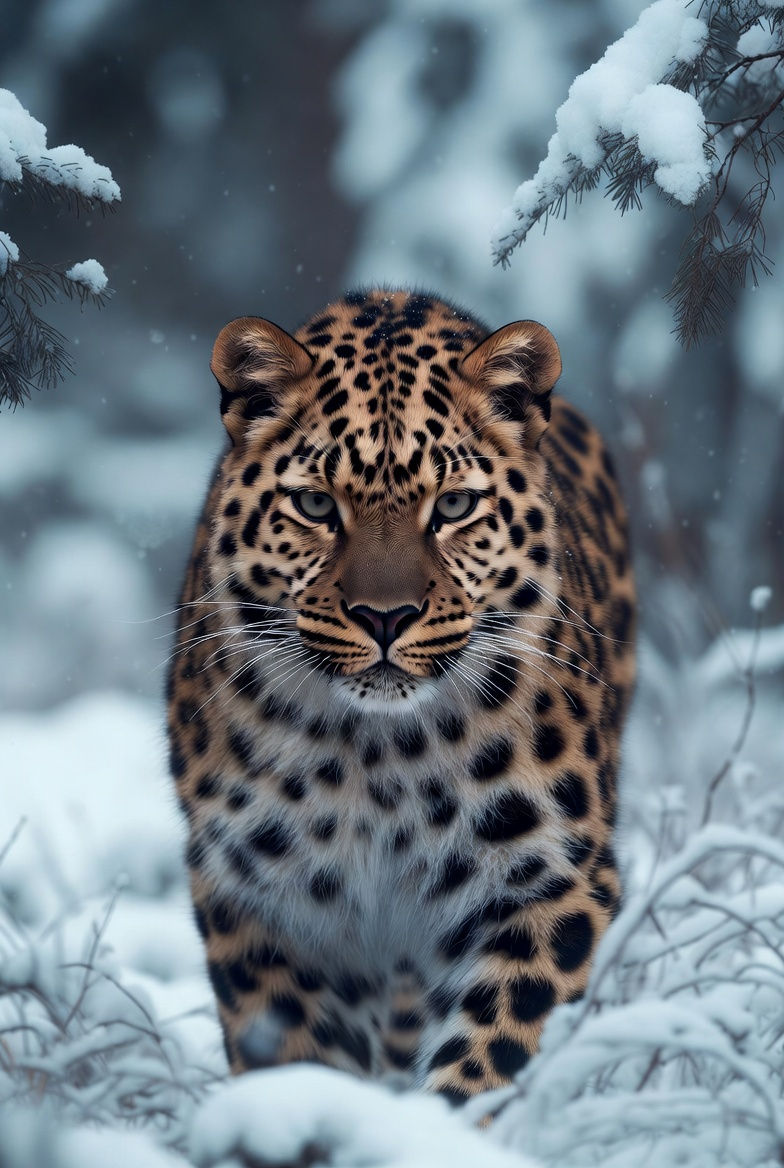
The Amur leopard, also known as the Far Eastern leopard, is a uniquely adapted wild cat of the Russian Far East and northeastern China. Its thick coat helps it survive harsh winters, while its powerful body and exceptional agility make it an effective predator in a challenging landscape. Like every wild cat, it has a role within the ecosystem that can't simply be replaced if the species disappears.
The situation for the Amur leopard was once considerably worse than it is today. Wild populations were reduced to only a few dozen animals at their lowest point, leaving the species dangerously close to extinction. Conservation efforts have helped the population recover, but a recovery from the brink doesn't mean the job is finished.
The cats still face threats that can affect both individual animals and the habitat they need to survive. Habitat loss and fragmentation can isolate populations, while poaching, loss of prey, wildfires, development, and other human pressures can make an already difficult situation even more dangerous. A wild cat can't survive simply because people want it to survive. It needs protected habitat, enough prey, safe territory, and a population large and healthy enough to reproduce.
That is why the birth of Amur leopard cubs at a conservation-focused zoo matters. It doesn't replace conservation in the wild, but it can provide an important safety net while conservationists continue working to protect the animals and ecosystems where Amur leopards belong.
Five Years To Find The Right Match
The story behind these cubs began long before their birth. Korkeasaari Zoo spent five years searching for a suitable breeding partner for its Amur leopard, working within a coordinated conservation breeding effort rather than simply pairing two animals because they were the same species.
That distinction matters. Successful conservation breeding requires careful decisions about genetics, age, health, reproductive compatibility, and the long-term needs of the population. A pairing that produces cubs isn't necessarily a good pairing if it
contributes to genetic problems or fails to strengthen the managed population.
The lengthy search demonstrates just how much planning can be involved in trying to protect a critically endangered wild cat. The first potential match wasn't suitable, and another candidate was too old. Eventually, the right female was found, and the introduction between the pair produced the result conservationists had been hoping for.
The successful pairing also has importance beyond the two parents themselves. Maintaining genetic diversity becomes increasingly challenging when a species has experienced severe population decline. Every carefully selected breeding pair can therefore contribute something much larger than a single litter.
A Litter Of Three With Two Survivors
Three Amur leopard cubs were born at Korkeasaari Zoo in late July. Sadly, one of the cubs didn't survive, leaving a male and female who have now made it through their first veterinary examinations.
That loss is difficult, especially when the birth itself represented five years of preparation and anticipation. It is also a reminder that conservation breeding doesn't eliminate the natural challenges that come with reproduction and raising young. Even when humans provide excellent care, newborn animals remain vulnerable during the earliest stages of life.
The two surviving cubs are being cared for by their mother, just as they would depend upon their mother during the early stages of life in the wild. Their veterinary examinations allow the zoo to monitor their development and address potential problems while they are still young.
Soon, the cubs will become more adventurous. As they grow stronger and more coordinated, their world will expand beyond the safety of the den, and visitors will eventually have opportunities to see more of their personalities and developing behavior.
Why These Cubs Matter Beyond Korkeasaari Zoo
It can be easy to look at a newborn wild cat and see only the emotional side of the story. Those tiny paws, spotted coats, and curious faces naturally make people smile. But conservationists have to look beyond the cuteness because the real question is what those cubs mean for the future of their species.
For the Amur leopard, genetic diversity is especially important. A population that has experienced a severe historical decline can face genetic challenges even when its numbers begin to recover. Conservation breeding programs can help maintain a healthy population outside the wild while researchers and conservationists continue protecting the remaining wild population.
The role of zoos in conservation is therefore much more complicated than simply displaying animals for visitors. Responsible breeding programs can involve international cooperation, careful genetic management, veterinary expertise, reproductive research, record-keeping, and decisions based on the long-term survival of a species.
None of that makes a zoo enclosure equivalent to the Russian Far East or the forests of northeastern China. It shouldn't. The ultimate goal of wildlife conservation has to include healthy wild populations living in functioning ecosystems. Conservation breeding is one tool that can help keep that possibility alive.
The Wild Amur Leopard Still Needs Protection
The Amur leopard's story isn't only about breeding programs. It is ultimately about habitat, because even the healthiest captive-bred population can't replace the forests and landscapes where this wild cat evolved.
Amur leopards need space to hunt, find mates, raise cubs, and move through their territory. When roads, development, logging, fires, human disturbance, and other pressures fragment that landscape, the cats can become increasingly isolated. The smaller and more fragmented a population becomes, the more difficult it can be to maintain a healthy wild population.
Protecting the Amur leopard therefore means protecting more than individual animals. It means protecting prey species, forests, migration routes, breeding areas, and the wider ecosystem. It also means addressing illegal killing and other human activities that can undermine decades of conservation progress.
This is where the distinction between loving wildlife and simply admiring wildlife becomes important. Admiration takes a moment. Conservation requires commitment.
Hope Doesn't Mean The Amur Leopard Is Safe
There is a tendency to hear that an endangered species is recovering and assume the danger has passed. The Amur leopard proves why that assumption can be dangerous. A species can make progress and still remain extraordinarily vulnerable.
The population has come back from a devastating low, which is an achievement worth celebrating. At the same time, the species remains dependent upon continued conservation work, protected habitat, responsible management, and international cooperation. Losing that momentum could erase hard-won gains.
The Korkeasaari cubs are therefore a reason for hope, but they aren't a reason to become complacent. They represent what can happen when people commit years of planning, research, cooperation, and patience to protecting an endangered wild cat.
That is the part of this story that deserves just as much attention as the photographs. Conservation works when people keep showing up.
What This Means For Other Wild Cats
The Amur leopard isn't the only wild cat facing an uncertain future. Tigers, jaguars, lions, cheetahs, snow leopards, smaller leopard species, and numerous lesser-known wild cats all face different combinations of habitat loss, prey depletion, poaching, human conflict, and other threats.
Some of these cats receive enormous public attention because people recognize their names and faces. Others can disappear quietly because relatively few people even know they exist. The Amur leopard itself spent decades living under the shadow of possible extinction before conservation successes began changing its trajectory.
That should teach us something important about conservation. We shouldn't wait until an animal is almost gone before deciding that it matters.
Every wild cat has value before it becomes rare. Every ecosystem matters before it collapses. Protecting wildlife should be about preventing the emergency rather than constantly trying to rescue species after humans have pushed them to the edge.
Why Cattytude Cares About Wild Cats

This is also where the Amur leopard story connects with what Cattytude stands for. Cattytude was created around a simple idea that loving cats shouldn't stop with the animals living in our homes. Wild cats are cats too, and their survival matters.
Cattytude's approach is rooted in stewardship and the belief that humanity has a responsibility to care for God's creation rather than treating animals as disposable resources. That belief isn't limited to one species or one sanctuary. It extends to the wild cats that still roam forests, mountains, grasslands, and other habitats around the world.
Cattytude puts that belief into practice by dedicating 10% of every sale to wildlife and domestic cat conservation. For wild cat conservation, that support currently includes Big Cat Rescue, Carson Springs Wildlife Conservation Federation, National Tiger Sanctuary, Panthera, and The Wildcat Sanctuary.
That connection matters because conservation shouldn't exist only as something we read about when a rare animal gives birth. The Amur leopard cubs at Korkeasaari are a beautiful reminder of what conservation can accomplish when people invest time and effort into protecting a species. Cattytude's role is much smaller, but the principle is the same, because loving cats means caring about their wild relatives too.
We Wear The Pattern, Not The Animal

There is another part of the Amur leopard story that deserves attention. These cats have coats that people have admired for generations, but their beauty shouldn't become a reason for people to exploit them.
Cattytude celebrates the visual beauty of wild cats through printed designs rather than real animal skins or body parts. We can wear leopard spots, tiger stripes, and other feline-inspired patterns without requiring a leopard, tiger, jaguar, or another animal to die for fashion.
That idea is simple enough to remember. We wear the pattern, not the animal.
For Cattytude, that isn't just a marketing phrase. It fits into the broader belief that we can celebrate God's creation without destroying the creatures we claim to admire. The Amur leopard doesn't need us to possess part of it. It needs us to leave the living animal alive.
Stewardship Means More Than Admiring Creation
Scripture gives humanity a responsibility toward the animals and the world God created. Genesis describes mankind as being given dominion over the animals, but dominion shouldn't be confused with permission to abuse, waste, or destroy.
The Bible also gives us examples of concern for animals and the responsibilities that come with caring for them. Proverbs 12:10 says, “A righteous man regardeth the life of his beast.” That principle reaches far beyond the animals directly under our care because compassion shouldn't suddenly disappear when the creature lives in a distant forest instead of our own backyard.
The Amur leopard can't ask humanity to protect its habitat. It can't explain why its population matters. It can't stand before governments and developers and argue for another protected forest.
We can.
That is why stories like this deserve more than a quick “how cute” reaction. The cubs are beautiful, but what they represent is even more important. They represent the possibility that careful conservation can keep a species from becoming nothing more than a photograph in a history book.
A New Generation Of Hope
The two Amur leopard cubs at Korkeasaari Zoo have a long road ahead of them. They still need to grow, remain healthy, learn from their mother, and eventually become part of the next chapter of the species' conservation story.
Their birth doesn't erase the threats facing wild Amur leopards. It doesn't restore lost habitat or eliminate poaching. It doesn't guarantee that the species will survive for another hundred years.
What it does provide is hope backed by action. Five years of searching produced a successful breeding match, and that match produced two surviving cubs that have already passed their first health checks.
That is worth celebrating.
It is also worth remembering that conservation is never finished. The Amur leopard came frighteningly close to disappearing, and the fact that it is still here is evidence that determined conservation work can make a difference. Now the responsibility is ours to make sure this new generation has a wild future waiting for it.
Big or small, we love them all. And when it comes to wild cats like the Amur leopard, love should mean more than admiration. It should mean protection, stewardship, and action.
Frequently Asked Questions
How many Amur leopard cubs were born at Korkeasaari Zoo?
Three Amur leopard cubs were born at Korkeasaari Zoo in late July 2026. One sadly did not survive, leaving one male and one female. The two surviving cubs have passed their first veterinary examinations and are developing under their mother's care.
Why are the Korkeasaari Amur leopard cubs important?
The Amur leopard is one of the world's most endangered big cats, making every successful birth significant. These cubs are also important because they are part of a carefully managed conservation breeding program designed to maintain a healthy population and preserve genetic diversity. Their birth follows five years of searching for a suitable breeding match.
Where do Amur leopards live?
Amur leopards are native to the Russian Far East and northeastern China. Their remaining wild habitat is much smaller than their historical range. Protecting forests and other suitable habitat is essential for the species' continued recovery.
Why did it take five years to find a breeding match?
Conservation breeding requires much more than finding two animals of the same species. Zoos and conservation programs consider factors such as genetics, age, health, reproductive suitability, and the long-term needs of the managed population. Korkeasaari Zoo evaluated potential matches before finding a female suitable for its male.
Are Amur leopards still critically endangered?
Yes. Amur leopards remain critically endangered despite significant conservation progress. Their population has recovered from a historical low, but the species remains vulnerable because its wild population is still small and its habitat continues to face threats.
What threats do Amur leopards face?
Amur leopards face habitat loss and fragmentation, poaching, wildfires, development, and reductions in the prey and habitat they need to survive. A small population is particularly vulnerable because additional losses can have a disproportionate effect. Protecting both the animals and their ecosystem is necessary for long-term recovery.
Does Cattytude support wild cat conservation?
Yes. Cattytude dedicates 10% of every sale to wildlife and domestic cat conservation, with wild cat conservation support going to Big Cat Rescue, Carson Springs Wildlife Conservation Federation, National Tiger Sanctuary, Panthera, and The Wildcat Sanctuary. That support reflects Cattytude's belief that loving cats includes caring about wild cats and the ecosystems they depend upon.
How can people help Amur leopards?
People can support legitimate wildlife conservation efforts, learn about endangered wild cats, share accurate information, and make choices that don't contribute to wildlife exploitation. Supporting habitat protection and responsible conservation programs can help keep wild populations viable. Even people far from Amur leopard habitat can contribute to conservation through informed choices and financial support.
Additional References
WWF UK Amur Leopard page (states Critically Endangered and around 130 mature individuals):
WWF worldwildlife.org species page:
Wikipedia Amur leopard (cites IUCN Red List as Critically Endangered):
IUCN-related assessment details (Amur leopard remains Critically Endangered under criteria C2a(ii) and D):
Referenced in scientific literature and the 2023 Panthera pardus assessment summaries.
Additional confirming sources
Mongabay 2025 recovery article (notes Critically Endangered status and rise to around 130):
Our Endangered World summary (Critically Endangered, population notes):
WildCats Conservation Alliance / WCS monitoring (Critically Endangered, density and recovery data):
https://conservewildcats.org/2025/06/24/amur-leopard-density/


Comments