
Why Reading Matters in a World That Wants Easy Answers

Updated: 6 days ago
UPDATE: Since the original publication of this post, Cattytude has expanded its financial support to include domestic and wildlife conservation and rescue efforts.
We live in a world where almost everything is being made easier, faster, shorter, and more convenient. We can ask a machine to summarize a book we haven't read, write something we haven't thought through, answer a question we haven't researched, and produce information before we've even decided what we actually want to know.
Convenience certainly has its place, but when we make everything effortless, we need to ask whether we're also removing the effort that makes us stronger. There is a difference between making something easier and making ourselves less capable of doing it.
That is why reading matters. A good book requires concentration, memory, comprehension, imagination, patience, and judgment, because the reader has to participate in the experience instead of simply receiving a finished answer. Reading asks us to follow an idea long enough to understand it, remember what came before, recognize connections, and decide what we think about what we're being told. Those aren't useless old-fashioned skills. They are some of the very abilities human beings need in order to function well.
There is also something deeply satisfying about learning something the hard way. When you work through a difficult chapter, figure out an unfamiliar idea, remember something from an earlier section, or finally understand a complicated argument, your brain has actually done something. The struggle isn't necessarily a defect in the learning process. Sometimes the struggle is the learning process.
Reading Is Exercise for the Mind

We understand that muscles become stronger when they are used, yet we sometimes act as though the brain should become stronger by doing less. Reading gives the mind sustained work that quick answers often don't require, because the reader has to process language, retain information, make connections, interpret meaning, and keep following the thread. The more complicated the material, the more actively the reader has to participate. That is mental exercise, and mental exercise matters.
Research from the UCL Centre for Longitudinal Studies followed more than 6,000 people through childhood and into adulthood and found substantial long-term associations between reading for pleasure and vocabulary development. People who had regularly read for pleasure at age 10 had an average vocabulary score of 67 percent at age 42, compared with 51 percent among infrequent childhood readers, while teenagers who read in their spare time knew 26 percent more words than those who never read for pleasure. The researchers also found that frequent reading was associated with greater progress in mathematics and vocabulary during childhood, even after comparing children from similar social backgrounds and with similar earlier test scores.
That doesn't mean every person who reads a book automatically becomes smarter, and it certainly doesn't mean reading alone determines a person's intelligence. It does mean that sustained reading has measurable relationships with important cognitive outcomes across the lifespan. When we encourage children to read, we're not simply keeping them occupied. We're giving their developing minds thousands of opportunities to practice understanding the world.
The Easy Answer Can Become a Trap
Artificial intelligence has changed the way people access information, and some of those changes are genuinely useful. The problem begins when getting the answer becomes more important than developing the ability to reach, evaluate, remember, and explain the answer ourselves. If a machine constantly performs the difficult part, we may become very good at receiving information while becoming less practiced at processing it independently. That is a tradeoff worth taking seriously.
A 2025 randomized controlled trial involving 120 university students provides some striking evidence. Students who used ChatGPT as a study aid scored 57.5 percent on a surprise knowledge-retention test 45 days after learning, compared with 68.5 percent among students who used traditional, non-AI study methods, and the difference was statistically significant with a Cohen's d of 0.68. The study doesn't prove that every use of AI harms learning, but it does show that under the conditions tested, unrestricted ChatGPT assistance was associated with substantially poorer long-term retention.
That finding should make us think about what learning actually means. If you can produce a perfect answer five minutes after asking a machine for one but can't explain the subject yourself tomorrow, you may have obtained information without truly learning it. Education was never supposed to be a contest to see how quickly information could pass through a person. The goal was to develop a person who could understand and use that information.
AI Dependence Deserves Attention
Another 2025 study examined 580 Chinese university students and found that greater AI dependence was associated with lower levels of critical thinking, while cognitive fatigue partly mediated the relationship. The researchers reported a correlation of -0.35 between AI dependence and critical thinking and a correlation of -0.42 between cognitive fatigue and critical thinking. The study does not establish that AI dependence alone caused every difference, but it provides additional evidence that how we use AI may matter just as much as the technology itself.
This distinction is important because the answer isn't to declare every technological tool evil. A calculator can help someone check an equation, a search engine can help someone locate information, and AI can help someone brainstorm or organize ideas. The problem comes when assistance becomes substitution, and people stop doing the mental work they need to remain capable without the assistance. A tool should extend our abilities, not quietly replace the need to develop them.
We should also be careful about what the research actually proves. Current studies provide evidence involving knowledge retention, critical thinking, cognitive fatigue, and digital distraction, but they do not establish that ordinary AI use permanently lowers everyone's IQ. We don't need to exaggerate the science to make the point, because the documented effects on learning and thinking are already serious enough. If people become less practiced at thinking because machines are doing more of it, that deserves our attention whether or not an IQ test ever captures the change.
Screens Can Train Us to Look Away

The problem with screens isn't that screens are inherently bad. Digital technology can provide extraordinary educational resources, and OECD data actually show that moderate educational use of digital devices can be associated with better academic performance. The problem is what happens when technology becomes a constant source of interruption, multitasking, notifications, entertainment, and divided attention.
PISA 2022 data found that around 30 percent of students across OECD countries reported becoming distracted by digital devices in most or every mathematics lesson. Students who reported that level of distraction scored an average of 15 points lower in mathematics than students who said it never or almost never happened, after accounting for students' and schools' socioeconomic profiles. The OECD does not claim that digital distraction alone caused the lower scores, but the relationship is strong enough to demonstrate that attention and digital habits matter.
A book doesn't demand that you check another notification before you finish the paragraph. It doesn't suddenly replace your subject with something designed to keep you scrolling, and it doesn't require an algorithm to decide what deserves your attention next. When you read, you choose to remain with the material. That ability to stay with something difficult is valuable far beyond the pages of a book.
The Books Are Worth More Than the Data

Here is where the modern AI story becomes almost surreal. In 2025, court filings revealed that Anthropic had acquired millions of physical books, removed their bindings, scanned the pages, and discarded the physical copies as part of a project to create digital material for AI training. Reporting based on those filings described the company spending tens of millions of dollars to acquire and destructively scan millions of books, while an internal document referred to the project as an effort to "destructively scan all the books in the world."
Think about what that actually means. The information inside those books was considered valuable enough to acquire, process, digitize, and feed into artificial intelligence, yet the physical books themselves were treated as disposable once their information had been extracted. We are living in an era where someone can tell us that books are outdated while an AI company is spending millions of dollars obtaining those supposedly outdated books because the knowledge inside them is valuable.
That should make us question the idea that a book is merely a container for information. A physical book can be read by a child, passed to another reader, placed on a library shelf, discovered decades later, signed by an author, or treasured because of the memories attached to it. Once that particular copy has been destroyed, it cannot do any of those things again. Digitizing information can preserve the words, but it doesn't preserve everything a physical book can mean.
Books Should Not Become Disposable

There is something profoundly backward about extracting knowledge from millions of books and then throwing away the objects that carried that knowledge. Technology is supposed to help us preserve and expand access to information, not convince us that the original objects have no remaining value once a machine has consumed their contents. A library filled with books isn't a primitive database waiting to be replaced. It is a living collection that people can physically enter, browse, discover, borrow, discuss, and return to.
The same principle applies to books that aren't being destroyed for AI. Books can also be removed from collections, restricted, challenged, or banned because people object to their content, and those actions deserve careful attention without pretending that every removal is the same thing as physical destruction. The American Library Association documented 4,235 unique titles challenged in U.S. libraries and schools during 2025 and reported 5,668 books banned from libraries, while also documenting hundreds of additional titles subjected to access restrictions. Those figures concern censorship and access, not thousands of books being physically burned, and that distinction matters.
The larger principle is still worth considering. Whenever access to books becomes narrower, whether because books are discarded, removed, restricted, or simply no longer made available, people lose opportunities to encounter ideas and stories. A society doesn't become stronger by making its intellectual world smaller. It becomes stronger when people have the opportunity to read widely, think critically, disagree intelligently, and decide for themselves what they believe.
Public Libraries Keep Knowledge Alive
That is one reason public libraries are so important. A library can put thousands of books within reach of people who could never afford to purchase thousands of books themselves, while also providing a place where children can discover subjects they didn't know existed. It offers something increasingly rare in modern life: a public environment where learning is the purpose rather than something that has to compete with advertising, sales, notifications, and endless entertainment.
Research published in the American Economic Journal: Economic Policy found that major public library capital investments increased library visits, children's attendance at library events, and children's circulation by an average of 5 to 15 percent in the years following investment. The researchers also found that capital investments of at least $200 per student were associated with subsequent increases in reading test scores in nearby school districts. Their findings provide evidence that public libraries aren't merely sentimental institutions from another era.
Libraries are community infrastructure. They give children somewhere to discover books, adults somewhere to continue learning, families somewhere to share stories, and communities somewhere to gather around knowledge rather than consumption. Keeping libraries open isn't simply about protecting buildings full of old paper. It is about protecting access to learning itself.
A Book Can Change a Child's World

Sometimes a child picks up a book because the cover catches their attention and ends up discovering an entirely new subject. A story about one animal can lead to questions about habitats, conservation, biology, geography, or the people working to protect wildlife. The first step doesn't have to look educational. Sometimes it simply looks like a child finding a story they love.
That is part of why Nora from Canora belongs in this conversation. Nora isn't simply a character placed inside a children's book, because the story creates a doorway into wildcats, conservation, courage, community, and caring about animals. A child who becomes fascinated with Nora can begin asking questions that extend far beyond the story. That is one of the beautiful things books can do.
A book can plant a seed before a child even realizes they're learning. It can make an unfamiliar animal feel familiar, make a distant place feel real, or make a conservation issue feel personal. Once curiosity begins, the child has somewhere to go next, and a library can be filled with those next places.
Bond of the Shadows Takes It Further

Bond of the Shadows carries that same philosophy into a larger story for readers who are ready to explore more complicated ideas. The fictional sanctuary in New Mexico brings wildcat conservation together with anti-poaching concerns, deforestation, family, faith, courage, and responsibility. Private BB and the people around him aren't simply there to move a plot forward. They give readers reasons to care about what happens to animals and what people choose to do when vulnerable creatures need protection.
That's what a story can accomplish that a pile of disconnected facts sometimes can't. You can tell someone that wildcats are threatened, and they may understand the statement intellectually, but a story can give those animals a place in the reader's imagination. Once a reader cares about a character, a sanctuary, a family, or a particular animal, information about conservation can become something more than information. It becomes something that matters.
This is also why Cattytude's books belong alongside its commitment to wildlife conservation. The point isn't simply to sell a story or put a cat on a product. The larger purpose is to encourage curiosity, compassion, and a willingness to care about animals, while giving back to wildlife conservation along the way. Sometimes a person begins caring because they read something that made them see an animal differently.
Stories Help Us Understand Other People
Reading also takes us outside our own experience. A story can introduce us to people who live differently, think differently, suffer differently, believe differently, or face circumstances we may never encounter ourselves. We don't have to agree with every character or every author to benefit from the exercise of trying to understand what we're reading. The act of seeing through another perspective can make the world intellectually larger.
Research examining fiction reading has found measurable, although generally modest, cognitive benefits in experimental studies, with some of the clearest findings involving social cognition and mentalizing. That doesn't mean reading fiction automatically makes someone compassionate or morally superior, because human beings are considerably more complicated than that. It does support the idea that stories can engage cognitive abilities beyond simply recognizing words on a page.
This is one reason reducing books to "information containers" misses the point. A book can teach you facts, but it can also teach you how to follow a life, understand a motive, recognize a consequence, imagine a possibility, or question an assumption. Those experiences are part of what makes reading fundamentally different from simply extracting information.
Stronger Minds Build Better Character
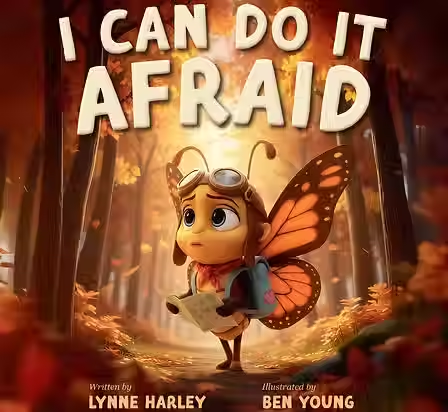
Knowledge alone doesn't make somebody good. History gives us plenty of examples of intelligent, educated people who used their abilities destructively, so reading should never be presented as a magical shortcut to morality. What reading can do is help develop the mental abilities that character needs, including reflection, patience, judgment, empathy, and the willingness to consider something before reacting to it.
Character requires choices, and good choices require thought. A person who can recognize manipulation, question an attractive but unsupported claim, understand consequences, and admit when they were wrong has more tools available to make responsible decisions. Reading doesn't guarantee that those tools will be used well, but refusing to develop them certainly doesn't make society stronger.
That is why the idea is so important: stronger minds build better character, and better character builds a stronger society. A society depends on people who can learn from history, evaluate information, recognize deception, listen to opposing ideas, understand consequences, and continue learning throughout their lives. If we allow convenience to replace those abilities, we aren't merely changing how people read. We're changing what people are capable of doing with what they know.
Scripture Takes Knowledge Seriously

The Bible doesn't treat knowledge as something insignificant. Proverbs 1:7 says in the KJV, "The fear of the LORD is the beginning of knowledge," placing knowledge within a framework of wisdom, humility, and recognition of God. Knowledge isn't presented as the highest goal, but ignorance certainly isn't presented as something to pursue.
Hosea 4:6 gives an even more sobering warning when it says, "My people are destroyed for lack of knowledge." The passage is speaking in its biblical context about rejecting knowledge of God, so it would be wrong to pretend that it was written specifically about reading books or modern technology. The broader principle is still striking, because rejecting knowledge leaves people vulnerable to deception, poor judgment, and consequences they might otherwise have avoided.
Faith and learning don't have to compete with each other. We can believe in God while continuing to read, study, ask questions, seek wisdom, and learn about the world He created. The goal isn't to know everything. The goal is to remain willing to learn.
We Cannot Outsource Everything

Artificial intelligence is not going away, and it doesn't need to. There are legitimate ways to use AI as a tool that helps people research, organize, create, communicate, and work more efficiently. The danger comes when efficiency becomes the only value, and we begin assuming that anything a machine can do is something humans no longer need to learn.
If a machine writes everything, we risk losing practice in writing. If it summarizes everything, we risk losing practice in comprehension, and if it answers everything, we risk losing practice in figuring things out. If we allow it to perform every difficult mental task, we may eventually discover that the greatest thing we outsourced was not a task but our own ability to perform it.
That is the stark reality we need to confront. Humanity has become extraordinarily good at taking the easy way out, and if we continue doing that with every form of intellectual effort, we risk weakening the very abilities needed to solve the enormous problems we have created for ourselves. Nobody needs to predict that humanity will literally exterminate itself to recognize that a civilization that stops thinking for itself is putting itself in unnecessary danger.
The Day We Stop Learning
There is a widely repeated saying that "the day we stop learning is the day we stop living." The exact origin of that wording is difficult to establish with confidence, so it shouldn't be presented as though we know precisely who first said it. The thought itself, however, captures something important about what happens when curiosity disappears.
Learning keeps the mind moving. It gives us new questions, new possibilities, new connections, and new opportunities to discover that something we believed yesterday wasn't quite right. A person doesn't stop needing knowledge simply because they finished school, and a society doesn't stop needing educated citizens simply because information can now be summoned by a machine.
The opposite of learning isn't simply ignorance. Sometimes it is certainty without understanding. Sometimes it is accepting the first answer because it is convenient. Sometimes it is deciding that we already know enough and no longer need to ask questions.
Hit the Books
This is why we need to keep reading. We need children who know that books can be adventures, adults who remain curious long after formal education ends, libraries that remain open, and communities that understand that access to knowledge is an investment rather than an unnecessary expense. We need people who can use technology without becoming dependent upon it for every difficult thought.
Read something that challenges you. Read something that teaches you about an unfamiliar place, an unfamiliar person, an animal you've never encountered, a period of history you don't understand, or a problem you have never considered. Read fiction, nonfiction, biographies, history, science, poetry, children's books, and stories that make you see the world differently.
Let technology help you when it genuinely helps. Let AI be a tool rather than a replacement for curiosity, judgment, memory, imagination, and independent thought. There is nothing wrong with taking a shortcut occasionally, but there is something dangerous about forgetting how to walk the road ourselves.
Public libraries matter because books matter. Books matter because learning matters, and learning matters because human beings need more than information. We need understanding, wisdom, judgment, imagination, compassion, and character.
The physical books being cut apart and discarded for AI training should remind us of something we shouldn't have forgotten. Information may be extracted, copied, summarized, digitized, and processed by machines, but the human experience of discovering knowledge still matters.
So don't let the machines do all the thinking. Don't let convenience become your definition of progress, and don't let a world overflowing with information convince you that learning has become unnecessary. Pick up a book, give it your attention, and remember that sometimes the work you are tempted to avoid is exactly the work that helps make you stronger.
Because stronger minds build better character, and better character builds a stronger society. If we want a stronger society, we need people who are still willing to learn, still willing to think, and still willing to turn the page.
Frequently Asked Questions
Why does reading matter?
Reading matters because it requires sustained attention, comprehension, memory, interpretation, and independent thought. Research has found long-term associations between childhood reading for pleasure and vocabulary development later in life, along with evidence of greater cognitive progress among frequent young readers. Reading also gives people a way to keep learning without requiring another person or a machine to do the thinking for them.
Does reading improve intelligence?
Reading isn't a magic formula that guarantees a higher IQ, and the evidence shouldn't be exaggerated that way. Research does show relationships between reading and vocabulary development, cognitive development, comprehension, and certain social-cognitive abilities. More importantly, reading repeatedly exercises mental abilities that people need in order to learn, reason, understand, and communicate.
Has AI been linked to poorer learning?
Yes, and the evidence is becoming difficult to ignore. A randomized controlled study involving 120 university students found lower long-term knowledge retention among students who used ChatGPT as a study aid compared with students using traditional study methods, while a separate study of 580 university students found greater AI dependence associated with lower critical-thinking scores. Those studies don't mean every use of AI is harmful, but they do show why dependence on AI for learning deserves serious attention.
Has AI been proven to lower IQ?
Current research does not establish that ordinary AI use permanently lowers everyone's IQ. The evidence is stronger for measurable outcomes involving knowledge retention, critical thinking, cognitive fatigue, and distraction. Those findings are important enough that there is no need to make a broader claim than the research can support.
Were books really destroyed for AI training?
Yes. Court filings and subsequent reporting documented that Anthropic acquired millions of physical books, removed their bindings, scanned the pages, and discarded the physical originals as part of a large-scale digitization project connected to AI development. The Washington Post reported in January 2026 that the company had spent tens of millions of dollars acquiring and destructively scanning millions of books, based on documents unsealed in litigation.
Are books being banned or removed too?
Yes, although banning a book from a library is not the same thing as physically destroying it. The American Library Association reported 4,235 unique titles challenged in 2025 and 5,668 books banned from libraries, along with hundreds of additional titles subjected to access restrictions. Those numbers concern reported censorship and access restrictions, so they shouldn't be described as thousands of books being physically destroyed.
Why are public libraries important?
Public libraries provide free community access to books, information, learning resources, programs, and spaces for reading and study. Research published by the American Economic Association found that major public library capital investments increased library visits and children's library use, while sufficiently large investments were associated with subsequent improvements in nearby reading test scores.
Libraries therefore serve as educational and community infrastructure rather than simply functioning as places where people borrow books.
Why does Cattytude have books?
Books fit naturally into Cattytude because stories can connect people with animals, conservation, compassion, courage, and responsibility. Nora from Canora gives younger readers an accessible story through which they can encounter wildcats and conservation, while Bond of the Shadows explores those ideas through a larger fictional sanctuary story. Cattytude's commitment to giving back to wildlife conservation is part of that same belief that caring about animals should extend beyond products.
Why is reading important for children?
Reading gives children opportunities to build vocabulary, comprehension, concentration, imagination, and knowledge while developing the habit of learning independently. UCL's longitudinal research found that children who read frequently for pleasure had stronger vocabulary outcomes later in life and made greater cognitive progress during childhood. Giving children access to books can therefore be much more than providing entertainment.
Why should libraries stay open?
Libraries give entire communities access to knowledge and learning opportunities that individuals might not otherwise be able to afford or reach. Research has found that public library investment can increase library use and is associated with improved reading outcomes in nearby school districts. Closing libraries therefore means more than losing buildings and books, because communities can also lose important educational infrastructure.
What does "hit the books" mean?
"Hit the books" means to study seriously and put effort into learning. The expression fits the larger message because learning isn't supposed to be entirely effortless. Sometimes that work is what makes the knowledge stick.
References
UCL Centre for Longitudinal Studies. Reading for Pleasure
Gilpin, Gregory, Ezra Karger, and Peter Nencka. “The Returns to Public Library Investment.” American Economic Journal: Economic Policy. The Returns to Public Library Investment
OECD. PISA 2022 Results, Volume I. PISA 2022 Results
Barcaui, André. Social Sciences & Humanities Open. ChatGPT-Assisted Learning Study
Tian, Jinrui, and Ronghua Zhang. Acta Psychologica. AI Dependence and Critical Thinking Study
American Library Association. Book Ban Data
American Library Association. State of America's Libraries 2026
Bartz v. Anthropic PBC. U.S. District Court. Court Records
The Washington Post. Anthropic's Book-Scanning Project
why reading matters, importance of reading, benefits of reading, why reading is important, reading and brain health, reading and critical thinking, reading and comprehension, reading for pleasure, benefits of reading books, importance of books, importance of public libraries, why libraries matter, public libraries and communities, reading in the digital age, reading in the age of AI, AI and critical thinking, AI and learning, AI dependence and learning, artificial intelligence and education, cognitive offloading and AI, digital distraction and learning, books and learning, lifelong learning, importance of lifelong learning, reading and character development, stronger minds stronger society, books versus AI, protecting public libraries, children and reading, wildlife conservation books
#WhyReadingMatters, #ReadingMatters, #ImportanceOfReading, #BenefitsOfReading, #ReadMore, #ReadingForPleasure, #BookLovers, #BooksMatter, #ReadingBooks, #LoveReading, #LifelongLearning, #KeepLearning, #CriticalThinking, #ThinkForYourself, #ReadingAndLearning, #LearningMatters, #PublicLibraries, #LibrariesMatter, #SaveOurLibraries, #SupportLibraries, #DigitalAge, #AIAndEducation, #AIAndLearning, #ArtificialIntelligence, #CognitiveOffloading, #BrainHealth, #StrongMinds, #CharacterMatters, #WildlifeConservation, #NoraFromCanora


The extent of my involvement with AI is limited to spelling and grammar. The pics were mostly taken from the internet when I searched for them. The same goes for the numbers and statistics. I love doing research. It has always been my kick. I also enjoy the challenge of writing. Without it, I'd become incredibly bored. Now, I have a habit of writing much like a school teacher. I often get flagged, despite the fact that I put the sentences together myself. I've been writing as a hobby since I was a kid. I still do it as an adult.